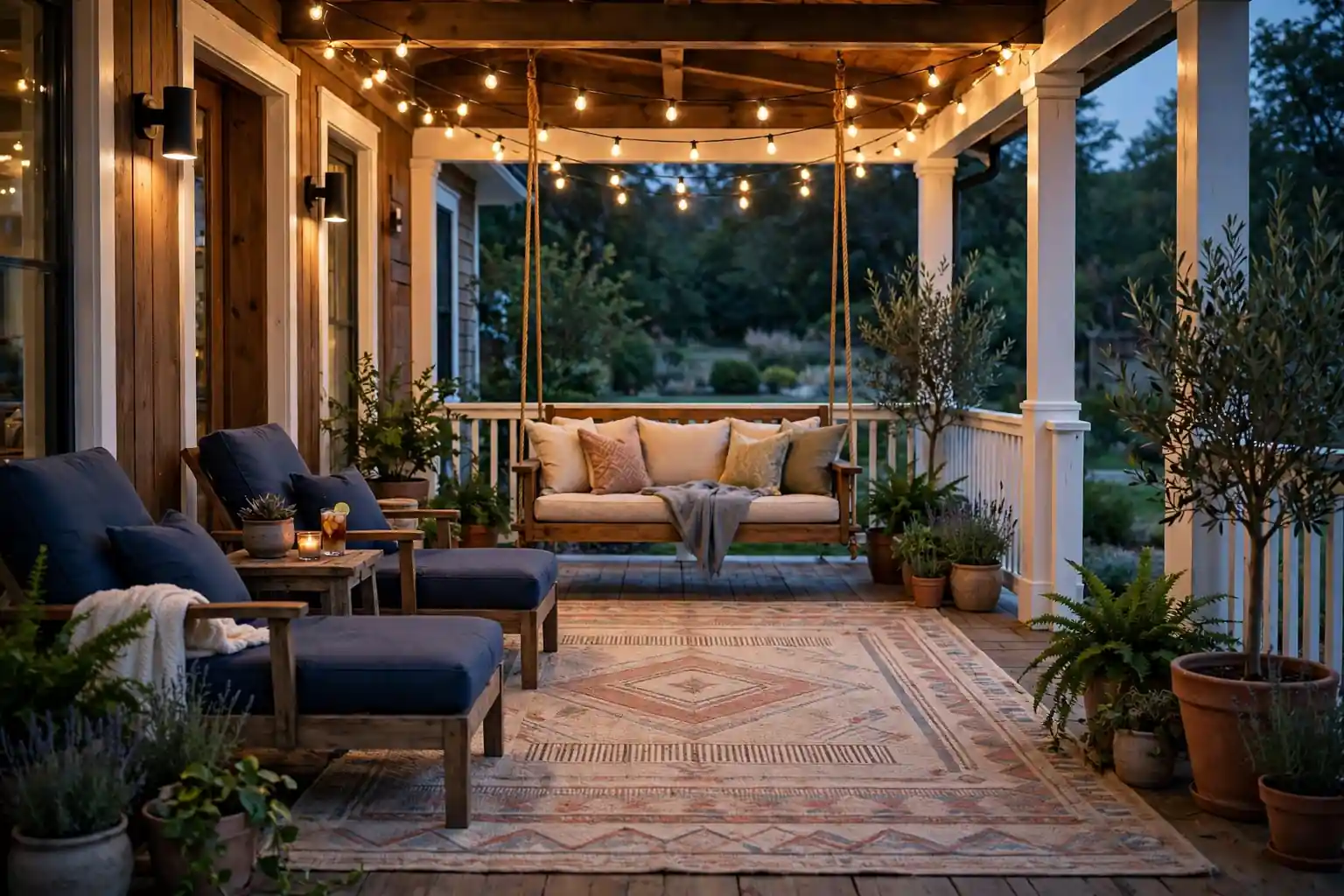
Back porch decorating ideas work best when you start with comfortable seating, shade, soft light, and plants, then add one calm focal point such as a rug, a swing, or a fountain. Keep the walking path clear, repeat two or three colors, and choose outdoor rated pieces so the porch stays inviting in sun and rain.
The 21 ideas below suit small back porches as well as wide ones, since most of them scale down to one chair and one planter, or up to a full seating and dining group. Pick one seating idea and one light idea first, then add shade and plants. The same layered approach that makes fall porch ideas feel welcoming works on a back porch all year, and a fall front porch palette can guide the colors you repeat out back.
Key Takeaways
- Start with seating you want to sit in: deep chairs, a swing, or a daybed, not decor alone.
- Give the porch one clear zone for sitting and one clear path to the yard, so nothing blocks the door or the steps.
- Repeat two or three colors, such as cream, sage green, and warm wood, across cushions, pots, and textiles.
- Add shade and soft light early, since a porch that is too bright at noon or too dark at dusk gets little use.
- Choose outdoor rated fabrics and finishes, or bring cushions and throws indoors in rain, so the porch stays tidy.
- Add plants at varied heights, and keep one calm focal point, such as a rug, a fountain, or a swing, so the porch reads as one plan.
1. Deep-Seated Lounge Chairs with Weatherproof Cushions
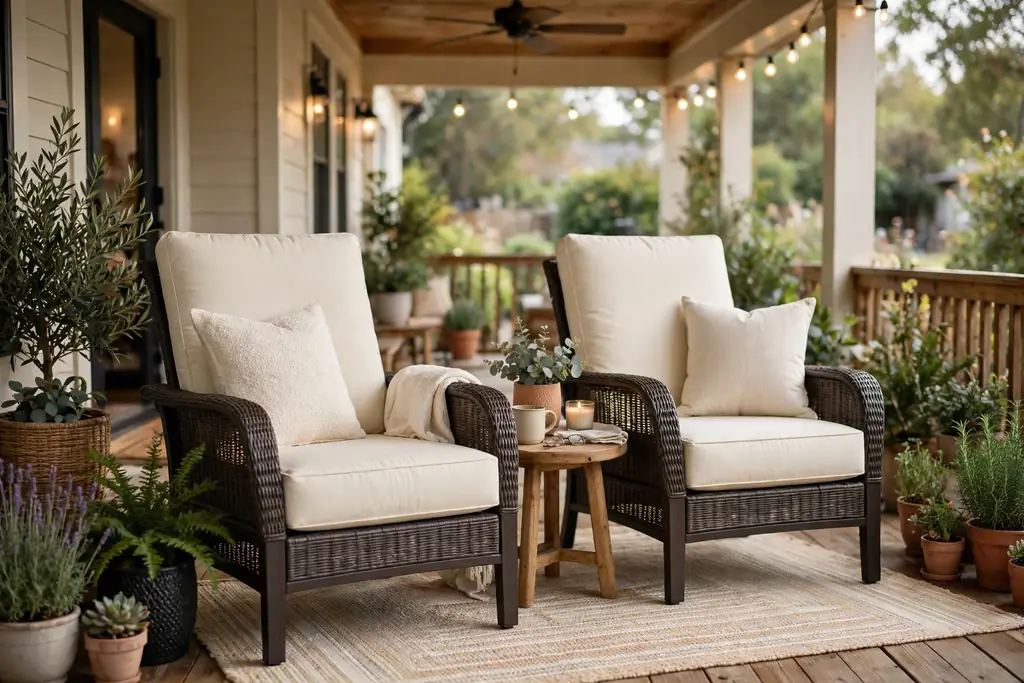
Deep-seated lounge chairs are the simplest way to make a back porch feel like a room. Choose two chairs with thick seat cushions, a low back, and armrests at a height that supports a book or a drink. Place them at a slight angle toward the yard, with a small table between them, so conversation feels natural and the view stays open.
Pick cushions with removable, washable covers and quick dry fills, since porch cushions gather dust and pollen. If the porch is narrow, one deep chair still gives the same restful feel, placed beside a side table and a planter. Add a folded throw over one arm for cool evenings, and keep the chair feet on a rug or flat stones so they do not mark decking.
2. Wooden Porch Swing with Soft Cushions
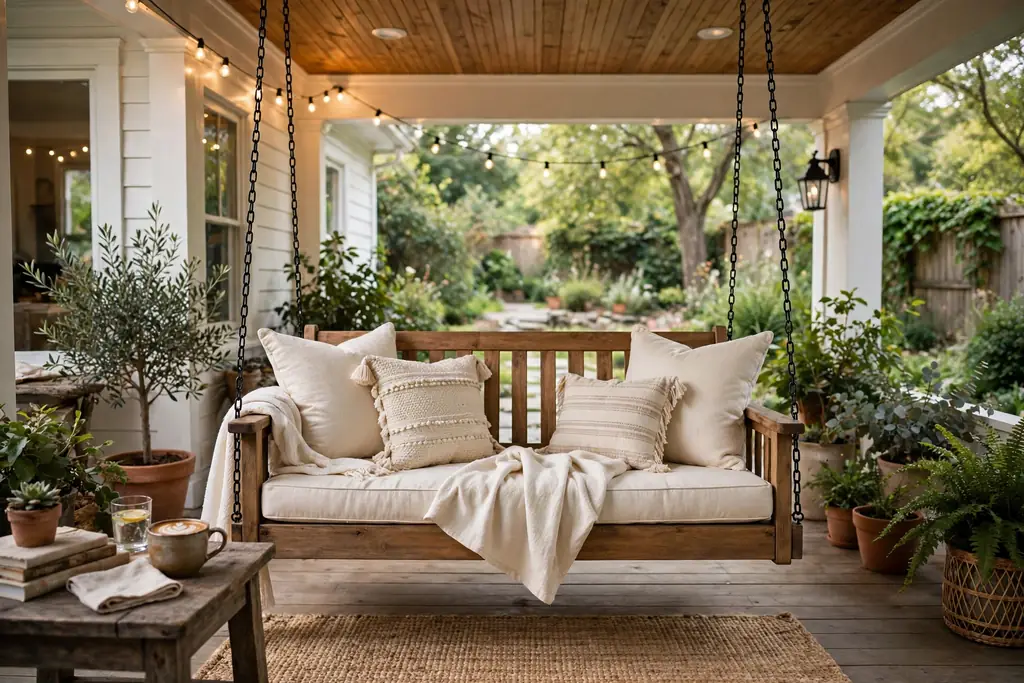
A wooden porch swing turns a back porch into a place to sit and stay. Hang the swing from sturdy ceiling joists, with chains rated for the weight, and add a seat cushion and two back cushions in cream or natural linen. The gentle motion suits a wide porch best, where the swing can move freely without hitting the wall or railing.
Check the chains and hooks each season for rust or wear, and tighten them as needed. If the swing faces rain, use quick dry foam cushions or bring the cushions indoors at night. Keep one end of the swing clear of planters, so guests can step on and off with ease, and place a small rug under the swing to catch dust from shoes.
3. Outdoor Daybed for Afternoon Rests
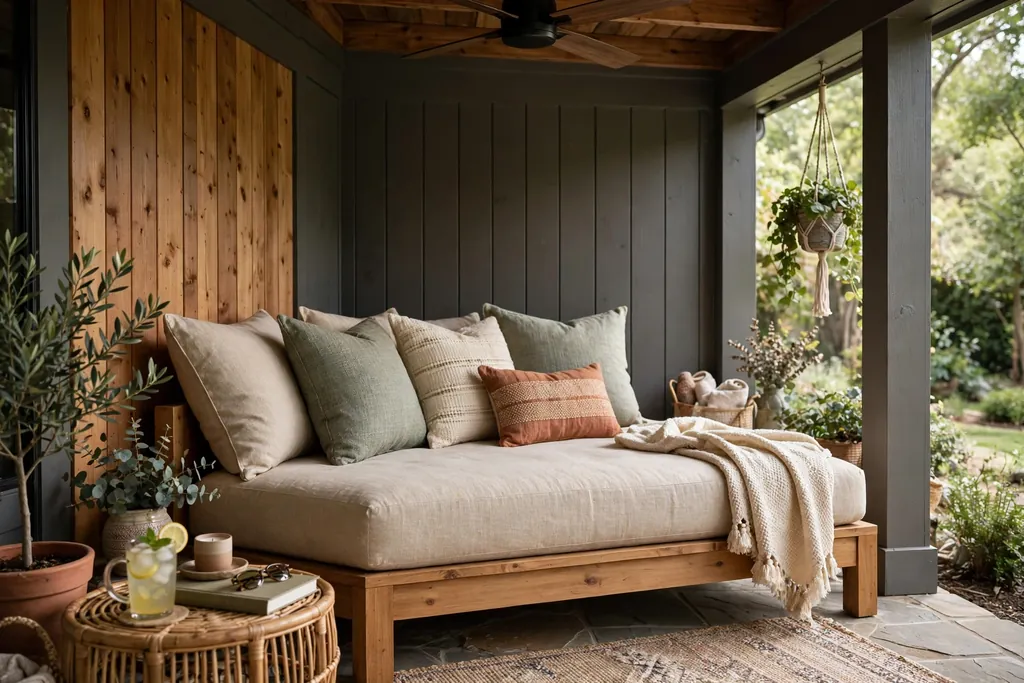
An outdoor daybed gives a back porch a clear spot for naps, reading, and long sits. Choose a daybed with a firm base cushion, a back cushion along one side, and a few smaller pillows for support. Place it against the house wall or in a shaded corner, with a side table close by for water, glasses, or a book.
Use outdoor rated fabric for the base and back cushions, and store extra pillows in a dry box when rain is forecast. If space is tight, a single daybed can replace two chairs, since it seats two people for a chat and one person stretched out for a rest. Keep a light blanket folded at the foot of the daybed for cool afternoons.
4. Layered Outdoor Rug Under the Seating Group
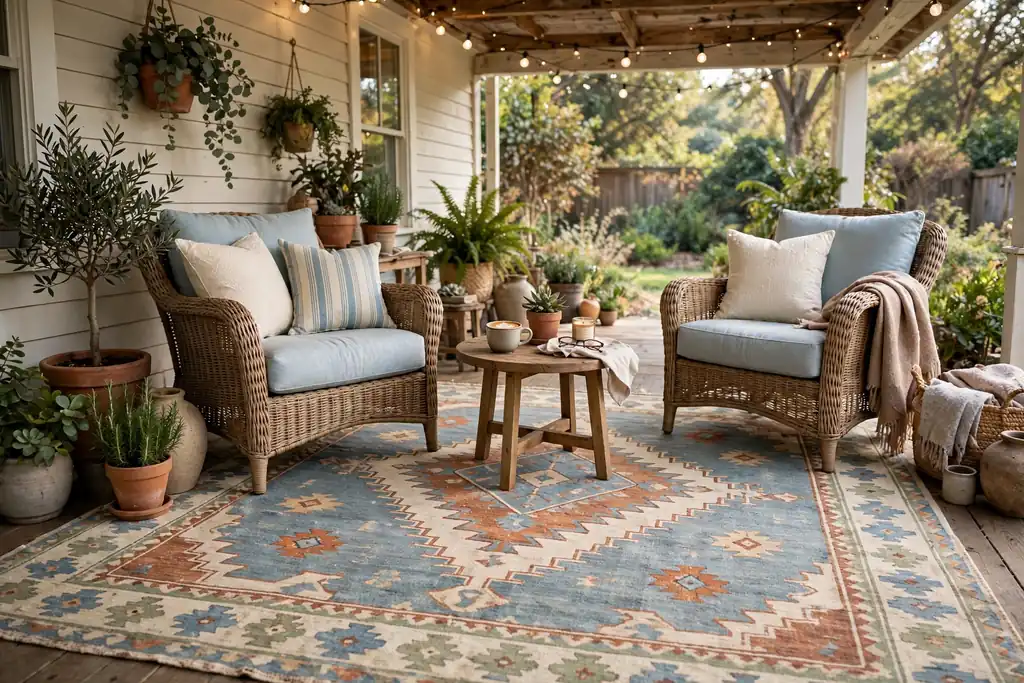
A large outdoor rug under the seating group defines the porch living area in one move. Lay a flat, washable rug in cream and sage, navy, or rust stripes, large enough to sit under the front legs of chairs and a table. The rug marks the seating zone clearly, even on a long porch with more than one use.
Pick a rug rated for outdoor use, so it dries quickly after rain, and shake it out weekly so leaves and dirt do not build up underneath. If the rug sits on painted wood, lift it now and then to check for damp marks. A patterned rug pairs well with plain cushions, since the rug carries the pattern while the chairs stay calm.
5. String Lights Across the Porch Ceiling
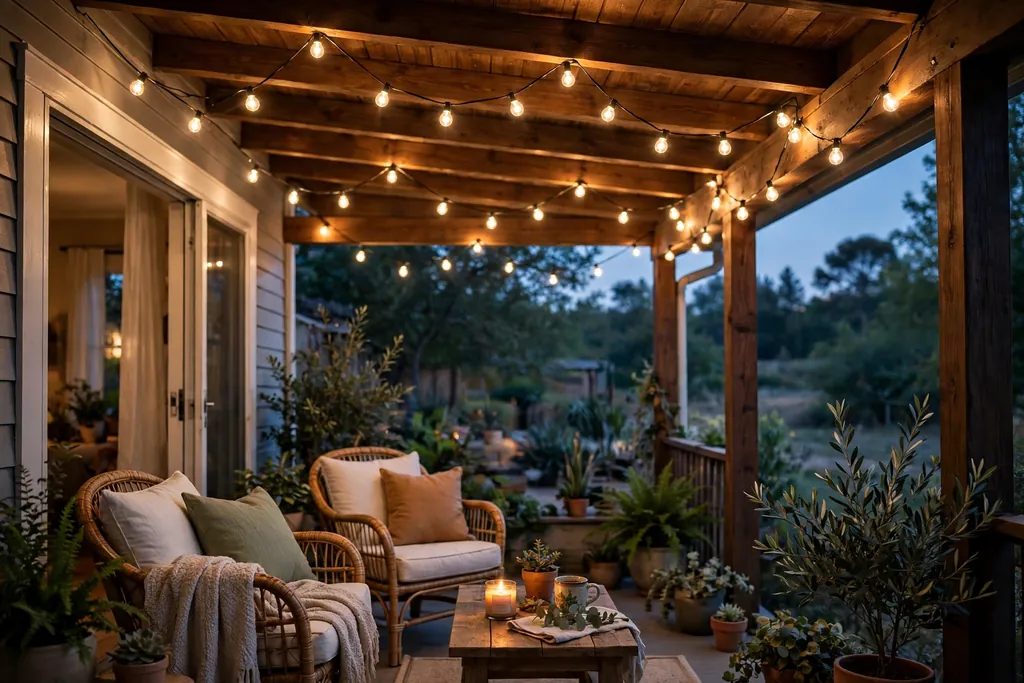
String lights across the porch ceiling give the porch a gentle glow that flatters every other piece on display. Drape warm white lights along the ceiling edge, around posts, or across a beam, with the cord tucked out of the walking path. The light makes the porch usable after sunset and highlights plants and seating.
Choose outdoor rated lights and a timer so they switch on at dusk without daily effort. Keep bulbs clear of dried leaves, curtains, and fabric, and check the cord each season for wear. Warm white suits a relaxing porch better than cool white, since it echoes candlelight and keeps the porch feeling calm.
6. Lantern Clusters on Tables and Steps
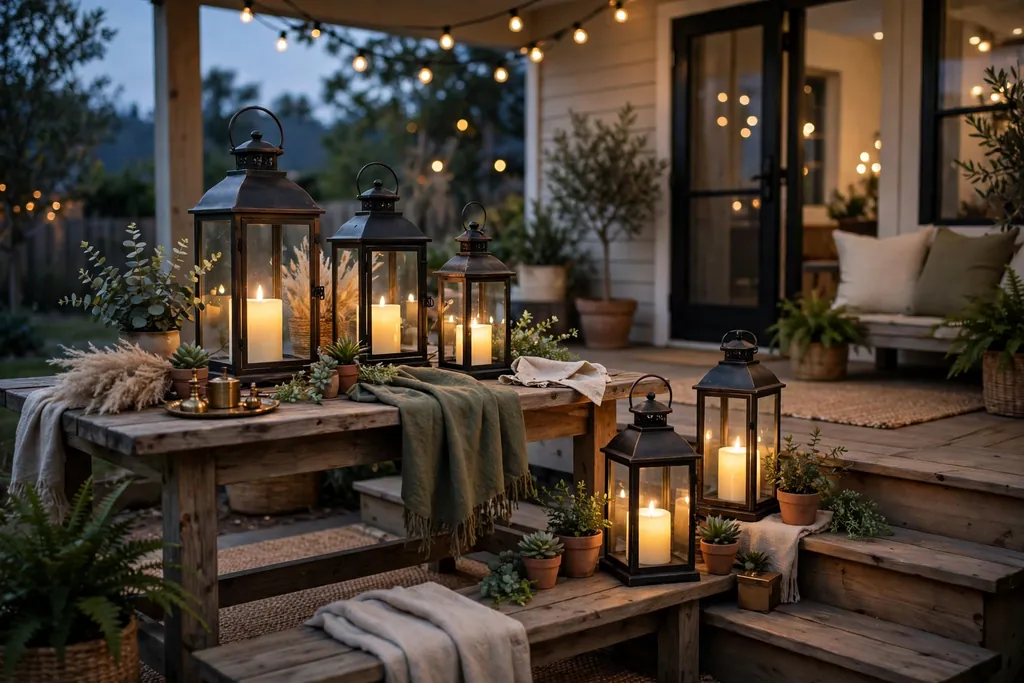
Lanterns with battery candles add warm light at table height and at the steps, where guests most often arrive. Group three lanterns of varied heights on a side table or at the base of the steps, with battery candles inside for safety. The glow softens the whole porch and makes the door and steps easier to find after dark.
Use battery candles on porches where wind or children make real flames risky, and keep real candles inside glass with a stable base if you use them. Bring lanterns indoors in storms, and wipe the glass clean so the light stays bright. Black metal lanterns suit most house styles, while wood or brass lanterns warm a rustic porch.
7. Outdoor Curtains for Shade and Privacy
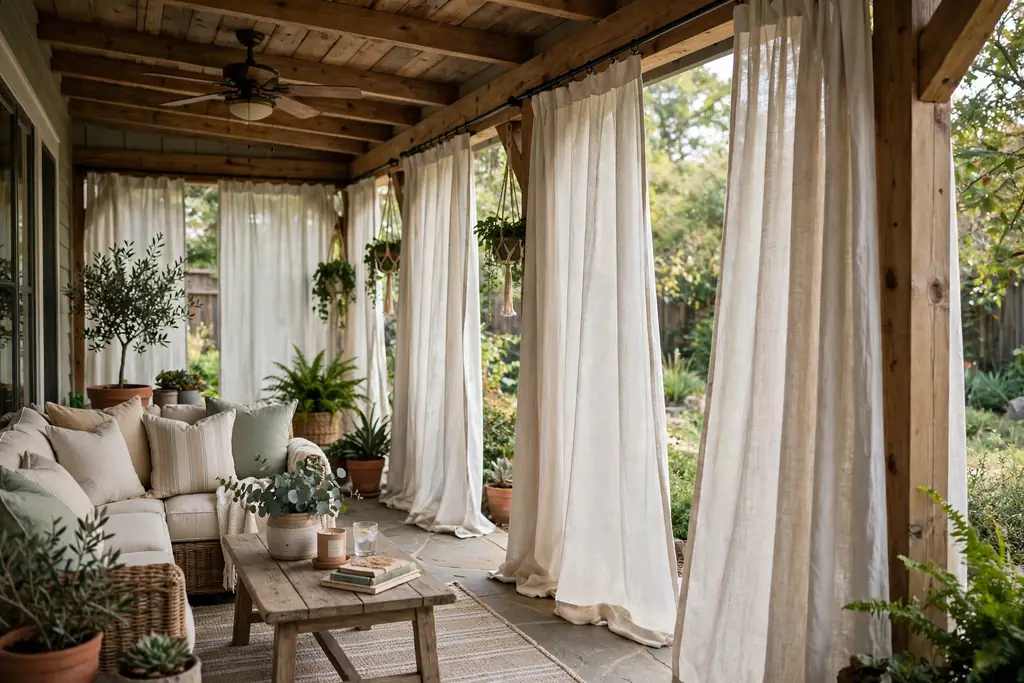
Outdoor curtains give a back porch shade, privacy, and a soft room feel in one step. Hang weatherproof curtain panels from a rod or wire along the open side of the porch, and draw them closed on the sunny side or the side facing neighbors. The fabric softens hard posts and railings and cuts glare on bright afternoons.
Choose curtains rated for outdoor use, in a light color that still lets some daylight through, and tie them back with simple ties when you want the view open. Wash the panels now and then, and bring them indoors in storms if they are not rated for heavy rain. Curtains also help a porch feel enclosed on cool evenings, when paired with lantern light.
8. Large Patio Umbrella Over a Dining Spot
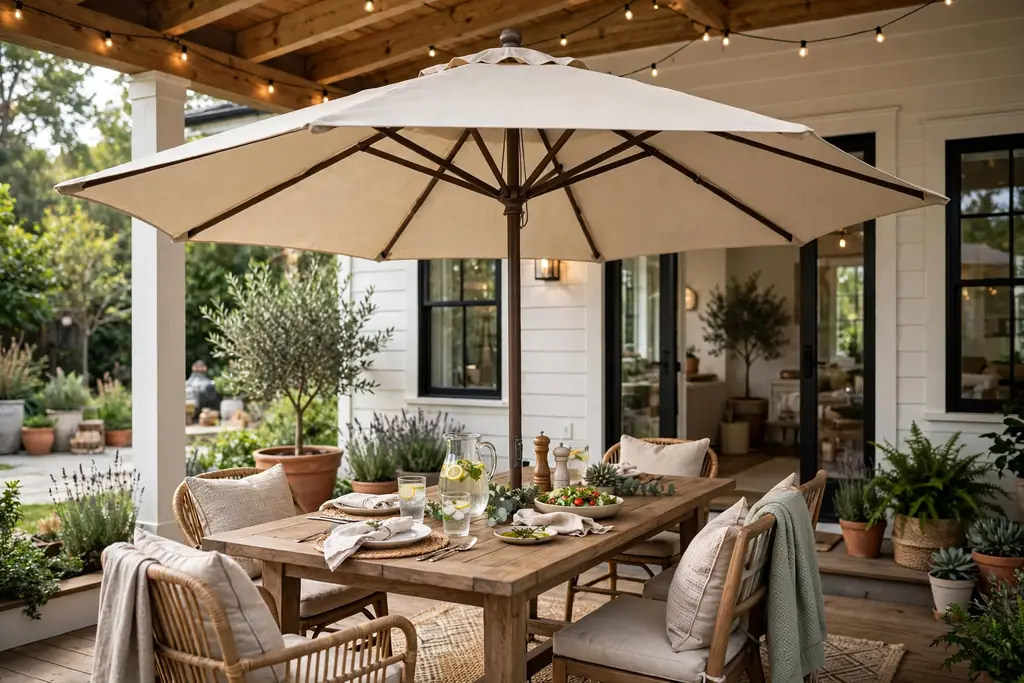
A large patio umbrella shades a back porch dining spot without a fixed roof change. Set a heavy base under the table, open the umbrella so it covers the table and chairs, and tilt it in late afternoon so the shade follows the sun. The umbrella suits a porch with an open edge or a deck beyond the roof line best.
Choose a base heavy enough that wind cannot tip the umbrella, and close it in storms or strong gusts. If the table sits near the house wall, a half umbrella or a wall mounted shade may fit better than a full round one. Keep the umbrella fabric clean and dry before storing it, so it stays free of marks through the season.
9. Potted Plants in Varied Heights
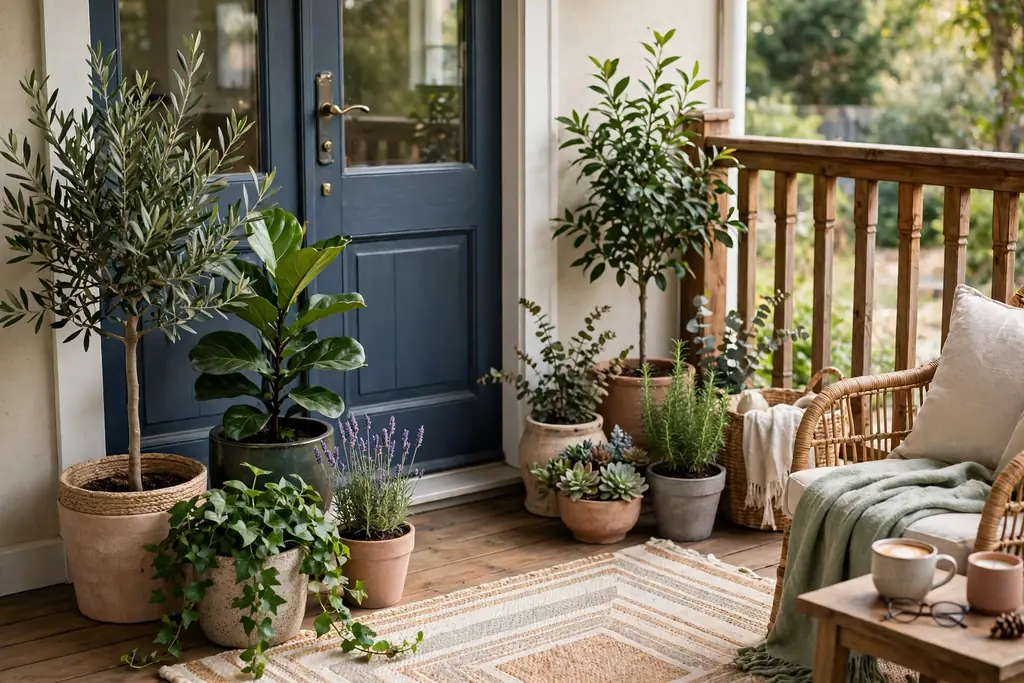
Potted plants in varied heights give a back porch living color with a clear plan. Group pots of different heights near the door, the railing, and the seating, with tall plants at the back, mid height plants in the middle, and trailing plants at the front. The mix keeps the porch from looking flat, even with a small plant count.
Water plants when the top of the soil feels dry, and set each pot on a saucer or flat stone to protect steps and decking. Match the plant to the light: shade loving plants for a covered porch, sun loving plants for an open edge. When a plant finishes, the same pots can hold evergreen cuttings or seasonal flowers, so the structure stays in place.
10. Hanging Planters from Porch Posts
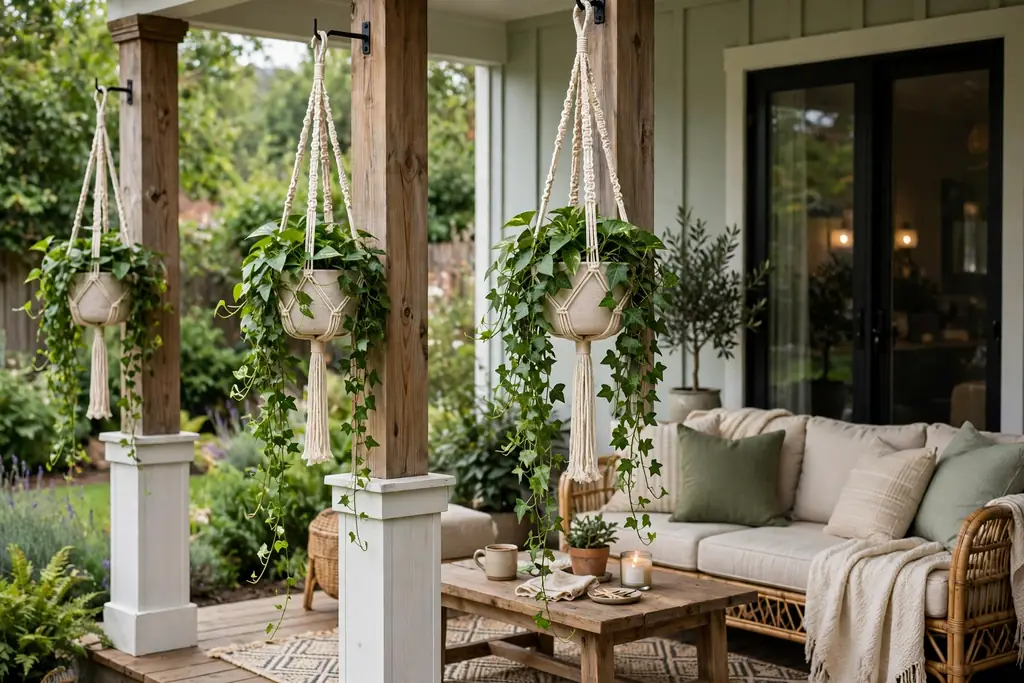
Hanging planters add green at eye level and above, where floor space is short. Hang one planter from each porch post or ceiling hook, with trailing ivy, ferns, or flowering plants that spill over the rim. The planters soften plain posts and draw the eye up to the porch roof.
Water hanging planters more often than floor pots, since they dry out faster in wind and sun. Check the hooks and chains for weight, and bring planters indoors in frost or storms. For a matched look, use the same plant in each planter, and vary only the planter color or hanger, so the display reads as planned.
11. Herb Pots by the Steps
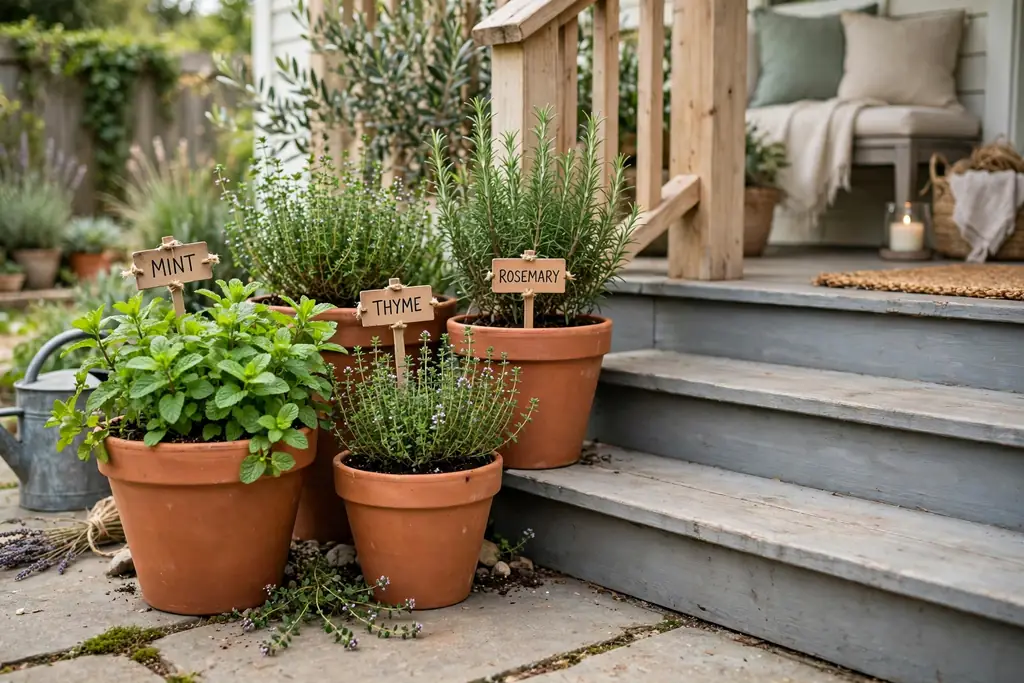
Herb pots by the steps add scent and useful green to the back porch entrance. Group three pots of different heights near the steps, with rosemary, thyme, and mint, and water them in the morning so the soil stays damp but not soaked. Guests brush past the scent on the way to the yard, and the herbs can go to the kitchen after.
Set each pot on a saucer to protect steps and decking, and trim herbs often, since regular picking keeps the plants bushy. Mint spreads fast, so keep it in its own pot rather than sharing a planter. In cold weather, move tender herbs close to the house wall for shelter, or cover them with cloth overnight.
12. Small Bistro Table for Morning Coffee
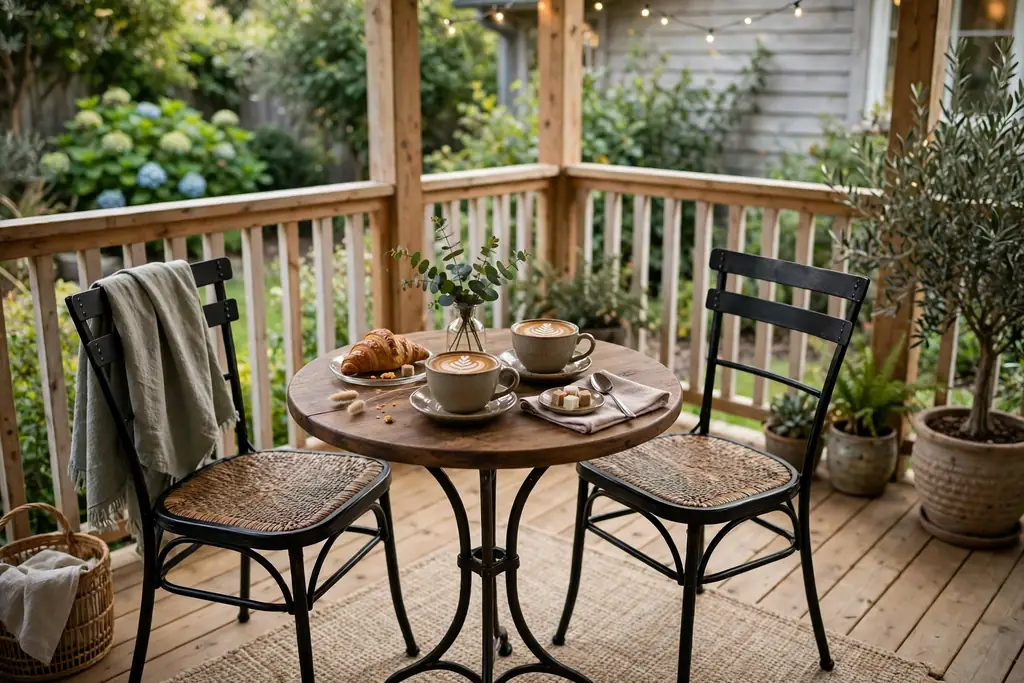
A small bistro table makes a casual back porch spot for morning coffee or a quiet drink. Set a round metal or wood table near the railing, with two chairs, and keep the top clear except for two cups and a small plant. The small scale suits a narrow porch, where a full dining table would block the path.
Weight a tablecloth or use placemats instead of a loose cloth, so a breeze does not lift it onto cups. Keep paper or fabric clear of candles, and bring cushions indoors after use if rain is forecast. For everyday use, two woven placemats and one small vase give the table a finished look without daily effort.
13. Outdoor Dining Table for Gatherings
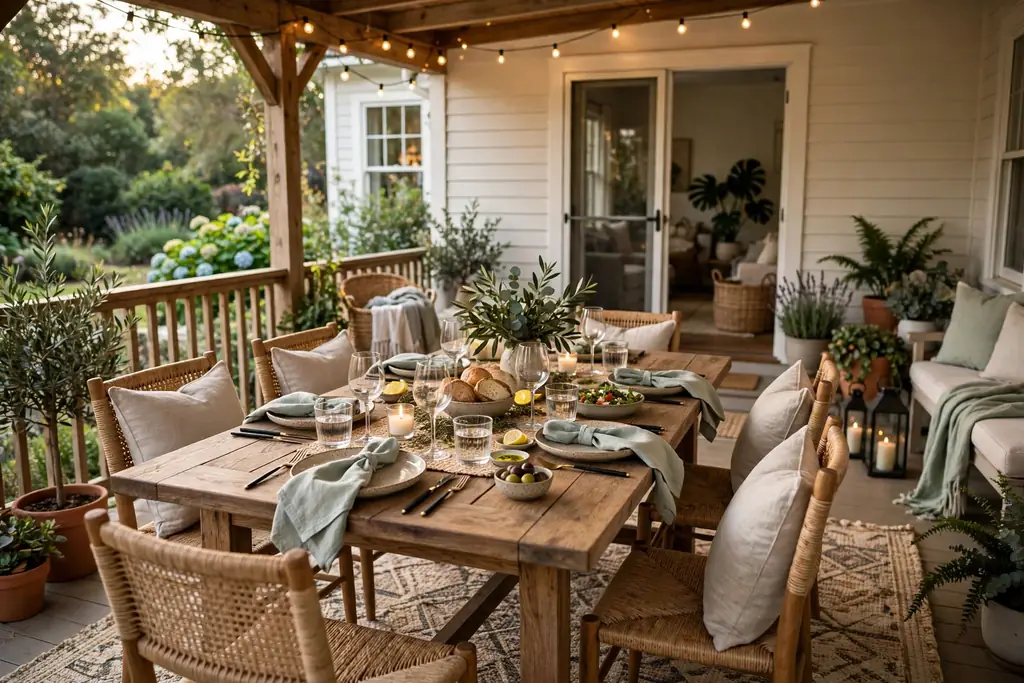
An outdoor dining table turns a back porch into a gathering spot for meals with family and friends. Choose a table that seats your usual group with room for serving dishes, and pair it with chairs that slide in fully so the path stays clear. Place the table near the kitchen door when you can, so carrying food stays short.
Pick a table material rated for outdoor use, such as treated wood, metal, or stone, and wipe it clean after meals so food marks do not set. If the porch is small, a folding table that stores flat gives you gathering space only when you need it. Add one centerpiece, such as a lantern or a low plant, and keep the rest of the table clear for plates.
14. Hammock Chair in a Quiet Corner
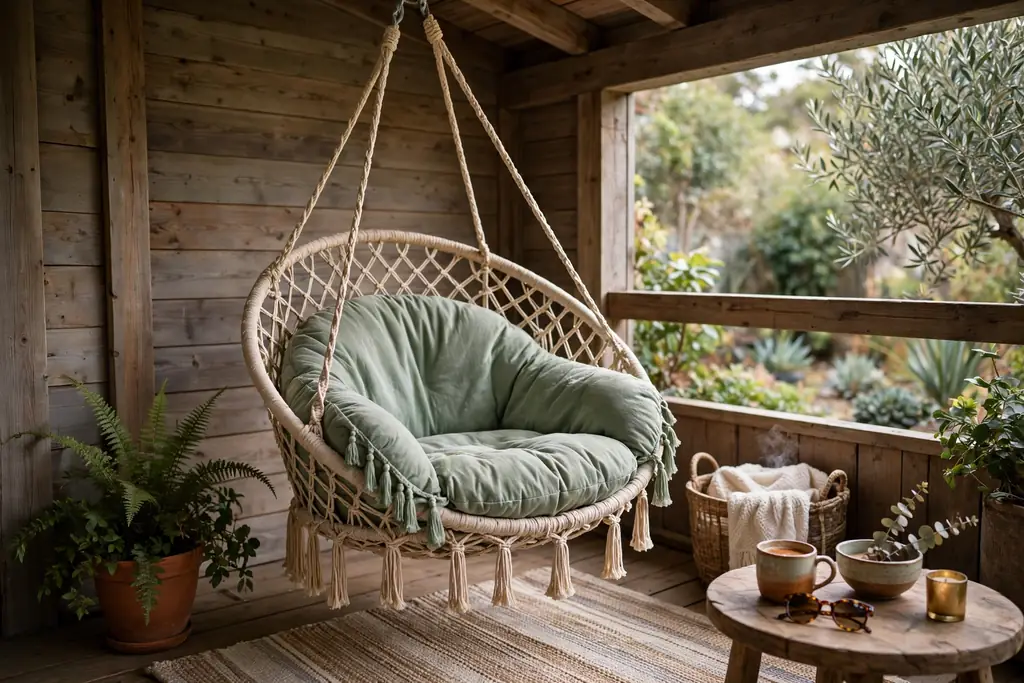
A hammock chair in a quiet corner gives a back porch a single seat made for slow sitting. Hang the chair from a sturdy ceiling joist or a freestanding frame, with room to swing gently without hitting the wall or railing. Add one cushion and a small footrest or side table, so the chair works for reading as well as resting.
Check the hanging hardware each season for wear, and keep the chair weight limit in mind when choosing a frame. If the chair faces rain, bring the cushion indoors at night, and let the fabric dry fully before storing it. A hammock chair suits a corner that gets morning light, where one person can sit apart from the main seating group.
15. Woven Basket with Throws and Blankets
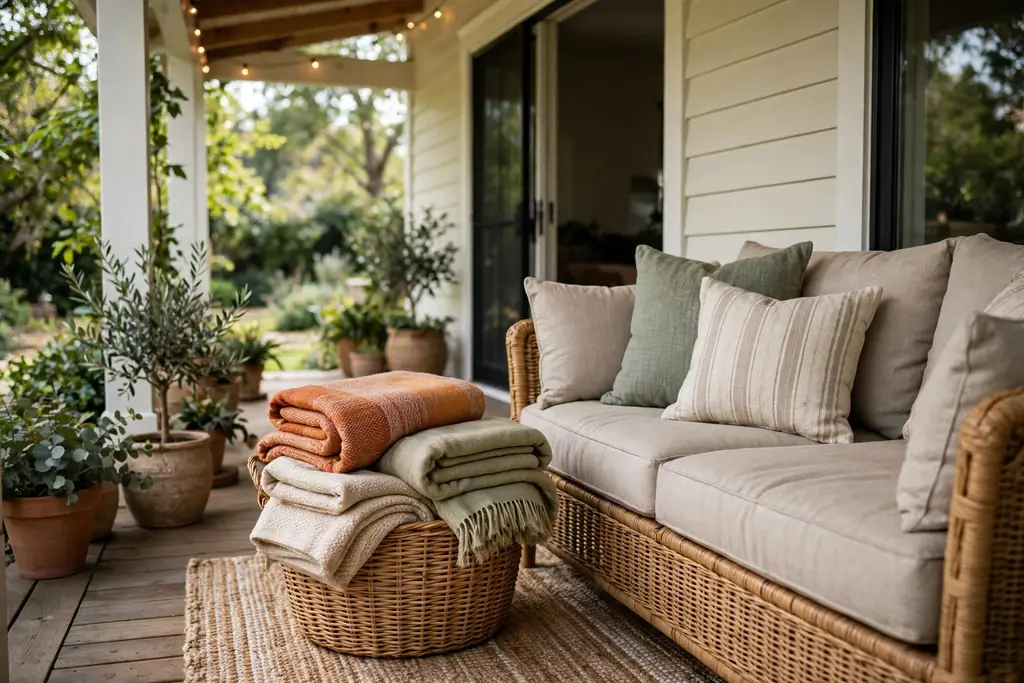
A woven basket with throws and blankets keeps cozy layers within reach on a back porch. Set a sturdy basket beside the seating group, roll or fold two or three throws inside, and drape one throw over the basket edge so guests see it and use it. The basket adds texture and keeps throws off the chairs.
Keep the basket light enough to move in one hand, so you can lift it indoors on wet nights. Choose washable throws, and shake them out weekly so dust and leaves do not build up. A basket with handles also moves easily indoors, so the same throws can follow you into the living room when the evening turns cool.
16. Tabletop Fire Bowl for Cool Evenings
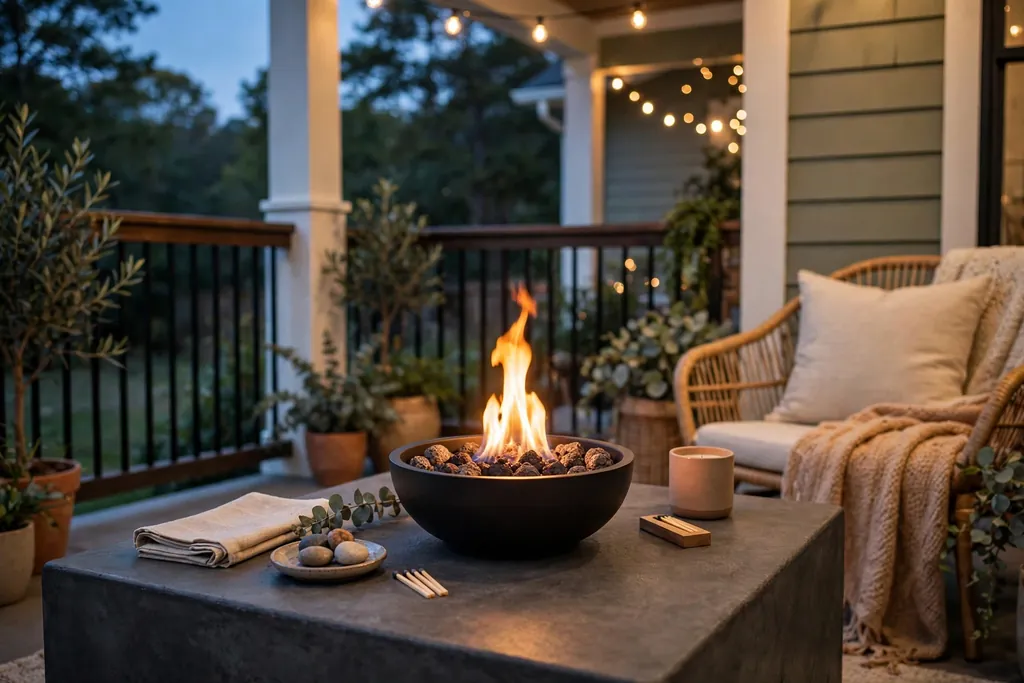
A tabletop fire bowl adds warmth and a focal point to a back porch on cool evenings. Set a small, stable fire bowl on a heat safe table, away from curtains, cushions, and overhanging plants, and follow the maker instructions for fuel and use. The flame gives the seating group a center to gather around after sunset.
Keep the fire bowl clear of fabric and dried plants, and never leave it burning when you go indoors or go to bed. Choose a bowl size that suits the table, so it does not crowd drinks or plates, and let it cool fully before moving it. On a small porch, a single fire bowl can replace several lanterns as the evening light source.
17. Outdoor Ceiling Fan for Airflow
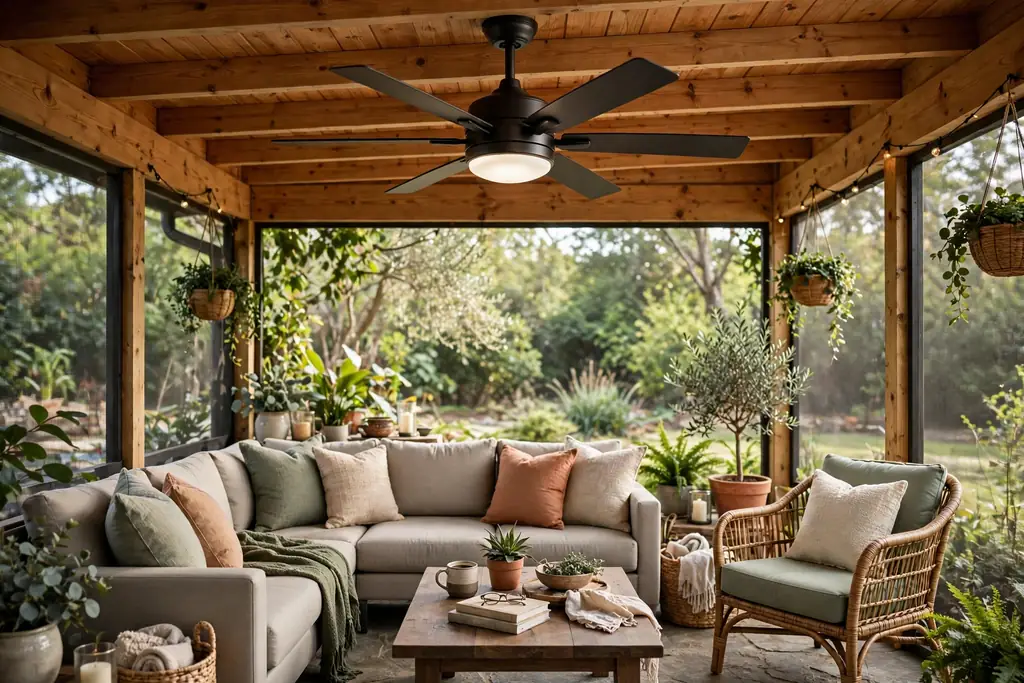
An outdoor ceiling fan keeps a back porch comfortable on warm, still days. Mount a fan rated for damp or wet locations on the porch ceiling, centered over the seating group, and run it at a low speed for a gentle breeze. The moving air makes the porch usable in heat that would otherwise push everyone indoors.
Choose a fan size that suits the porch: a small fan for a narrow porch, a larger fan or two fans for a wide porch. Clean the blades now and then, since porch dust settles on them, and check the mount each season for wear. A fan also helps keep flying insects from settling over the seating area on calm evenings.
18. Rolling Drink Cart for Easy Serving
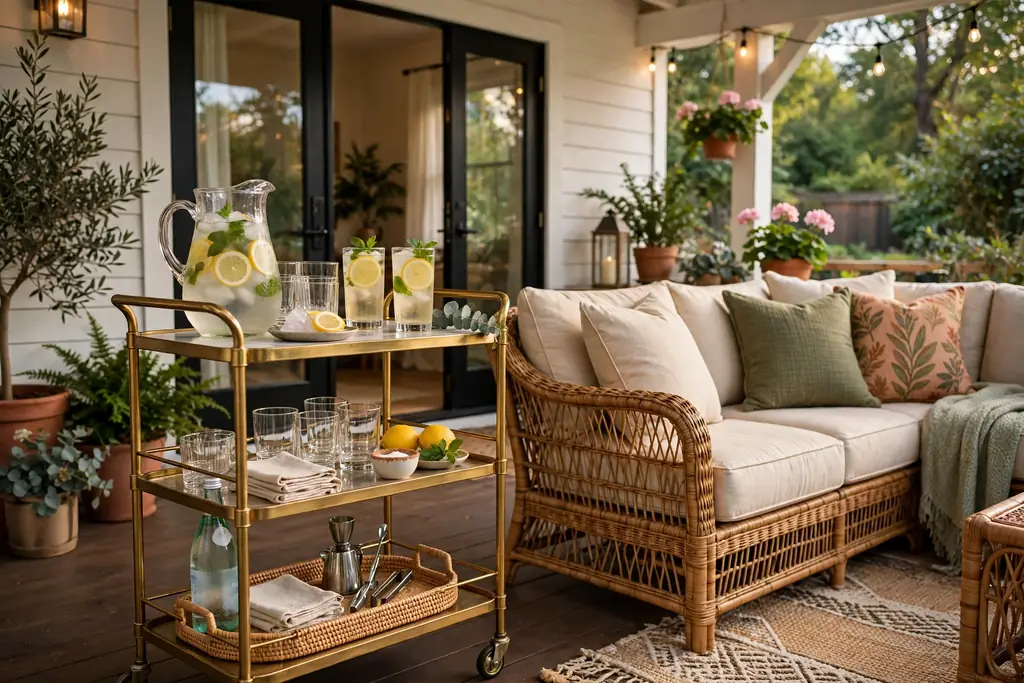
A rolling drink cart makes serving on a back porch simple, since drinks, glasses, and snacks move in one trip. Set a cart with two shelves beside the seating group, stock the top shelf with glasses and a pitcher, and keep the lower shelf for extra supplies. The wheels let you roll the cart indoors when rain arrives.
Keep the cart off the main walking path, and lock the wheels when it is in place so it does not roll on a sloped floor. Wipe the shelves clean after use, and avoid overloading the top shelf, since a heavy cart tips more easily. A cart also works as a plant stand or a book holder when it is not serving drinks.
19. Small Fountain for Gentle Sound
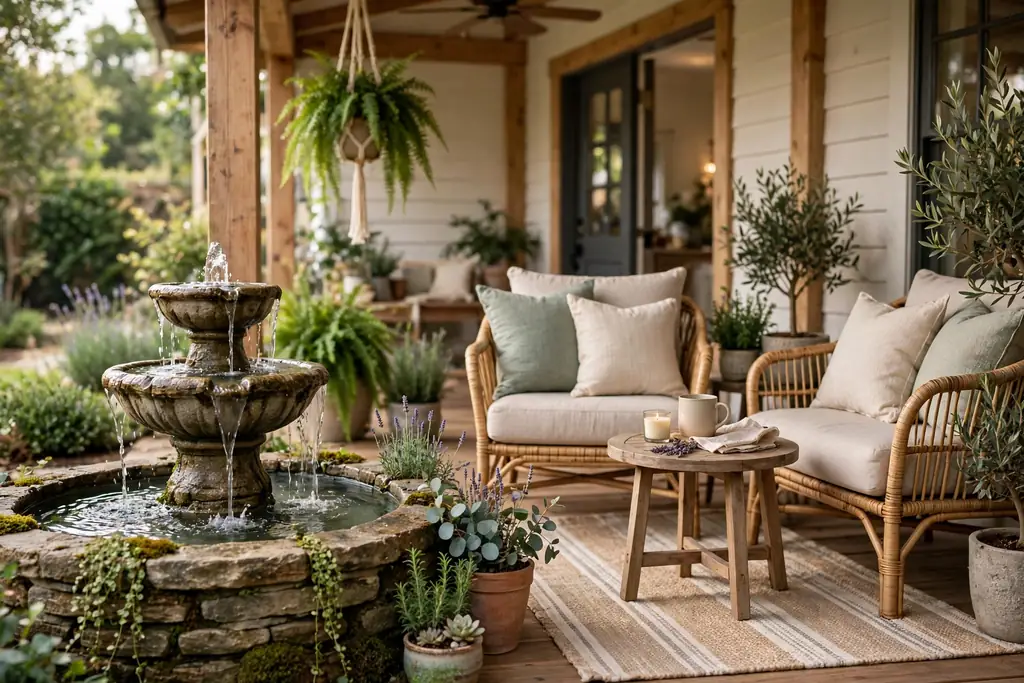
A small fountain adds gentle water sound to a back porch, which helps mask street noise and makes the space feel calm. Choose a tabletop or floor fountain that suits the porch size, set it on a level, waterproof base near the seating, and keep the water level topped up so the pump runs quietly. The sound suits a porch used for reading and resting best.
Place the fountain where splashes cannot reach cushions, rugs, or wood floors, and clean the pump and basin now and then so the water stays clear. In cold weather, drain the fountain and bring it indoors if frost is forecast, since frozen water can crack the basin. A solar fountain suits a sunny porch edge with no nearby outlet.
20. Trellis Screen with Climbing Plants
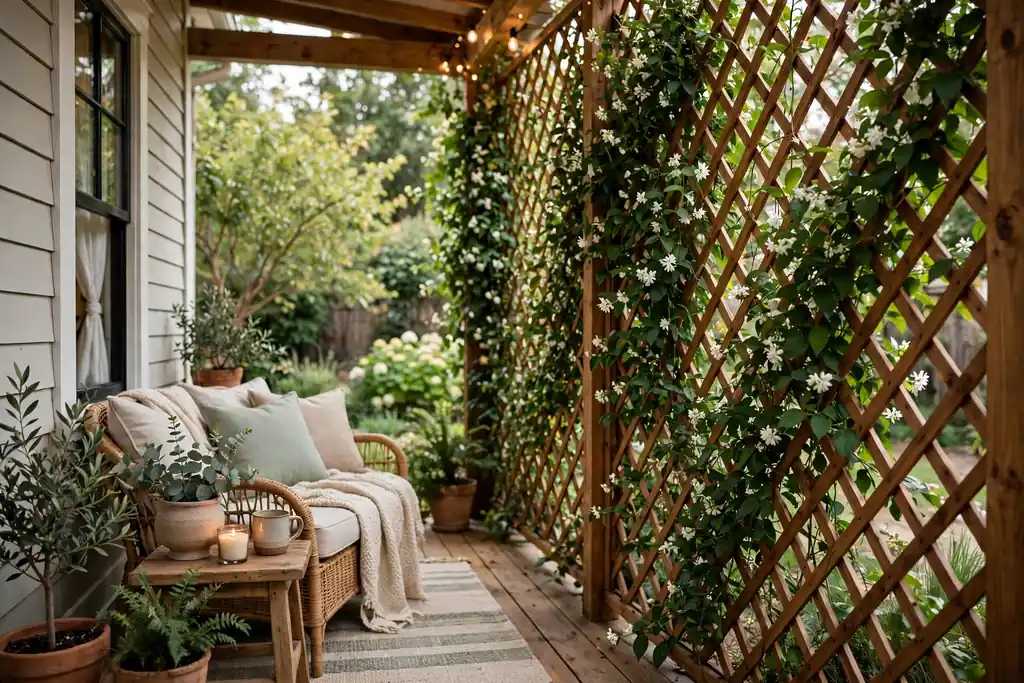
A trellis screen with climbing plants gives a back porch privacy and green in one structure. Set a freestanding or wall mounted trellis on the side facing neighbors or the street, and train climbing plants such as jasmine, ivy, or clematis up the frame. The screen softens a plain railing and frames the seating area.
Fix the trellis firmly so wind cannot topple it, and trim the plants often so they do not block the path, the light, or the house numbers. Choose plants suited to your light and climate, and water them at the base so the roots stay damp. A trellis also works as a backdrop for string lights in the evening.
21. Reading Nook with a Storage Bench
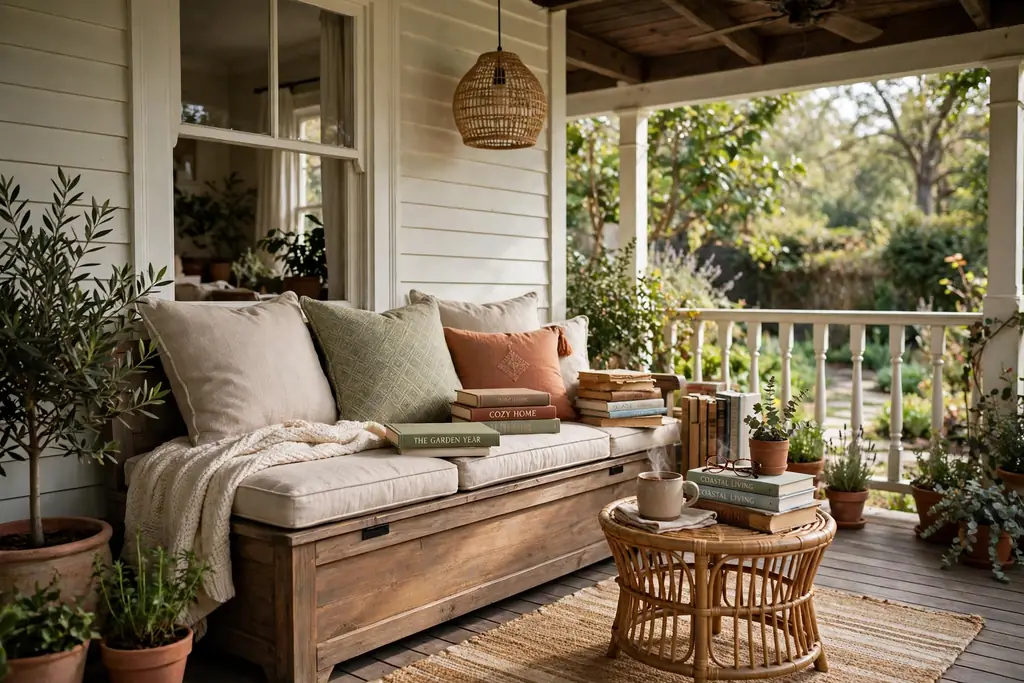
A reading nook with a storage bench turns one end of a back porch into a quiet retreat. Set a bench with storage underneath at the far end of the porch, add a seat cushion and two back pillows, and keep books, a blanket, and a small lamp or lantern in the bench. The storage keeps the nook tidy, while the pillows make it a seat guests return to.
Keep the bench close to good light, near a window or under a porch light, and choose a bench lid that lifts with ease. Empty the storage now and then, so it does not fill with items that belong indoors. A reading nook suits a porch with a calm corner away from the dining table, where one person can sit apart from the group.
Conclusion
A relaxing back porch does not need new furniture or a full redesign. Pick comfortable seating, one shade idea, soft light, and plants at varied heights, then repeat a small palette through cushions and pots and keep the path to the yard clear. Start with one idea from this list this week, and add shade or light next, so the porch grows into a place you use every day.
FAQs
What is the best seating for a relaxing back porch?
A relaxing back porch needs seating you want to sit in for an hour, such as deep lounge chairs, a porch swing, or a daybed with thick outdoor cushions. Pair the seating with a small side table and a rug, keep the path to the yard clear, and add a throw for cool evenings so the seat stays inviting in every season.
How do I decorate a small back porch?
Decorate a small back porch with one chair or a bistro set, one planter group, a rug, and string lights, keeping the path to the door and steps clear. Choose vertical pieces, such as hanging planters or a trellis screen, for height without floor space, and skip large dining groups that block movement.
What colors work best for a relaxing back porch?
Cream, warm white, sage green, soft grey, and natural wood tones work best for a relaxing back porch, with one accent color, such as navy, rust, or muted blue, in cushions or pots. Repeat each color at least twice, across textiles, pots, and the rug, so the porch reads as one plan rather than a set of separate pieces.
How do I add shade to a back porch without a roof change?
Add shade to a back porch with outdoor curtains, a large patio umbrella, or a trellis screen with climbing plants, none of which need a roof change. Curtains suit a covered porch edge, an umbrella suits a dining spot beyond the roof line, and a trellis suits a side that needs privacy as well as shade.
How do I keep back porch cushions and throws in good shape outdoors?
Keep back porch cushions and throws in good shape by choosing outdoor rated fabrics with removable, washable covers, and bringing them indoors in rain and overnight in wet weather. Shake cushions out weekly, store them in a dry box when not in use, and pick quick dry foam fills for chairs outside the roof line.
What plants suit a back porch?
Ferns, trailing ivy, potted herbs, climbing jasmine, and sun loving flowers suit a back porch, since they suit plain pots and need only regular water and trimming. Match the plant to the light: ferns and ivy for shade, herbs and flowers for sun, and evergreen plants for color through winter.