
Choose beach house furniture by starting with light, durable materials that handle humidity and salt air, such as teak, rattan, and washable linen. Pick comfortable seating sized to your rooms, keep the palette pale and natural, and add storage for beach gear. Test every piece for comfort before you buy.
A beach house asks more of furniture than a typical home does. Sand comes in on shoes, damp air settles into fabric, and bright light shows every mark on a dark finish. The pieces that work best are the ones you can clean easily, move without a struggle, and sit on for a long evening without thinking about them. For more coastal styling ideas, see these coastal fall decor ideas and these fall living room decor ideas.
Key Takeaways
- Start with materials that handle humidity, salt air, and sand, and check care needs before you fall for a look.
- Measure every room, doorway, and stair turn before you order, since coastal homes often have tight halls and small bedrooms.
- Choose seating for comfort first: seat depth, back height, and cushion firmness matter more than a pretty silhouette.
- Use washable slipcovers and removable cushion covers wherever you can, so sand and spills do not become permanent.
- Keep the palette pale and natural, and repeat one or two wood tones through the house for a calm, linked feel.
- Plan storage for beach towels, shoes, and outdoor gear near the door, so clutter does not spread into living rooms.
- Sit in every seat, open every drawer, and test the layout in the room before you commit.
Materials and Supplies
- A tape measure, a notebook, and painter’s tape for marking furniture footprints on the floor
- A list of room dimensions, doorway widths, and stair turns for each room you plan to furnish
- Fabric swatches in the colors you plan to use, to test against your light and wood tones
- A short list of pieces you already own and plan to keep, with their measurements
- Cleaning supplies suited to your chosen materials, such as a soft cloth, mild soap, and a vacuum with an upholstery head
- Felt pads for chair and table legs, to protect wood and tile floors from sand grit
- Storage baskets or lidded boxes for beach towels, shoes, and outdoor gear
- A budget list by room, so one statement piece does not use up the whole furnishing plan
1. Define Your Coastal Style and Palette
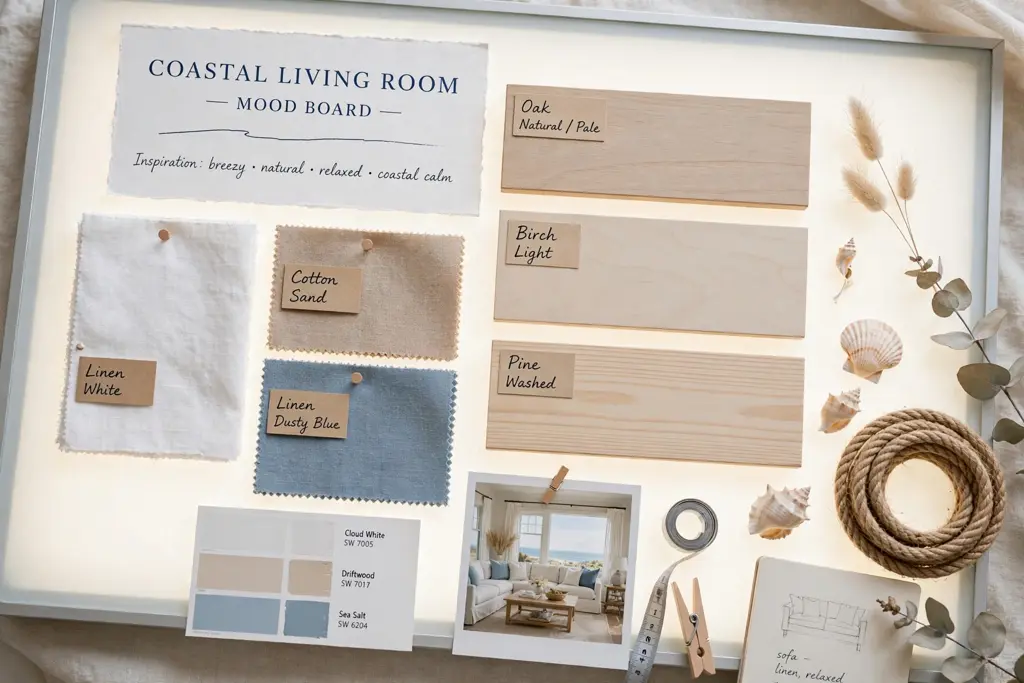
Start by naming the coastal look you want, since “beach house” covers a wide range. A classic coastal room uses white walls, pale wood, linen, and blue accents. A relaxed surf style leans on rattan, jute, and weathered finishes. A modern coastal room keeps clean lines, light oak, and a quiet palette with one soft blue or green accent.
Pick a palette of three or four colors and use it through the house. White, sand, pale gray, and driftwood tones make a calm base, and one accent color, such as sea glass green or dusty blue, gives rooms a link to each other. Write the palette down and carry the swatches when you shop, so a piece that looks right alone does not clash once it is home.
Look at your light before you lock in colors. A room with strong south light can take slightly deeper tones, while a north facing room needs paler finishes to stay bright. If the house is a rental or a shared family home, favor neutral main pieces and add color through cushions and throws, which are easy to change.
2. Measure Rooms, Doorways, and Traffic Paths
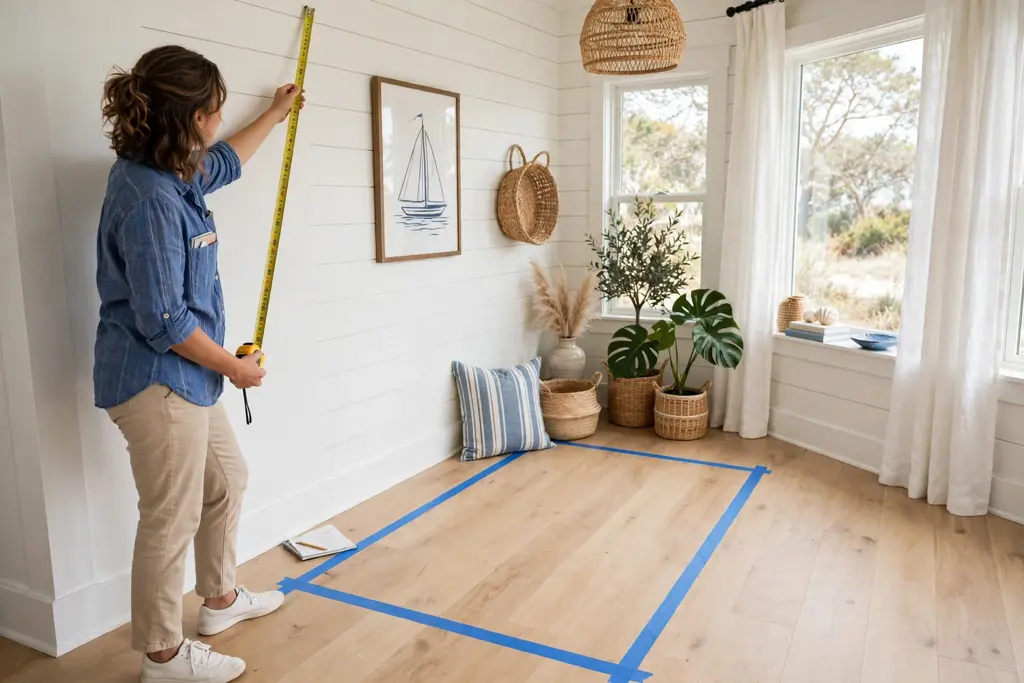
Measure each room wall to wall, and note window heights, radiator positions, and any built in features that limit placement. Measure doorways, hall widths, and stair turns too, since a sofa that fits the living room is no good if it cannot reach it. Sketch a simple floor plan for each room, even a rough one on paper, and mark the doors and walkways.
Use painter’s tape to mark the footprint of each large piece on the floor. A taped outline shows at once whether a sofa blocks a path to the kitchen or a dining table leaves too little room to pull out chairs. Leave at least 30 inches for main walkways and about 24 inches to pull out a dining chair comfortably.
Measure ceiling height as well, especially for tall bookcases, canopy beds, and pendant lights. In rooms with low ceilings, low profile seating and horizontal storage keep the room feeling open. Keep your measurements in one notebook or phone note, so you can check them in a shop without guessing.
3. Set a Budget and a Room by Room Priority List
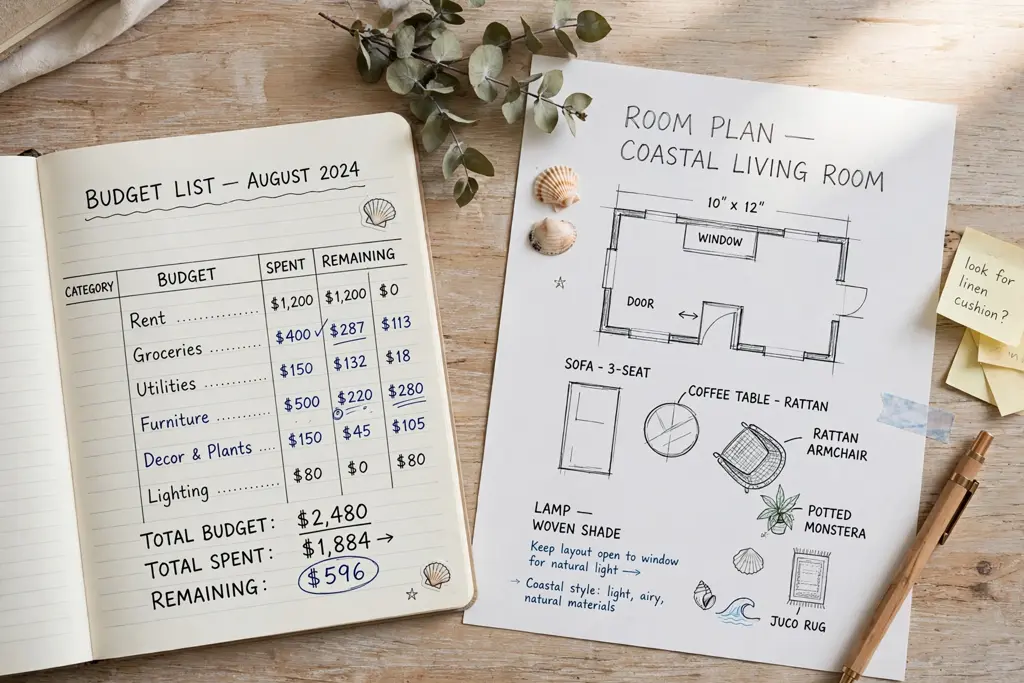
Work out a total budget first, then split it by room based on how much each room will be used. Living rooms and main bedrooms usually deserve the largest share, since seating and beds get daily use. Guest rooms and hallways can often wait or use simpler pieces.
List the pieces each room needs in order of importance. A bed, a sofa, and a dining table usually come first, while accent chairs, side tables, and extra storage can follow. This order stops you from spending the budget on small decorative pieces before the basics are covered.
Allow a small reserve for delivery, assembly, and care supplies, such as felt pads and fabric protector. If you are furnishing in stages, buy the main pieces first and live with them for a few weeks before choosing accents. You will see the light, the traffic flow, and the storage gaps much more clearly once the big pieces are in place.
4. Choose Frames and Materials Built for Humidity and Salt Air
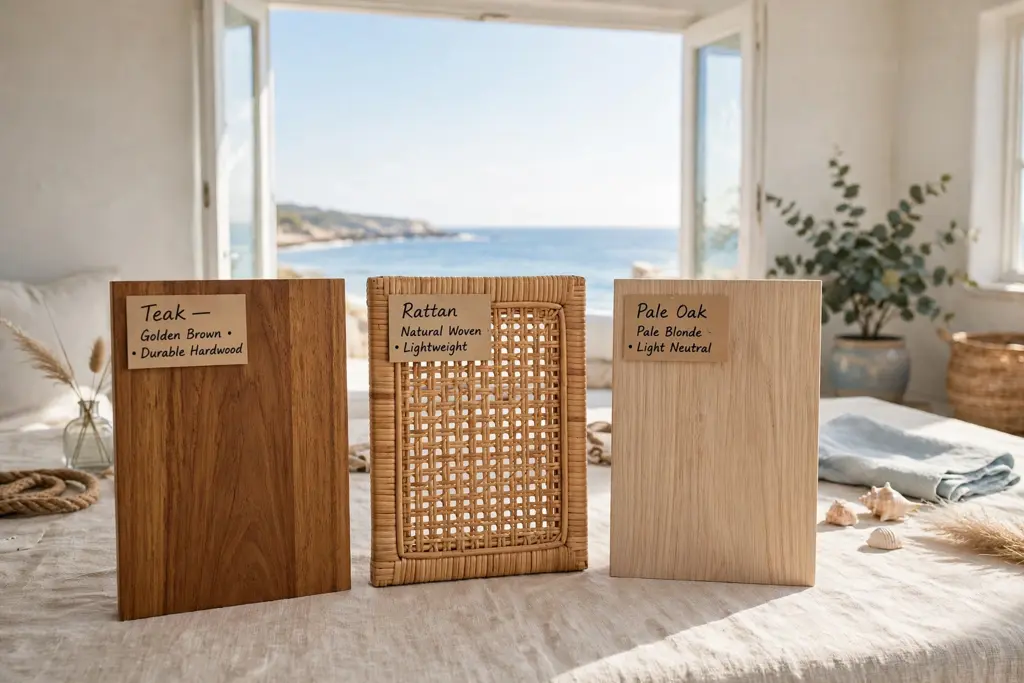
Coastal air is damp and salty, so material choice matters more here than in a dry inland home. Teak, cedar, and properly sealed oak handle moisture better than raw softwood. Rattan and wicker suit covered porches and bright living rooms, but need protection from constant direct rain. Powder coated metal frames resist rust better than bare steel, so check the finish on any metal piece.
Avoid materials that swell, peel, or rust quickly in damp air. Unsealed particleboard, thin veneers over damp prone cores, and uncoated iron frames tend to show damage early near the coast. Ask how a piece is sealed and whether the maker rates it for humid or covered outdoor use, and read the care directions before you buy.
Check joints and construction as well as the surface. Solid joints, screwed and glued frames, and removable cushions usually last longer than stapled frames with fixed covers. A well built frame in a plain fabric is a better buy than a striking piece with a weak frame, since re-covering a good frame is possible and rebuilding a weak one is not.
5. Pick Seating Depth, Height, and Comfort First

Sit in a sofa or chair before you buy it, and sit the way you actually sit at home, not perched on the edge. Check seat depth: a deep seat suits lounging with feet up, while a shallower seat suits upright sitting and smaller rooms. Check seat height too, since a seat that is too low is hard to get out of, and one that is too high leaves feet dangling.
Test the back height and arm height as well. A low back keeps a room open and suits a view, while a higher back gives more support for reading and long evenings. Arms should support your elbows without pushing your shoulders up. If more than one person will use the seat, have each person test it, since comfort varies with height.
Check cushion firmness and filling. Foam wrapped in fiber gives a tidy look and firm support, while feather wrapped cushions feel softer but need regular plumping. Removable cushion covers make cleaning far easier, so favor them in a beach house. Ask whether replacement cushions or covers are available, since that extends the life of a good frame.
6. Choose Slipcovers and Washable Fabrics

Slipcovers are one of the most useful choices in a beach house. A washable linen or cotton slipcover lets you remove sand, sunscreen, and spills in a normal wash cycle, and a second set of covers lets you rotate while one set is in the wash. Choose a fit that suits you: a relaxed, slightly loose slipcover hides wrinkles, while a tailored fit looks neater but shows creases more.
When you compare fabrics, check the cleaning code and wash directions, not just the color. Performance fabrics and treated cotton blends resist stains better than untreated velvet or silk, which are harder to clean after beach use. Order swatches and test them at home: rub in a little sand, spill a drop of water, and see how the fabric cleans and dries.
Keep dark colors off main seating if the house gets strong sun, since dark fabric shows sand and fades faster in bright light. Pale, mid tone fabrics hide sand better and keep rooms bright. If you love a bold color, use it on cushions and throws that can be swapped, rather than on the whole sofa.
7. Select Tables in Pale Wood, Rattan, or Weathered Finishes
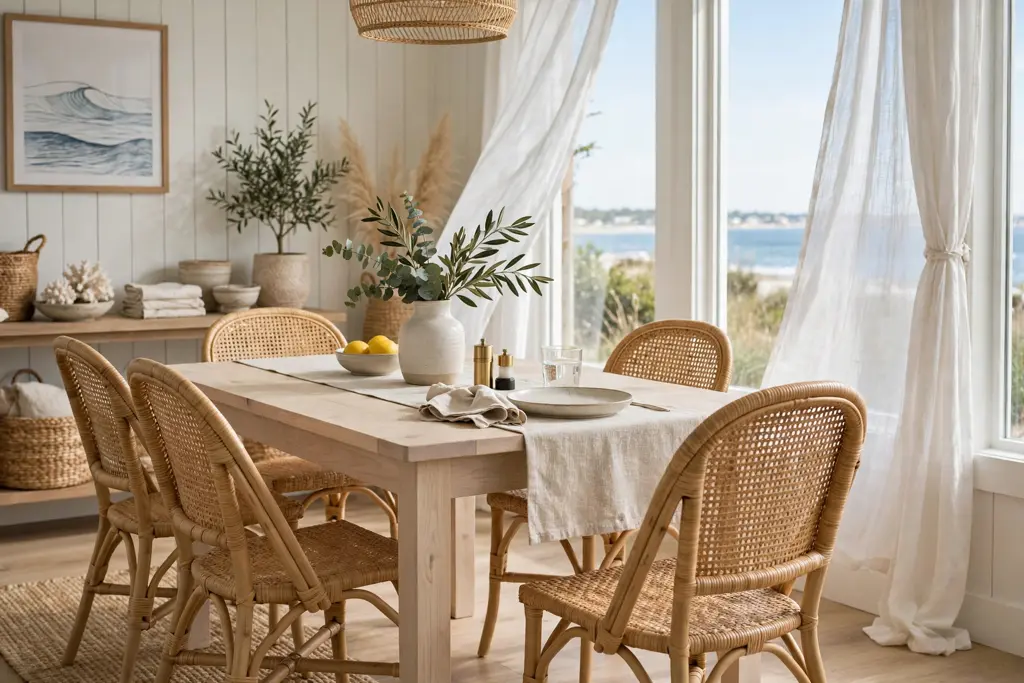
Choose tables that suit how you eat, work, and gather. A round dining table fits small coastal dining rooms well, since it has no sharp corners and seats people evenly. A rectangular table suits larger rooms and longer gatherings. Check that the table height matches your chairs, with about 12 inches between the seat and the underside of the table.
Pale wood, whitewashed finishes, and rattan keep a coastal room light, and they show fewer marks than high gloss dark finishes. A sealed top matters in a beach house, since wet glasses, sunscreen, and sandy hands reach tables quickly. Ask whether the top is sealed and how to re-seal it, and use coasters and placemats for daily meals.
For coffee and side tables, favor pieces you can move easily. A light side table can shift beside a reading chair or a sun lounger, and a nesting pair gives extra surface only when guests arrive. Check that table legs sit stable on your floors, and add felt pads so sand grit does not scratch wood or tile when tables move.
8. Add Storage That Hides Beach Gear and Clutter
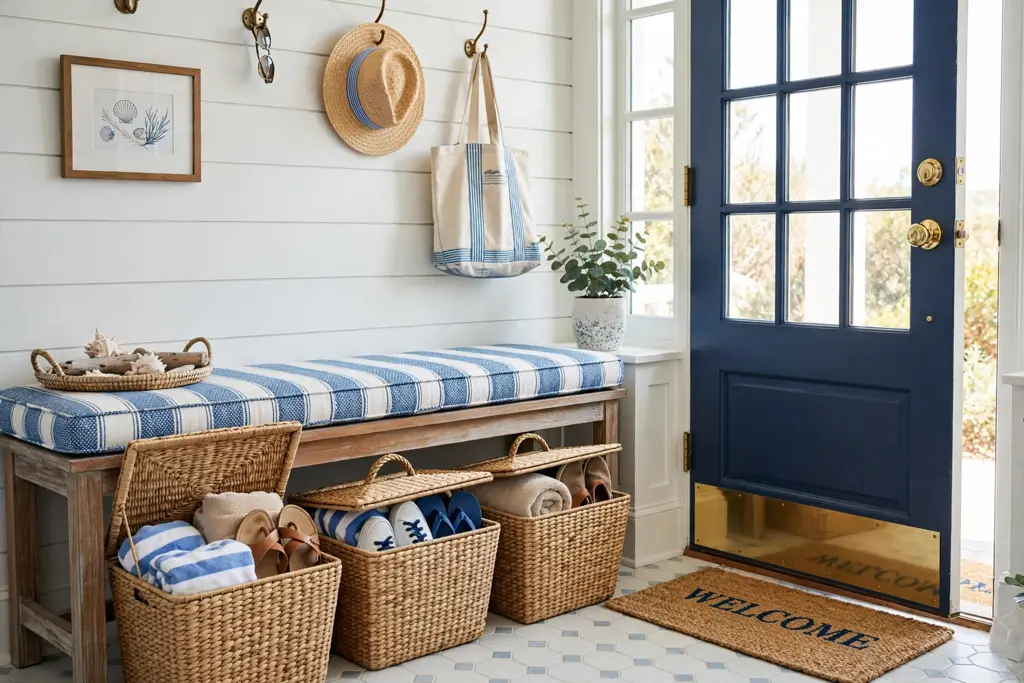
Beach houses collect gear: towels, shoes, buckets, bags, and outdoor toys. Without planned storage, that gear spreads across living rooms and hallways. Place a storage bench or a set of lidded baskets near the door guests use from the beach, so towels and shoes have a home before anyone reaches the sofa.
In living rooms, choose storage that looks like furniture: a coffee table with a shelf below, a console with doors, or an ottoman that opens. Closed storage hides clutter better than open shelves in a busy beach house, though one or two open baskets for throws keep the room inviting. Label baskets in a shared house so everyone knows where things belong.
In bedrooms, favor wardrobes and chests with doors over open rails, since damp air and sand settle on open clothes. A lidded laundry basket per bedroom keeps sandy clothes separate from clean ones. Check that storage pieces are easy to wipe down, since beach storage gets sandy hands and wet towels more often than indoor storage.
9. Layer Lighting for Bright Days and Soft Evenings
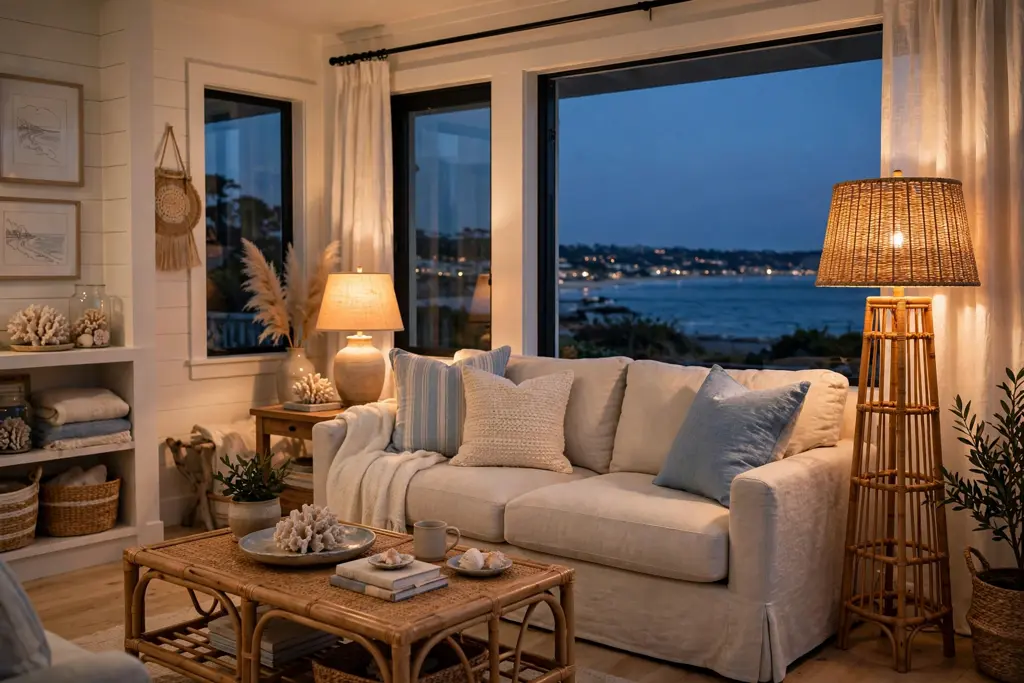
Coastal rooms are bright by day, so plan lighting for evenings and cloudy days as well. Start with one overhead light or a set of recessed lights for general light, then add table lamps at seating height and a floor lamp near a reading chair. Lamps at different heights make a room feel settled after dark, while a single overhead light alone can feel harsh.
Choose lamp bases in natural materials, such as ceramic, pale wood, or rattan, to keep the coastal palette going. Use warm white bulbs in living areas and bedrooms, since cool white light can make pale rooms feel clinical. Put lamps on separate switches or dimmers where you can, so you can lower the light for an evening without losing it altogether.
Check that reading light reaches chairs and beds without glare on screens. A lamp beside, rather than behind, a reading chair works best. In dining areas, hang a pendant low enough to light the table, but high enough that seated guests can see each other across it. Keep spare bulbs in the house, since coastal shops may not be close by.
10. Choose Rugs, Cushions, and Throws That Stand Up to Sand

Rugs in a beach house should be easy to clean and hard to damage. Flatweave cotton, jute, sisal, and indoor outdoor rugs shake out well and handle sand better than deep pile wool. Choose a rug large enough to anchor the seating area, with front legs of sofas and chairs on the rug, so the group reads as one space.
Cushions and throws add color and comfort, and they are the easiest pieces to change with the season. Use removable, washable covers on cushions, and keep a spare set for guest turnovers. Throws in cotton or light wool wash well and dry fast, while heavy throws can feel too warm in a coastal summer.
Shake rugs outside often, and vacuum with a head suited to your rug type. Sand sinks into pile and wears fibers from below, so regular shaking matters more than it does inland. Keep a small brush and dustpan near the main door, so sand gets swept up before it travels through the house.
11. Test the Layout, Sit in Every Seat, and Check the Flow
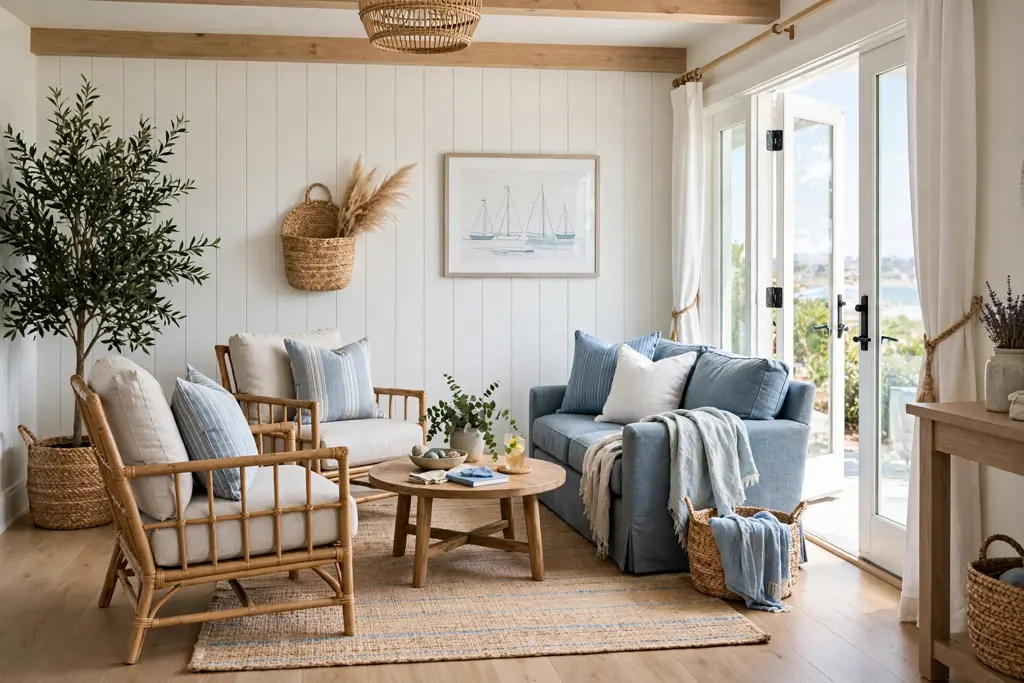
Once the main pieces arrive, live with the layout for a few days before you fix anything in place. Walk every path you use daily: from the door to the kitchen, from the sofa to the bathroom, and from the bedroom to the porch. Move any piece that forces a detour or blocks a door, even if it looked right on paper.
Sit in every seat at different times of day. Check the view from each chair, the light on a reading spot, and whether a seat faces the television, the fireplace, or the window as you intended. Check conversation distances too: seats about 8 feet apart or less talk easily, while seats much farther apart feel disconnected.
Test the room with guests in mind. Pull out extra chairs, set the dining table for a full meal, and open sofa beds or guest beds. If the room only works when it is empty, adjust the layout now. Small changes, such as turning a rug, swapping two side tables, or moving a lamp, often fix flow problems without new purchases.
12. Protect, Clean, and Care for Pieces Through the Seasons

Set a simple care routine and keep it short, so it actually happens. Shake rugs and cushion covers weekly in the beach season, wipe wood tops with a soft damp cloth, and vacuum upholstery with an upholstery head. Wipe metal frames dry after damp weather, and check rattan for dust in its weave.
Protect pieces from the strongest sun. Move light sensitive fabrics out of direct midday sun where you can, or use sheer curtains to soften the light. Rotate cushions so one side does not fade faster than the other, and store spare covers out of sunlight. Re-seal wood tops when water stops beading on the surface, following the sealer directions.
At the end of the season, clean each piece before you cover or store it. Wash slipcovers, shake rugs, and wipe frames, so sand and salt do not sit on surfaces through the winter. Check joints, screws, and fabric for wear, and repair small problems now. A short seasonal check keeps beach house furniture comfortable for years, and it makes the next season start with a clean, ready home.
Conclusion
Choosing beach house furniture comes down to a few steady choices: materials that handle damp and salt, seating tested for real comfort, washable covers, pale natural colors, and storage near the door. Measure first, set a budget by room, and test the layout once pieces arrive. With those steps done, the house stays light, easy to clean, and comfortable for long stays, guests, and sandy days alike.
Frequently Asked Questions
What is the best material for beach house furniture?
Teak, sealed oak, rattan, and powder coated metal frames are strong choices for beach houses, since they handle humidity and salt air better than unsealed softwood or bare steel. The best choice depends on the room: teak and sealed wood suit living and dining rooms, rattan suits bright sitting areas, and powder coated metal suits covered porches.
Should I choose a slipcovered sofa for a beach house?
Yes, in most beach houses a slipcovered sofa is a practical choice. Washable slipcovers let you remove sand, sunscreen, and spills in a normal wash, and a second set of covers lets you rotate while one set is in the wash. Choose a fabric with clear wash directions and test a swatch at home before you commit.
How do I keep sand out of beach house furniture?
Place storage for shoes and towels near the beach door, shake rugs outside often, and use washable cushion covers and flatweave rugs that release sand easily. Keep a brush and dustpan by the main door, vacuum upholstery weekly in the beach season, and wipe wood and metal surfaces so sand grit does not scratch finishes.
What colors work best for beach house furniture?
White, sand, pale gray, driftwood, and light oak make a calm base that keeps coastal rooms bright, with sea glass green or dusty blue as an accent. Pale and mid tone fabrics hide sand better than very dark colors, and they fade less obviously in strong light. Use bold color on cushions and throws that can be swapped easily.
How do I size a sofa for a small beach house living room?
Measure the wall it will sit against, then choose a sofa that leaves at least 30 inches for main walkways and room to open nearby doors. In small rooms, a loveseat or an apartment sized sofa often fits better than a full three seat sofa, and low profile arms keep the room feeling open. Mark the footprint with painter’s tape on the floor before you order.
Is rattan furniture durable enough for everyday use in a beach house?
Yes, well made rattan with a solid frame and tight weave holds up well for everyday sitting in living rooms and covered porches. It suits dry indoor use best, so keep it out of constant direct rain and wipe it dry after damp weather. Check the frame joints and the weave before you buy, since a weak frame matters more than the rattan finish alone.