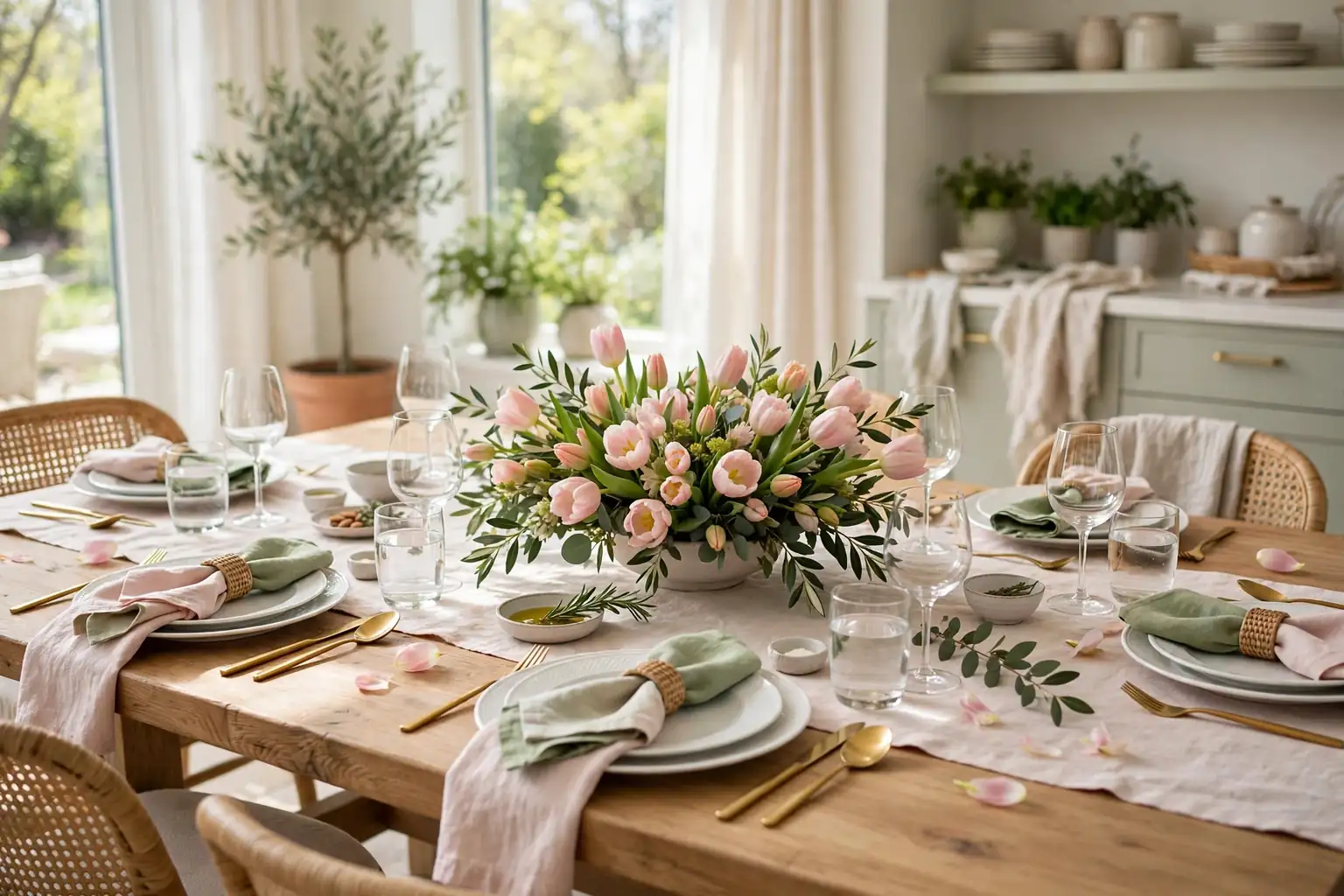
Spring tablescapes work best when the centerpiece stays low, the palette stays fresh, and each place has room to eat. Use a light runner or cloth, one low floral centerpiece, and plates, napkins, and candlelight in soft green, blush, cream, and pale yellow. The 19 ideas below cover everyday dining and special gatherings.
Start with the base you already own: a plain cloth or runner, everyday plates, and cloth napkins in a pale neutral. Then add one spring layer at a time, such as a tulip vase, a lemon runner, or a set of herb pots. Keep the centerpiece low enough to see across, leave room for serving dishes, and choose pieces you can lift off in one move when the table needs to clear. The same low centerpiece rule that keeps a fall table usable applies here, with lighter colors and fresh flowers in place of pumpkins and dried leaves.
Key Takeaways
- Keep the centerpiece low and narrow, so guests can see each other and serving dishes still fit.
- Pick a palette of soft green, blush, cream, and pale yellow, and repeat each color at least twice.
- Start with textiles: a cloth, runner, napkins, and placemats carry most of the spring color and wash easily.
- Use one main centerpiece per table, not several competing clusters, and leave empty space at each place.
- Choose fresh flowers with care: trim stems, change the water often, and keep pollen heavy blooms clear of food.
- For gatherings, add place cards, a drink tray, or a small favor at each place, so the table also helps guests settle in.
1. Low Tulip Centerpiece in a Glass Vase
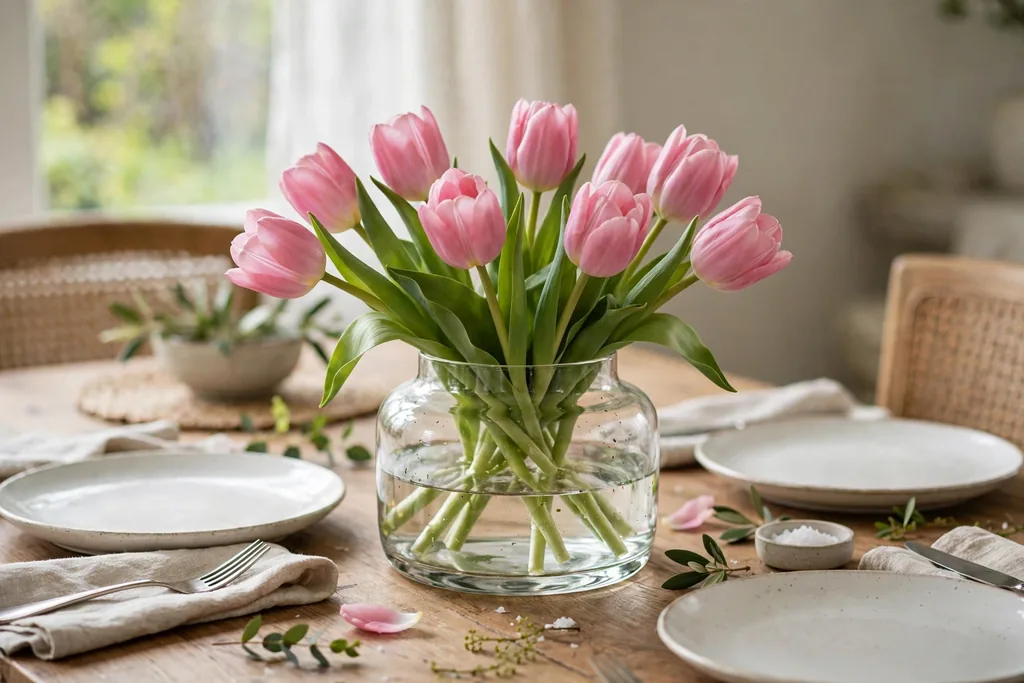
Set a short, wide glass vase in the center of the table and fill it with tulips in one color, such as soft pink, pale yellow, or white, with the stems trimmed so the blooms sit just above the rim. The low height keeps sightlines open, and the clear glass suits almost any plates or napkins you already own.
Change the water every two days and trim a small piece off each stem at an angle when you refresh it, so the tulips last through the week. If one tulip opens faster than the rest, move it to a small bud vase at the end of the table rather than letting it droop over the main group.
2. Pastel Linen Cloth with White Plates
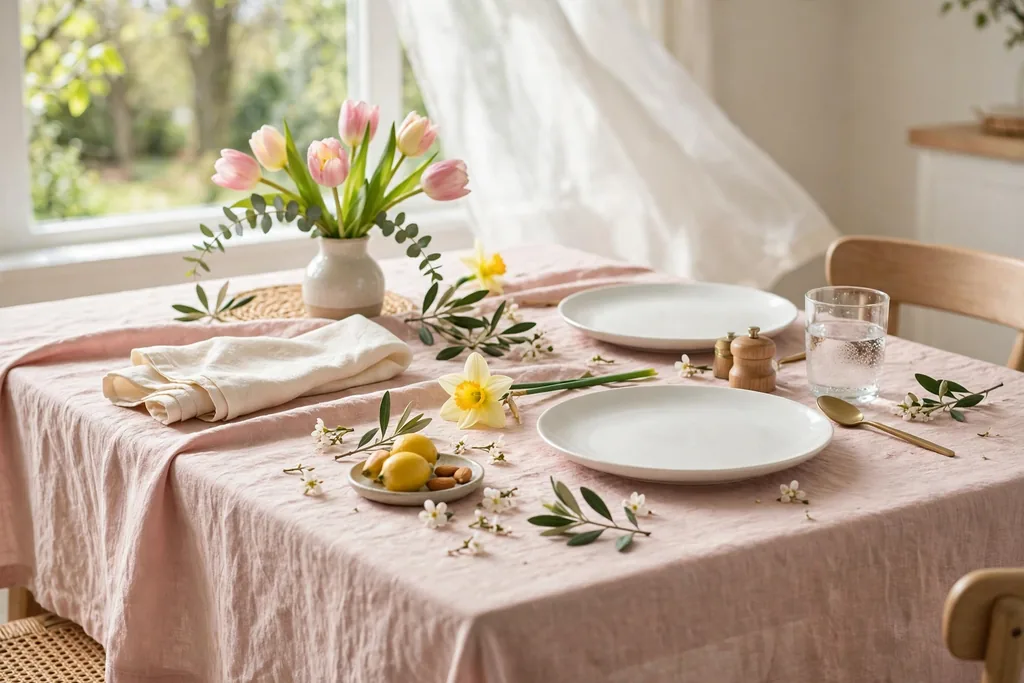
Lay a pastel linen cloth in blush, mint, or pale blue over the table, then set plain white plates at each place so the cloth carries the color and the plates stay calm. This simple pairing suits both a weeknight dinner and a spring lunch with guests, since it needs no patterned dishes.
Iron or steam the cloth before a gathering, since creases show more on pastel linen than on a patterned cloth. If the cloth is light in color, use a plain undercloth or table protector beneath it, so a spill does not mark the table during the meal.
3. Lemon and Leaf Runner Down the Center
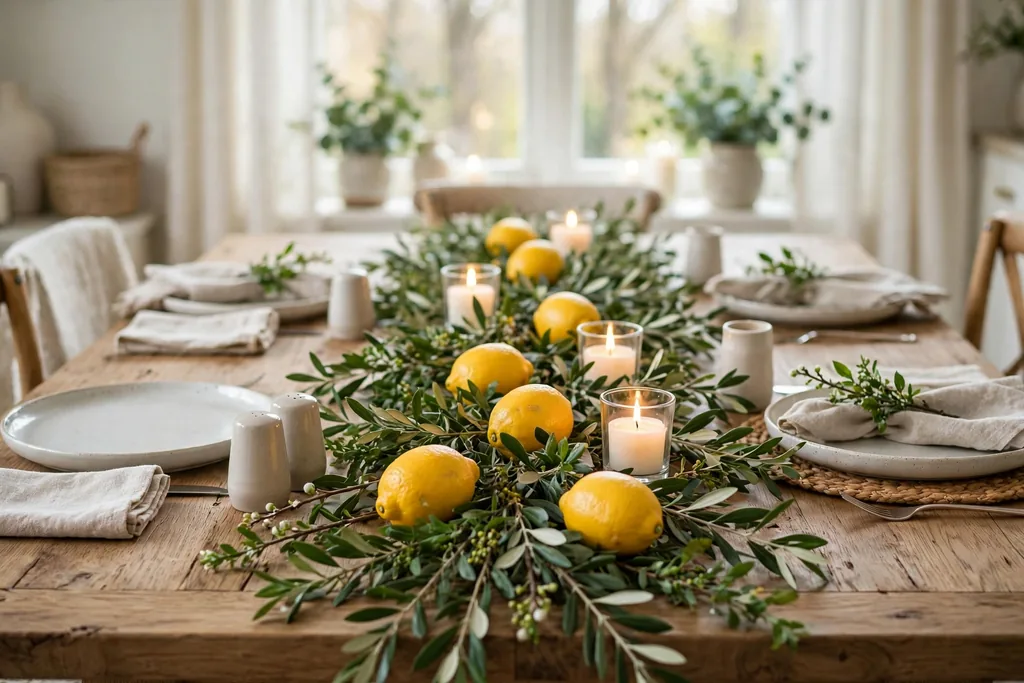
Lay a light green leaf runner down the center of the table, then set whole lemons and small leaf sprigs along it at uneven intervals, with two short candles in holders to anchor the ends. The yellow and green pairing reads fresh and bright, and the lemons can go back to the kitchen after the meal.
Keep the lemons clear of plates and glasses, and wash them before setting them out, since guests may pick them up. If real lemons feel too heavy for a small table, use three or four only, grouped at the center, and let the leaf runner carry the rest of the color.
4. Wildflower Jars Down the Center
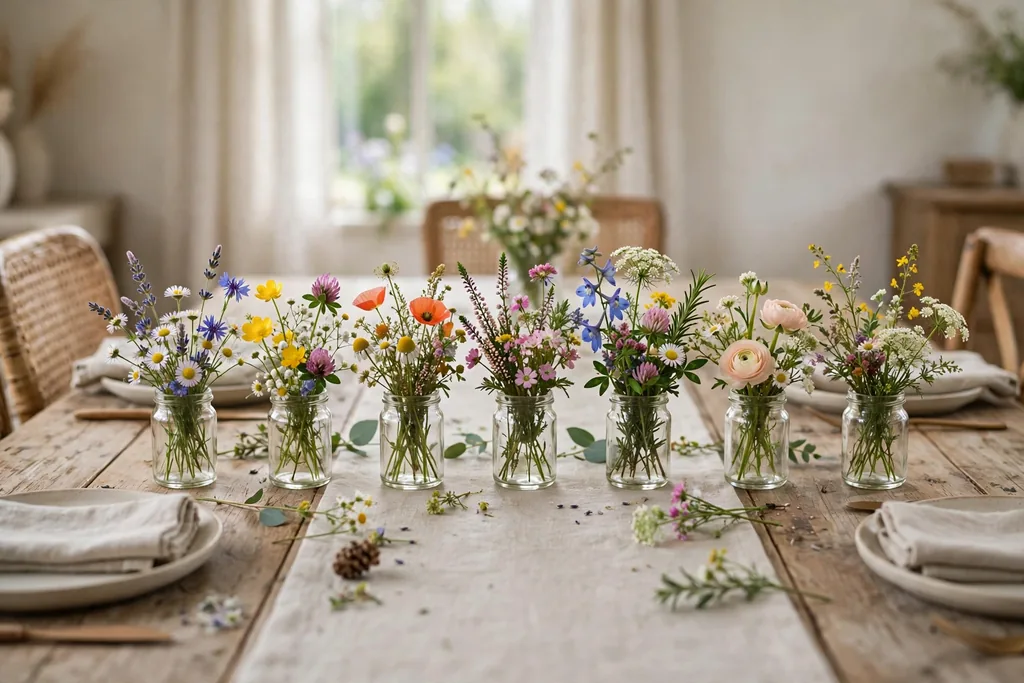
Fill three or five small glass jars with mixed wildflowers, such as daisies, buttercups, and small white blooms, and set the jars down the center of the table at even spacing. The small scale suits a narrow table, and each jar can move to a sideboard or windowsill after the meal.
Use jars of the same height so the line looks planned, and keep the stems short enough to see over. If you gather flowers from a garden, check each stem for insects before bringing it inside, and keep wildflowers clear of food, since some blooms shed petals onto plates.
5. Herb Pots at Each Place
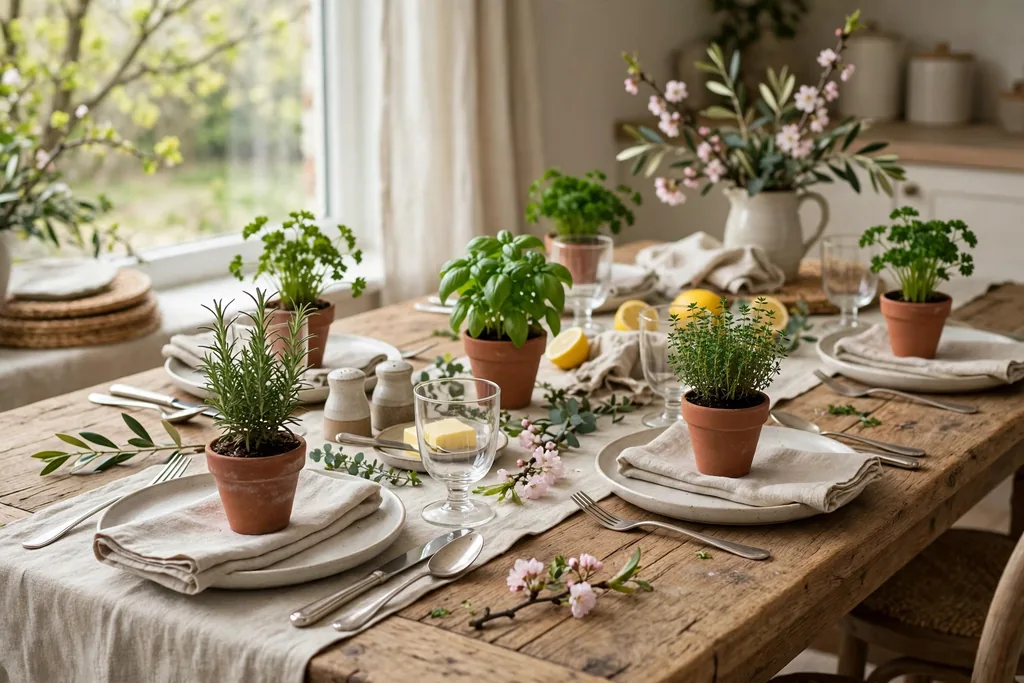
Set one small potted herb, such as basil, mint, or parsley, at each place, in a plain terracotta or white pot, so each guest has a green place marker that doubles as a take home gift. The pots add scent and color without a large centerpiece, and they work well for a spring dinner with friends.
Water the herbs lightly before guests arrive, and set each pot on a small saucer so damp soil does not mark the table. For everyday meals, keep two or three herb pots as a centerpiece group instead of one per place, and move them back to a sunny windowsill after dinner.
6. Woven Placemats with Floral Plates
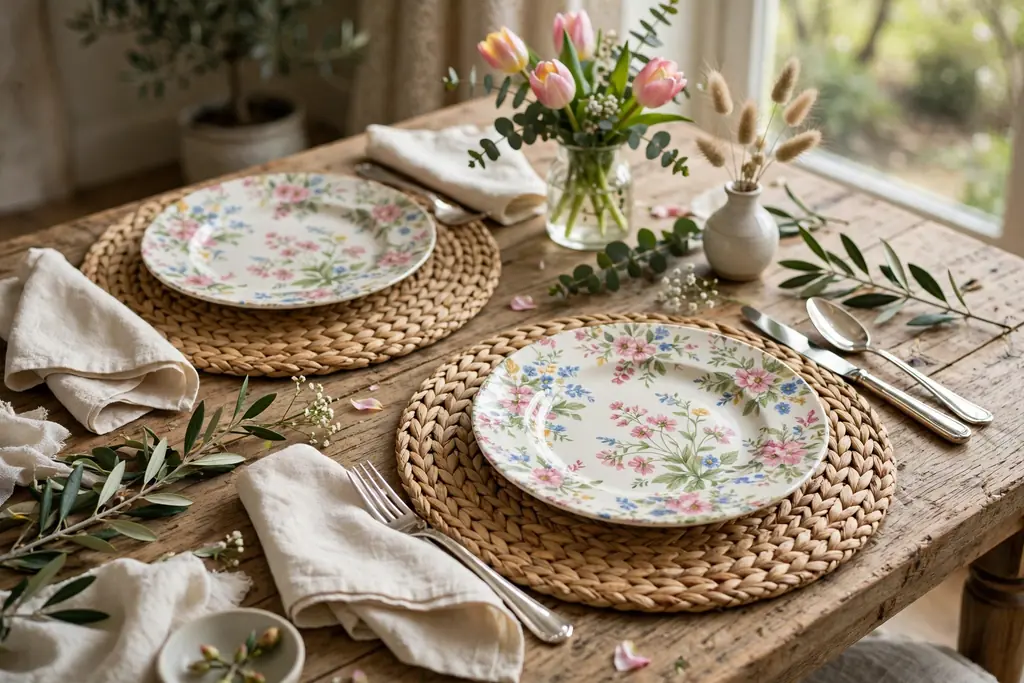
Use woven placemats in natural straw or seagrass under floral plates, so the table gains texture at each place while the pattern stays on the plates. This pairing suits a spring lunch, since the woven mats read casual and the floral plates carry the season.
Wipe the placemats after meals and store them flat, since woven mats can bend if folded damp. If your floral plates are busy, keep napkins and glasses plain, so the table does not feel crowded with pattern at every place.
7. Fresh Sprig Napkin Rings
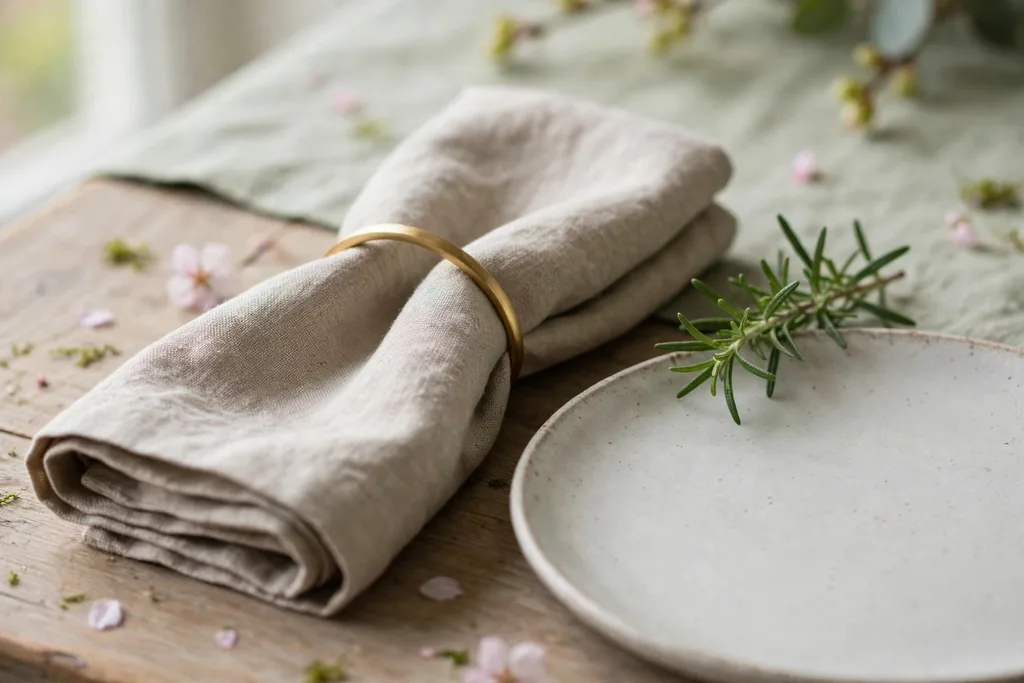
Wrap a simple napkin ring around each folded napkin, then tuck a short fresh sprig, such as rosemary, mint, or a small eucalyptus stem, under the ring. This small detail dresses an everyday place setting in minutes, and the scent adds a fresh note as guests sit down.
Keep the sprig short so it does not brush the plate, and use the same sprig at every place for a matched look at a gathering. Remove the sprig before washing napkins, and compost fresh stems when they start to wilt, rather than storing them with the linen.
8. Blue and White Porcelain with Tulips
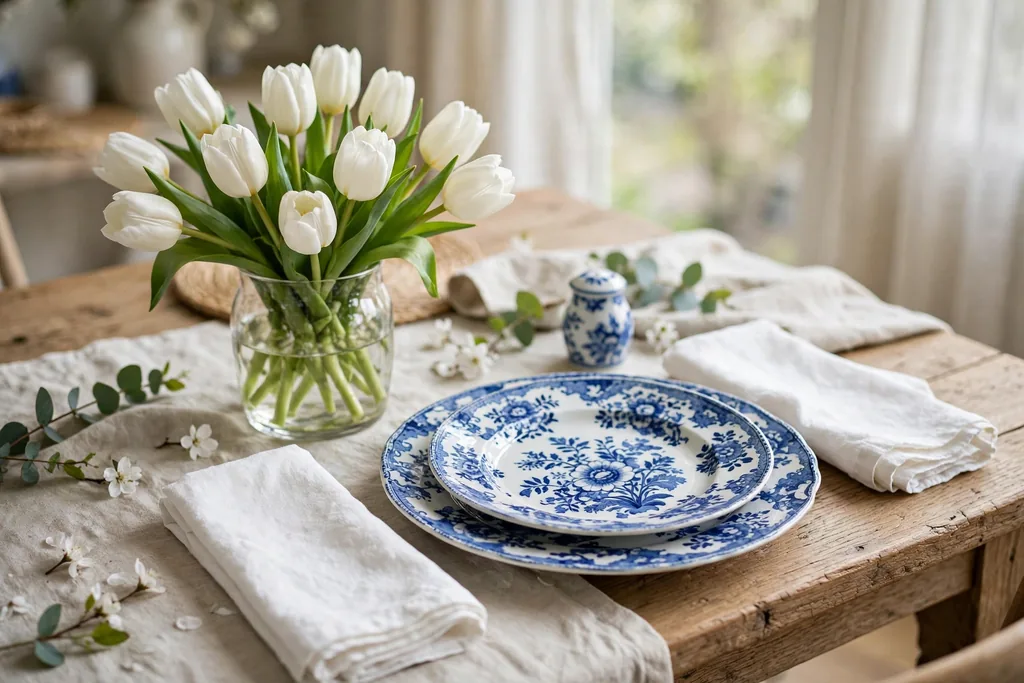
Pair blue and white porcelain plates with a vase of white or pink tulips, and keep the rest of the table plain, with white napkins and clear glasses. The blue and white pattern gives the table a classic spring look, while the tulips soften it and tie the colors together.
Let one patterned piece lead at each place, such as the dinner plate, and use plain bowls or side plates beside it, so the pattern does not repeat at every layer. If you only own a few blue and white plates, mix them at the ends of the table with plain white plates between, for a collected look.
9. Blush Candles for a Spring Evening
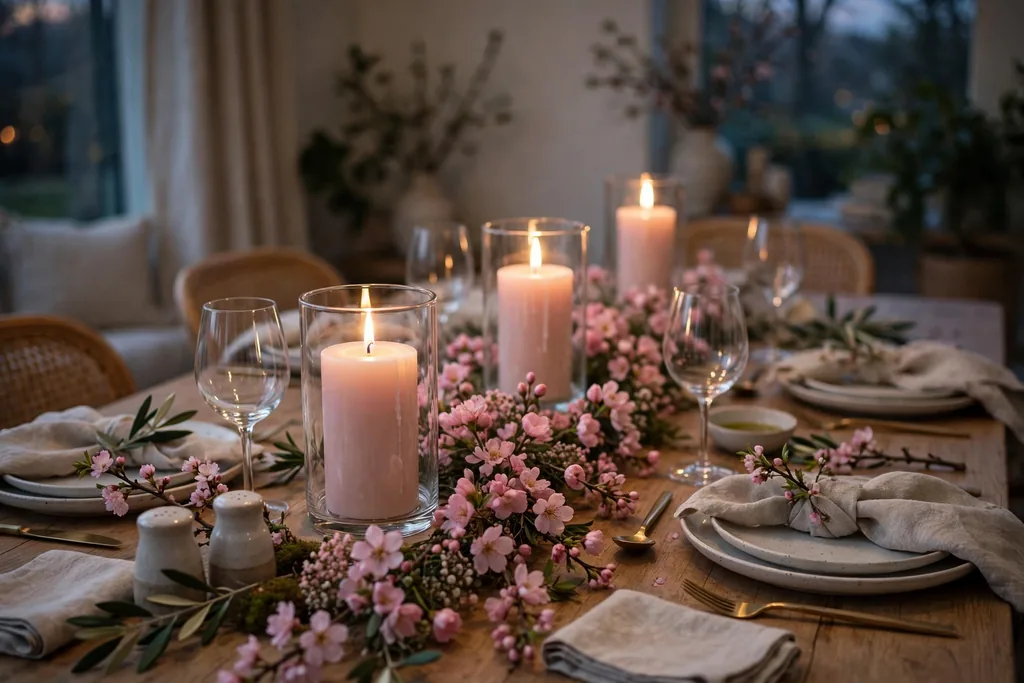
Set blush or cream pillar candles in glass holders down the center of the table, with a few small pink blooms or rose petals scattered between them, for a spring dinner after dark. The candlelight warms the pastel palette, and the low holders keep the table open for conversation.
Use battery candles if the table will sit near fabric or paper, or if children will be at the table. For a real flame, keep candles in holders, clear of petals and napkins, and never leave them burning unattended. Trim wicks before lighting so the flames stay steady.
10. Rustic Wood Table with Wildflowers
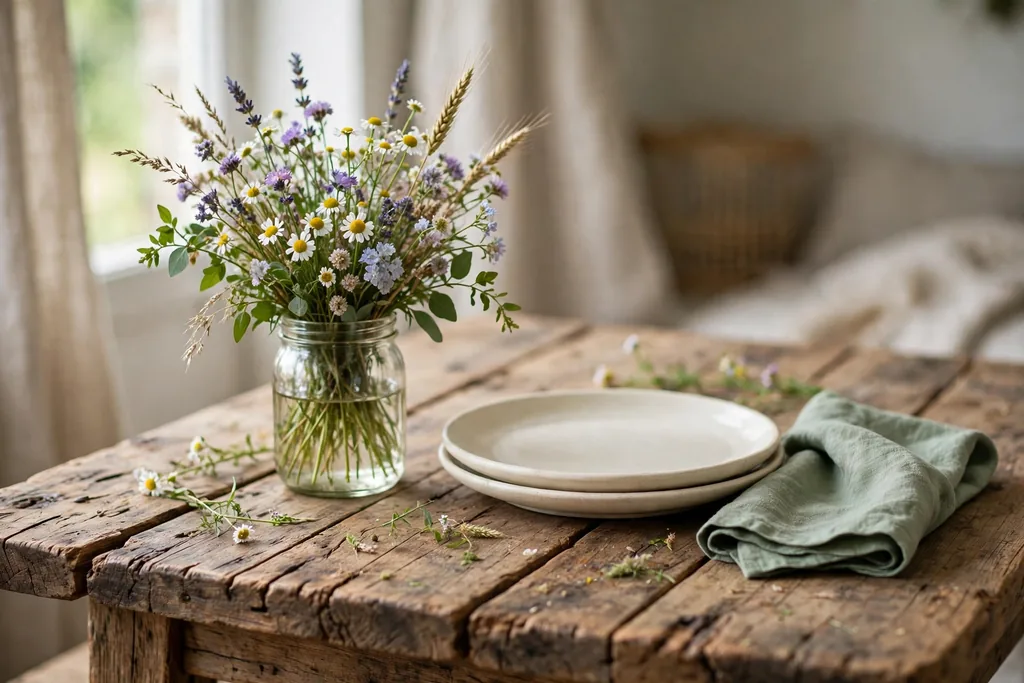
Leave a wood table bare, with no cloth, and let the grain show, then set a low jar of wildflowers at the center, with plain cream plates and linen napkins in sage green. This approach suits a farmhouse dining room, and it keeps the table easy to wipe after everyday meals.
Use placemats under plates if the wood marks easily, and keep the centerpiece to one low group, so the wood still shows. Fold napkins the same way at every place for a tidy look, and iron linen napkins before a gathering, since creases show more on bare wood than under a patterned cloth.
11. Outdoor Garden Party Table with Pastel Bunting
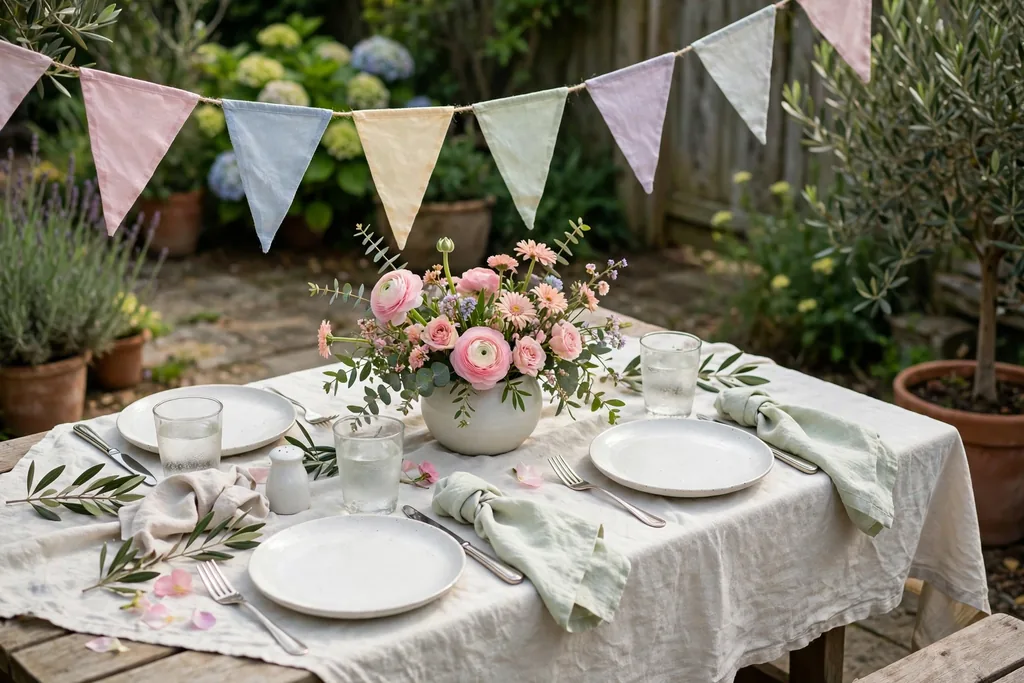
Set an outdoor table with a pale cloth, white plates, and pastel bunting strung above or along the edge, then add a low vase of garden flowers at the center. The bunting marks the occasion clearly, while the low flowers and plain plates keep the table practical for serving food outside.
Weight the cloth or use clips at the corners, so a breeze does not lift it onto plates. Keep paper bunting clear of candles or a grill, and bring fabric bunting inside after the meal, since damp fabric can stain if left out overnight.
12. Speckled Egg Place Cards
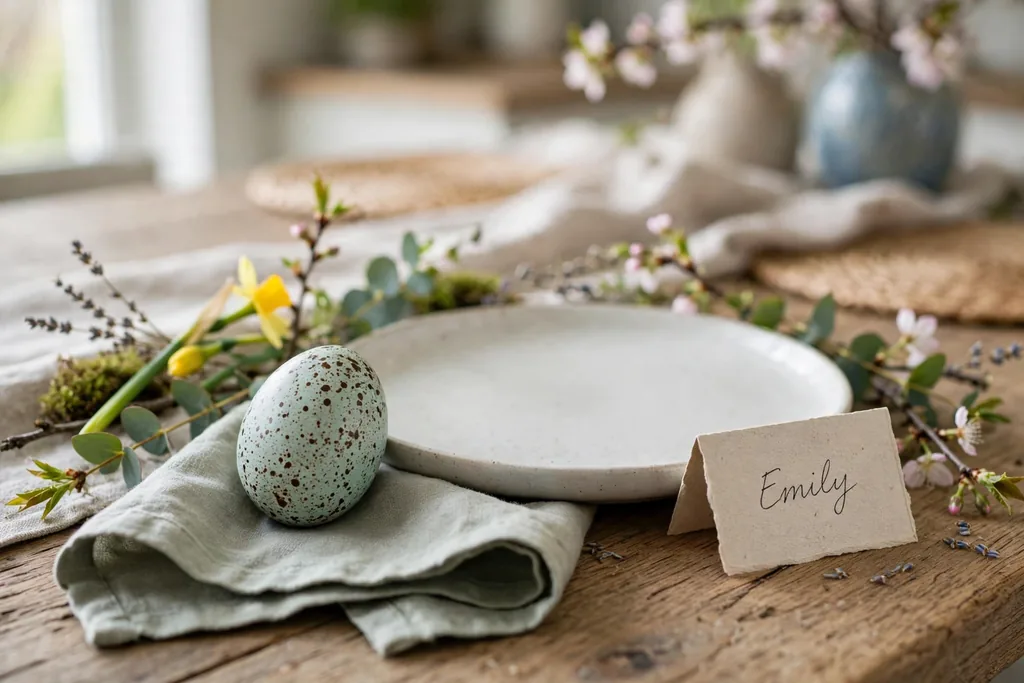
Set one speckled decorative egg at each place, with a small card tucked beside it showing the guest name or a short welcome note. This idea works for a spring gathering as well as a family dinner, because it marks each seat and doubles as a small seasonal detail guests notice right away.
Choose eggs small enough to sit beside a plate without crowding the glass, and write names in clear, large lettering. For everyday meals, skip the names and use the eggs alone as a simple place marker, grouped in a small bowl at the center when the table is not set for guests.
13. Green and White Minimal Tablescape
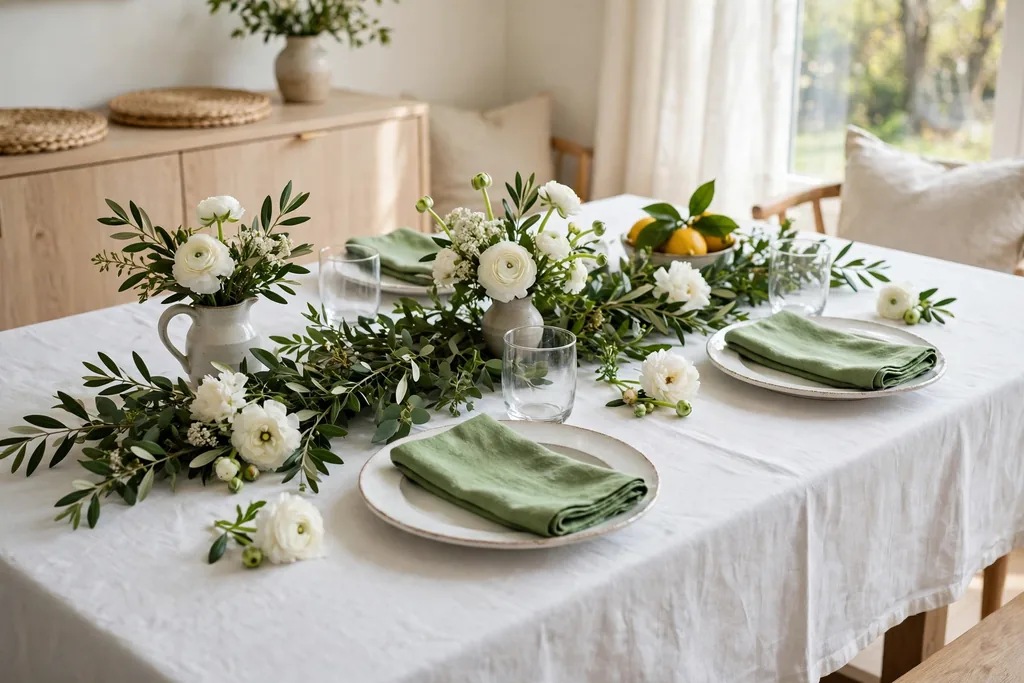
Use a white cloth, white plates, and clear glasses, then add green only, through a leaf runner, green napkins, or a vase of green stems and white blooms. This restrained palette suits a bright dining room and works well with wood, glass, and pale stone.
Vary the greens, with one deep leaf green and one soft sage, so the table does not look flat. Wipe white plates clean before setting them out, since marks show more on white than on patterned dishes, and keep one green accent at each place, such as the napkin, to tie the places together.
14. Vintage Mixed Floral Plates
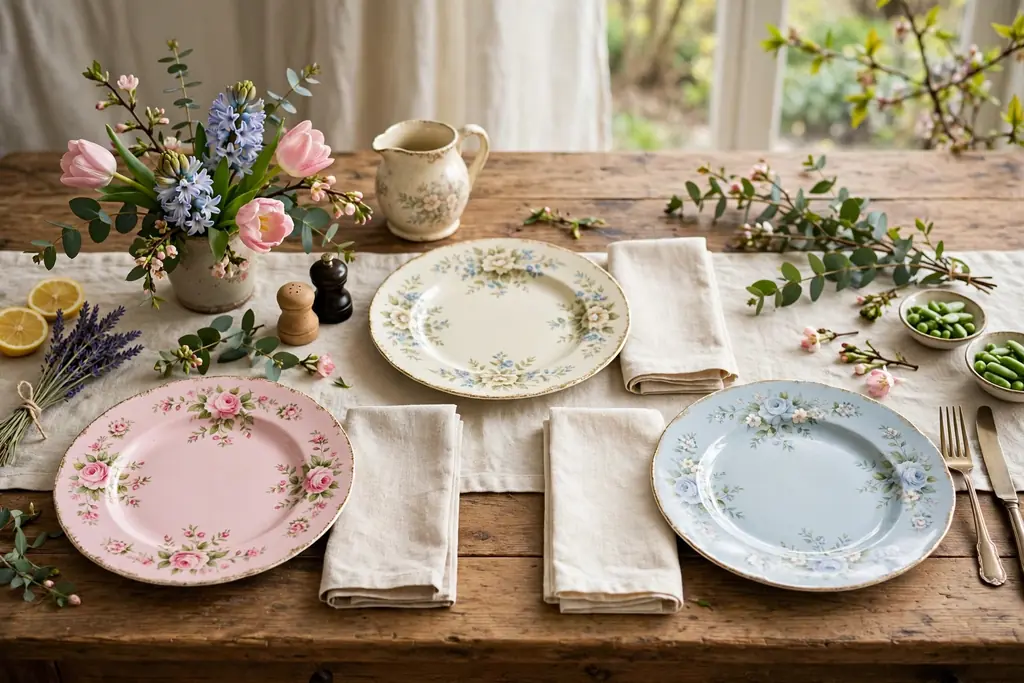
Mix vintage floral plates in soft, related colors, such as pink, cream, and pale blue, with one plate pattern per place, and keep napkins and glasses plain. The mixed plates give a collected, spring feel without buying a new set, and they suit a lunch with friends who enjoy an unfussy table.
Group plates by tone, not by exact pattern, so a pink plate sits near a cream one rather than next to a strong blue. If a plate is chipped, use it as a side plate or under a serving dish, rather than at a place where a guest will eat from it.
15. Tiered Stand for a Spring Brunch Table
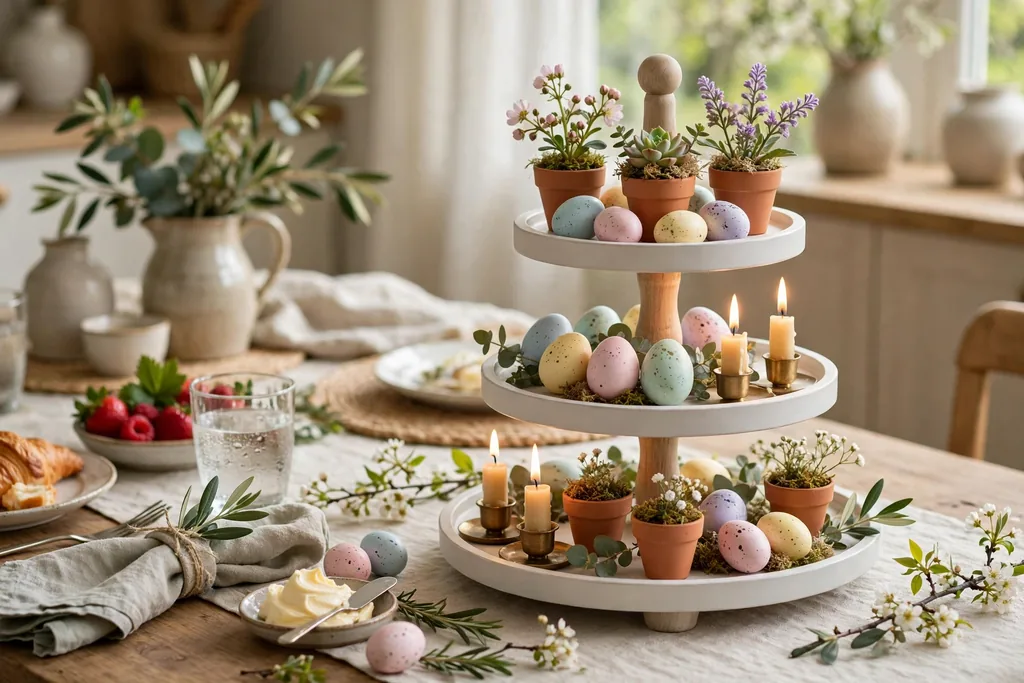
Set a two or three tier stand at one end of the table or on a sideboard, and fill it with small spring details, such as mini flower pots, pastel eggs, and small candles in holders, so the brunch table gains height without blocking the center. A tiered stand also works for serving, with scones, fruit, or small bites on the tiers at a buffet style meal.
Keep the stand stable and clear of the main serving path, and put heavier items on the bottom tier. If the stand will hold food, use it for food only, and set the decor version on a separate stand or tray, so crumbs and wax do not mix.
16. Pink Peony Bowl Centerpiece
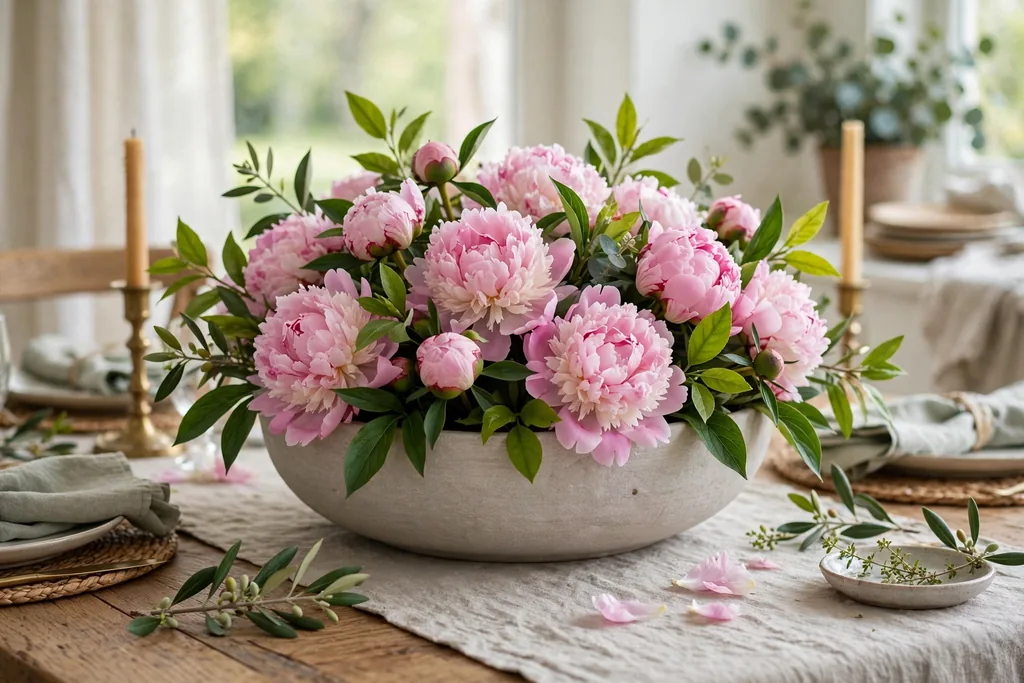
Fill a wide, shallow bowl with pink peonies and a few green leaves, and set it in the center of the table as a single, full centerpiece. The bowl shape keeps the peonies low and round, so the table gains a clear spring focus without a tall arrangement blocking views.
Check peonies for insects before bringing them inside, and keep the bowl on a small mat if the table marks easily, since water can drip from fresh stems. If peonies are not in season where you live, use garden roses or ranunculus in the same wide bowl for a similar full, soft shape.
17. Gingham Cloth for a Casual Spring Table
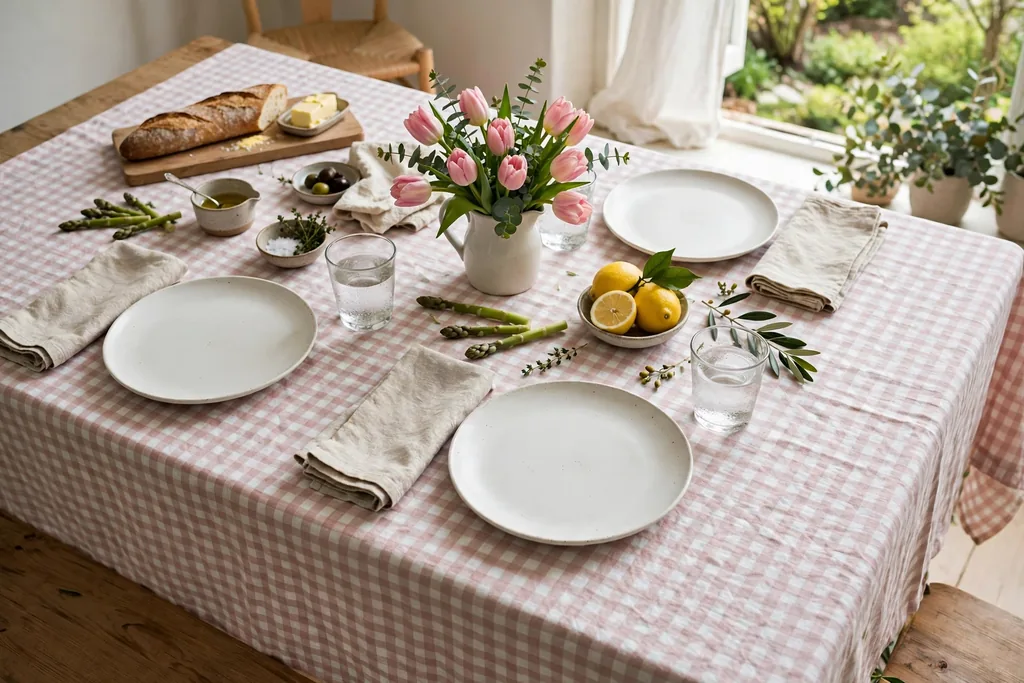
Lay a gingham cloth in pale pink, mint, or sky blue over the table, then set plain white or cream plates, so the check pattern carries the spring color and the plates stay simple. Gingham suits a casual family meal, a picnic style lunch indoors, and a table with children, since it hides small marks better than a solid pastel cloth.
Match the check size to the table: a small check suits a round breakfast table, while a larger check suits a long dining table. If the cloth is thick, use it alone and skip a runner, so plates sit level, and wash it promptly after meals with tomato or berry dishes.
18. Clear Glass and Gold Airy Tablescape
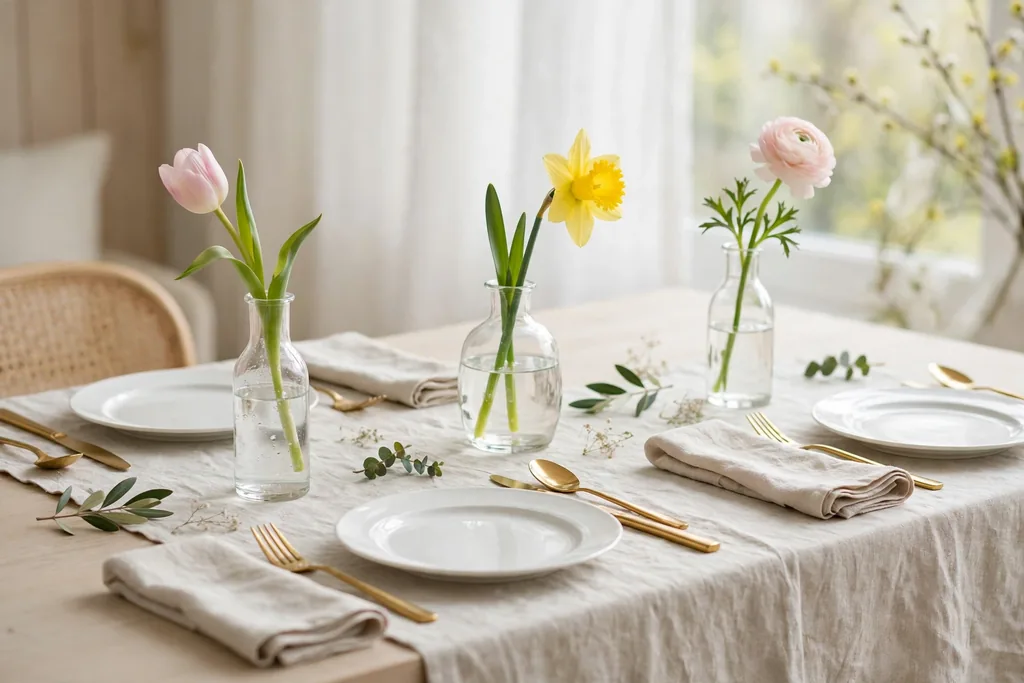
Use clear glass vases, gold cutlery, and white plates on a pale cloth, with a few single stems in tall, narrow vases spaced down the center. The clear glass and pale gold keep the table light and open, which suits a small dining room or a table near a bright window.
Space the narrow vases so they do not crowd serving dishes, and keep each stem short enough to see over when guests are seated. Polish gold cutlery before a gathering, since marks show more on metal than on plain steel, and use plain napkins so the gold stays the main accent.
19. Small Round Table Spring Breakfast Nook
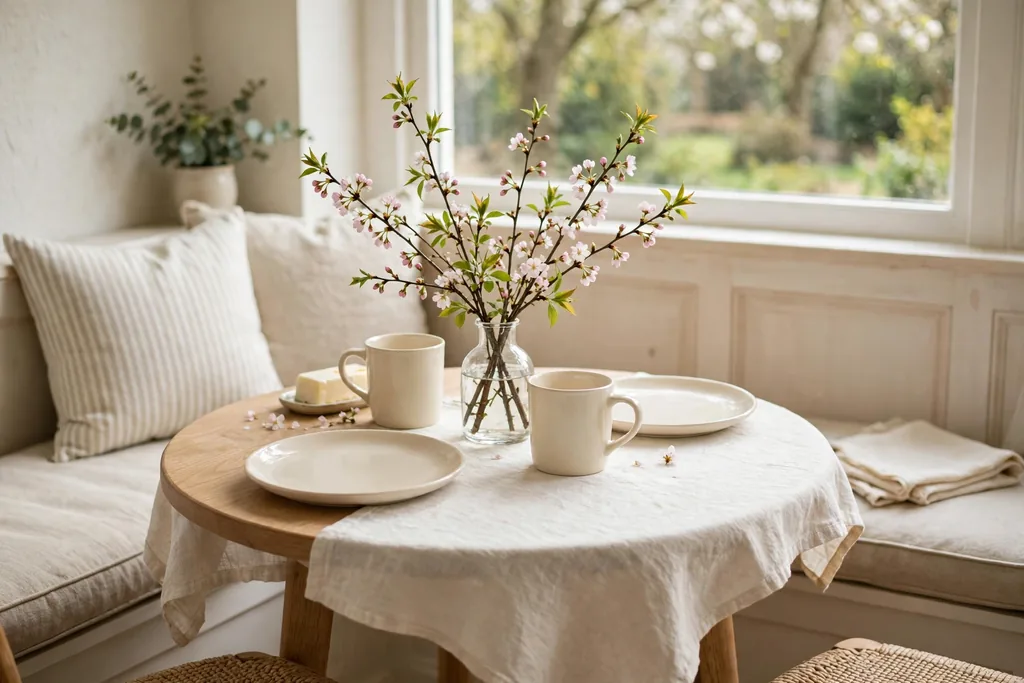
Dress a small round table for two or four with a plain cloth, a single bud vase with one or two spring stems, and simple plates and mugs in cream or pale green. The small scale suits a breakfast nook or a kitchen corner, where a large centerpiece would crowd the table and leave no room for coffee and plates.
Keep the vase at the center and the mugs to one side of each plate, so the small table still has a clear path for serving. For a weekend breakfast with guests, add a small plate of fruit or a tiny vase at each place, and skip the runner, since a runner can bunch on a round table.
Conclusion
A good spring tablescape does not need a new dinner set or a tall arrangement. Pick one low centerpiece, one fresh palette, and textiles you can wash, then repeat the same colors at each place and leave room for food and conversation. Start with one idea from this list for your next everyday meal, and add place cards, a drink tray, or a tiered stand when guests come, so the table grows with the occasion without getting crowded.
FAQs
What is a spring tablescape?
A spring tablescape is a styled dining table for spring, with a low floral centerpiece, a light cloth or runner, and place settings in soft green, blush, cream, or pale yellow. It covers the whole table look, from the centerpiece to the napkins, rather than one single decoration.
How do I keep a spring centerpiece low enough for conversation?
Keep the centerpiece below eye level when guests are seated, which usually means blooms no higher than about 30 centimeters above the table. Use a wide, shallow vase or bowl, trim stems short, and test the height by sitting at the table before guests arrive.
What colors work best for spring tablescapes?
Soft green, blush pink, cream, white, and pale yellow work best for spring tablescapes, since they read fresh in daylight and pair well with fresh flowers. Pick two or three of these colors, repeat each one at least twice, and keep the rest of the table plain so the palette stays calm.
Can I use a spring tablescape for everyday meals?
Yes, you can use a spring tablescape for everyday meals by keeping one simple layer, such as a runner, a jar of flowers, or pastel napkins, and skipping place cards and favors. Choose washable textiles and a centerpiece you can lift off in one move, so the table still clears fast after dinner.
How long do fresh flowers last in a spring centerpiece?
Fresh flowers in a spring centerpiece usually last five to seven days if you trim the stems, change the water every two days, and keep the vase out of direct sun and away from fruit bowls. Remove wilted stems promptly, since one wilting stem can cloud the water and shorten the life of the rest.
What is the easiest spring tablescape for a first gathering?
The easiest spring tablescape for a first gathering is a plain cloth, white plates, a low vase of tulips, and a fresh sprig at each napkin. It needs no special dishes, takes under half an hour to set, and leaves the table open for food, glasses, and conversation.