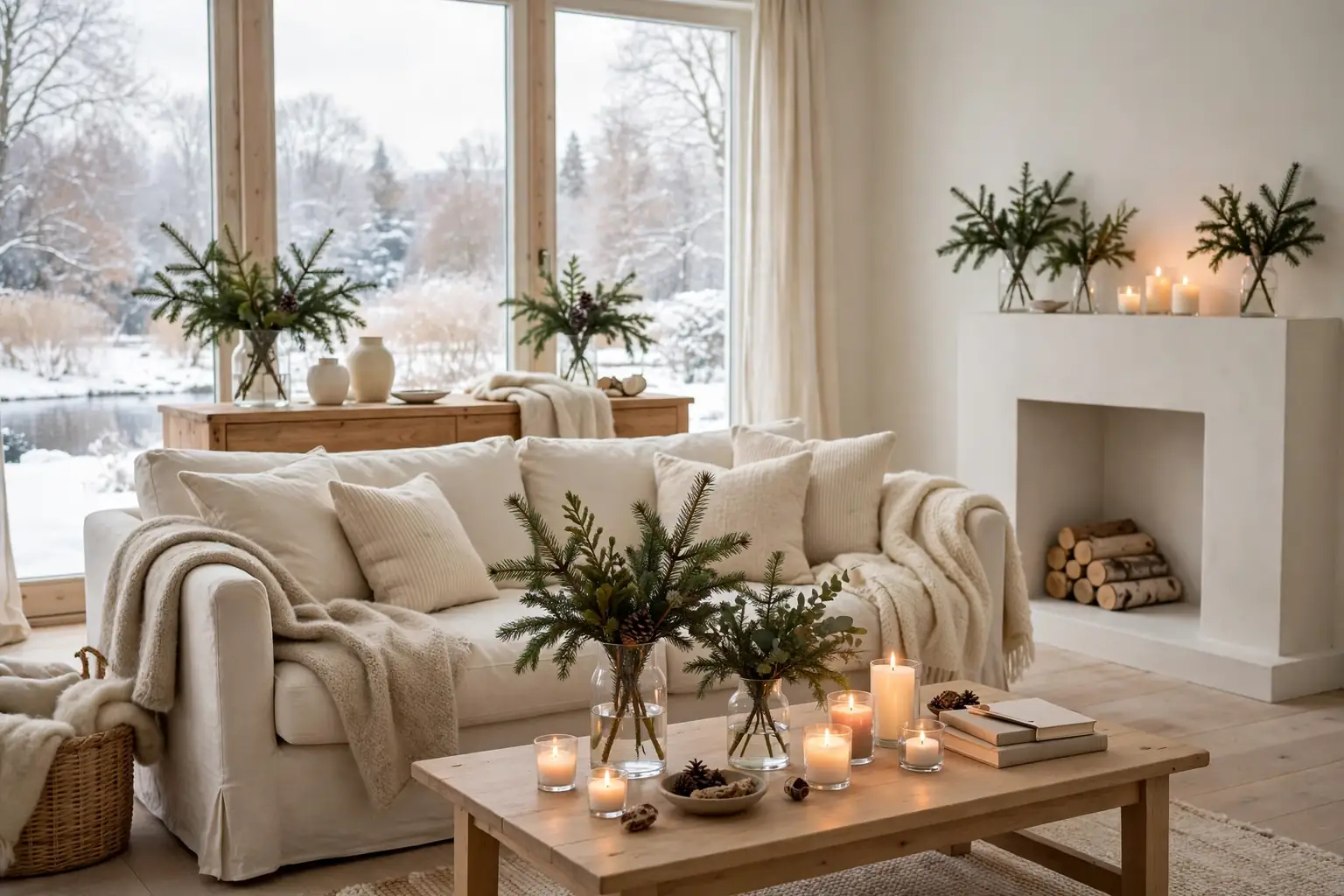
January decorating works best when you clear away holiday clutter, keep a calm winter palette, and add soft light, natural greenery, and cozy layers room by room. Start with one room, use pieces you already own, and make small swaps that feel fresh, restful, and easy to live with all winter.
January is a good month to reset rather than redecorate. Take down holiday pieces, wipe surfaces, and look at each room in daylight before you add anything back. For more seasonal ideas to pair with these looks, browse the Dwell Ovell decor ideas index. Keep a simple palette of cream, soft white, wood tones, and one muted accent, then repeat it from room to room so the whole home feels settled and calm.
Key Takeaways
- Start with a clear out: remove holiday pieces and clutter before adding any new decor.
- Keep a calm winter palette of cream, white, wood, and one muted accent through the home.
- Use soft light, natural greenery, and layered textiles to add warmth without crowding rooms.
- Make small swaps first, such as cushions, throws, table linens, and entry baskets.
- Give every item a place, with baskets and trays that make daily tidying quick.
- Reuse what you own: rearrange furniture, move art, and restyle shelves before buying anything.
1. Fresh Evergreen Sprigs in Simple Vases
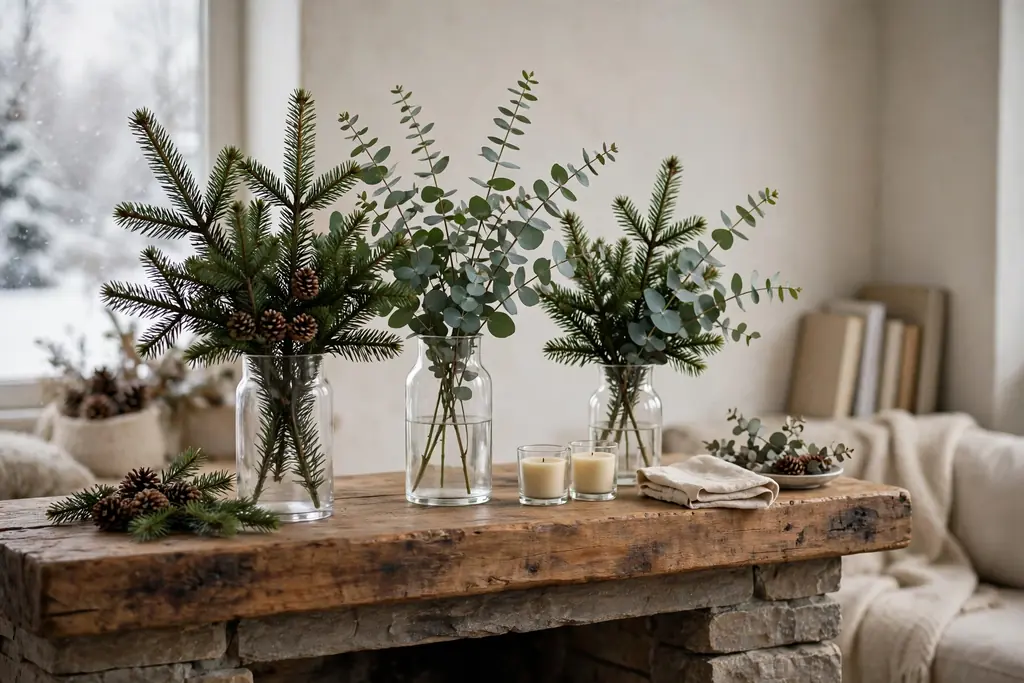
Place fresh evergreen sprigs, eucalyptus, or pine in plain glass or ceramic vases on a mantel, table, or windowsill. The green adds life to a bare January room, and the scent feels clean and seasonal without any holiday colors. Trim stems at an angle and change the water every few days to keep sprigs fresh longer.
Use one tall vase for a strong focal point, or group three small vases of different heights on a sideboard. Keep the arrangement loose and natural, with a few stems leaning outward, rather than a tight, formal bouquet. When sprigs dry out, replace them with bare branches or dried stems for a longer lasting look.
2. Swap Holiday Red for Cream and Soft White
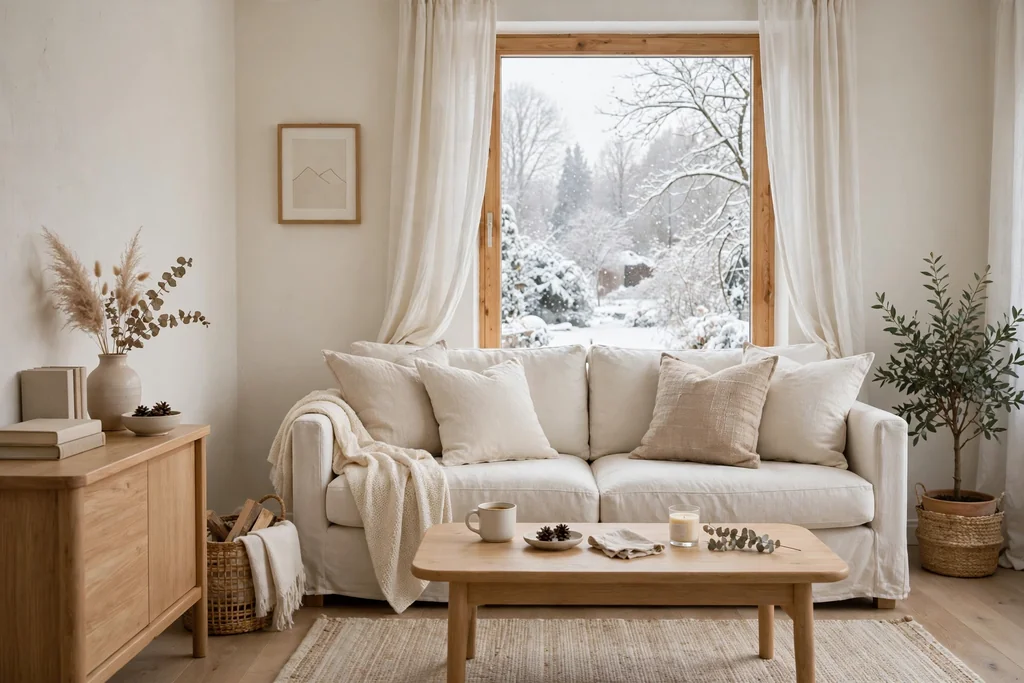
Put away red ribbons, ornaments, and holiday prints, and bring in cream, soft white, and pale wood tones. The lighter palette makes rooms feel brighter in short winter days and gives the eye a rest after a busy December. Keep one muted accent, such as sage, dusty blue, or warm gray, for cushions or a throw.
Work through one room at a time so the change feels manageable. Swap cushion covers, table runners, and towels first, since those carry the most color. If a room still feels flat, add texture with knit, linen, or woven pieces rather than adding more color.
3. Layer Wool Throws and Linen Cushions
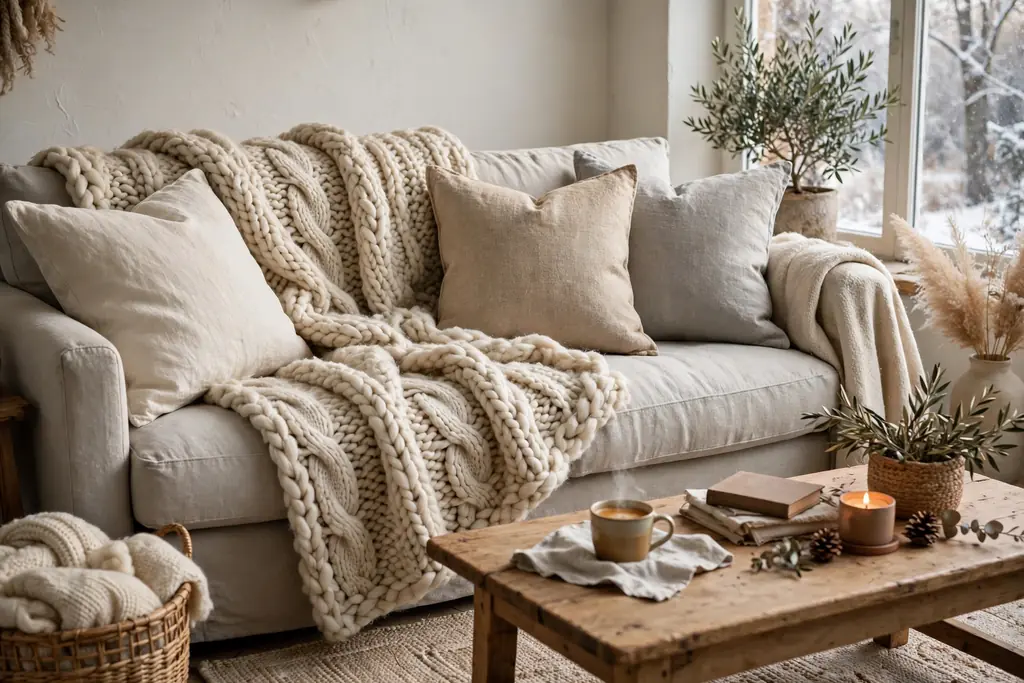
Layer a wool throw over a sofa arm or chair back, and mix linen and knit cushions in cream, oatmeal, and soft gray. The mix of textures makes seating feel inviting on cold evenings, and layers can be folded back easily when the room warms up. Choose covers you can wash, since winter throws get daily use.
Limit the mix to three or four cushion colors so the sofa stays calm. Fold a throw in thirds and drape it neatly over one arm, or roll it in a basket near the sofa for easy reach. Swap a heavy patterned cover for a plain one if the room starts to feel busy.
4. Clusters of Warm Candlelight
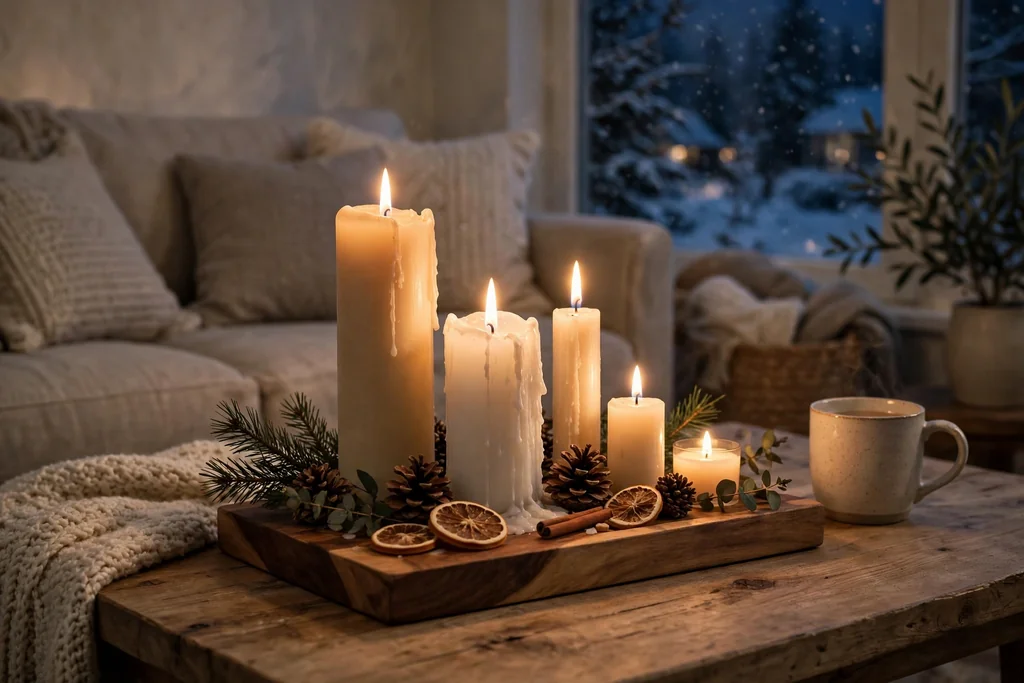
Group candles of different heights on a tray on a coffee table, mantel, or windowsill, and use battery candles near fabric, paper, and dried greenery. Warm light softens a room in the early dark of January evenings and makes a plain corner feel cared for. Keep candles away from curtains and never leave a lit candle unattended.
Use a tray to contain wax and to lift the whole group in one move for cleaning. Mix plain pillar candles with small votives, and keep the tallest candle at the back so the group reads as one display. If you use real candles, trim wicks and place them on a heat safe surface.
5. A Cleared Mantel with Winter Branches
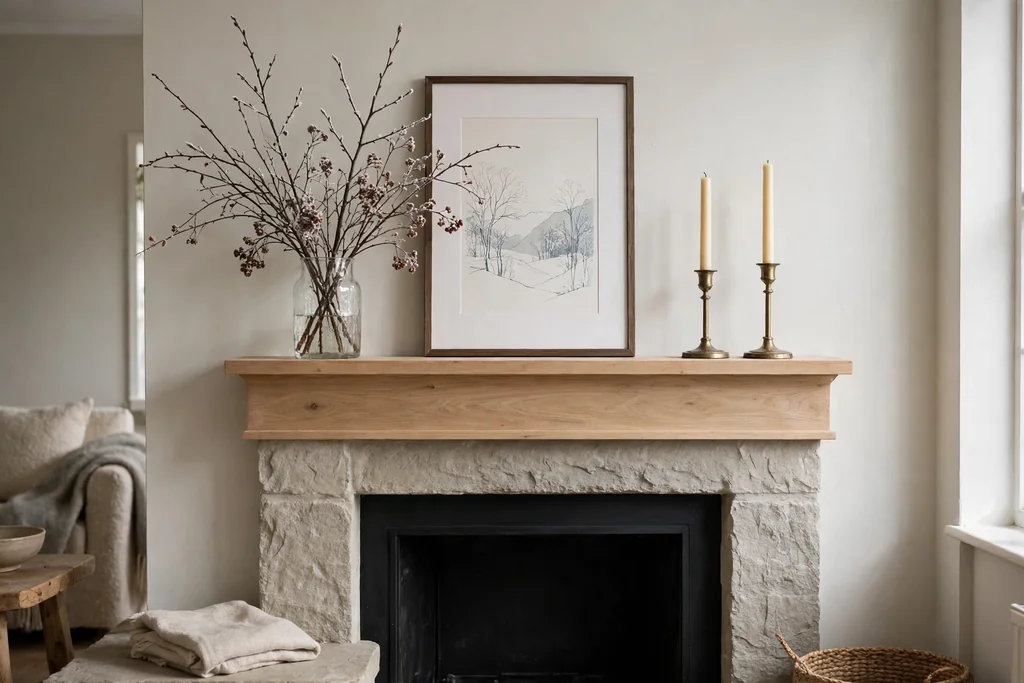
Clear the mantel completely, wipe it down, and start again with just a few pieces: a vase of winter branches, two candle holders, and one framed print or mirror. The empty space around each piece lets the mantel breathe, and the simple grouping suits January better than a crowded holiday display. Step back and check the balance from across the room.
Keep the tallest piece at one end or in the center, and leave gaps between items rather than filling every inch. A length of plain greenery laid flat can ground the display without adding color. Change the branches every few weeks to keep the mantel feeling fresh.
6. An Entry That Handles Winter Coats and Boots
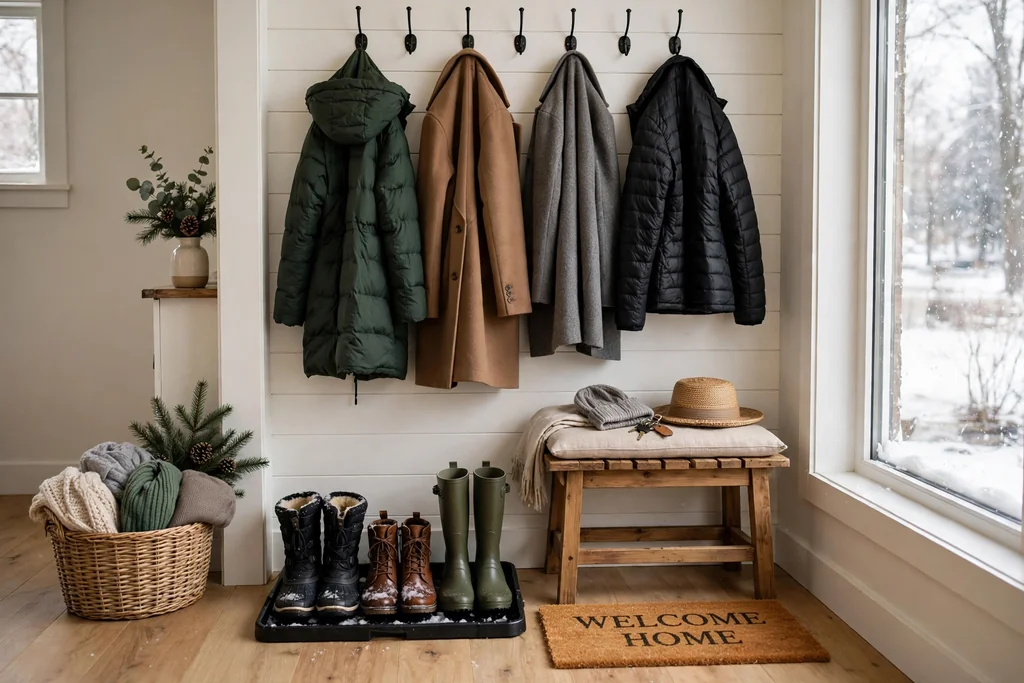
Set a sturdy tray for boots, a basket for scarves and gloves, and hooks at a height every household member can reach. A tidy entry makes winter mornings easier and stops coats and shoes from spreading into the living room. Add a small bench or stool if space allows, so shoes can be put on seated.
Label or assign one hook and one basket per person in a busy household. Keep a small brush and cloth near the door for muddy boots, and empty the tray weekly so it does not overflow. A mirror by the door adds light and gives a last check before leaving.
7. A Kitchen Shelf Reset with White Ceramics
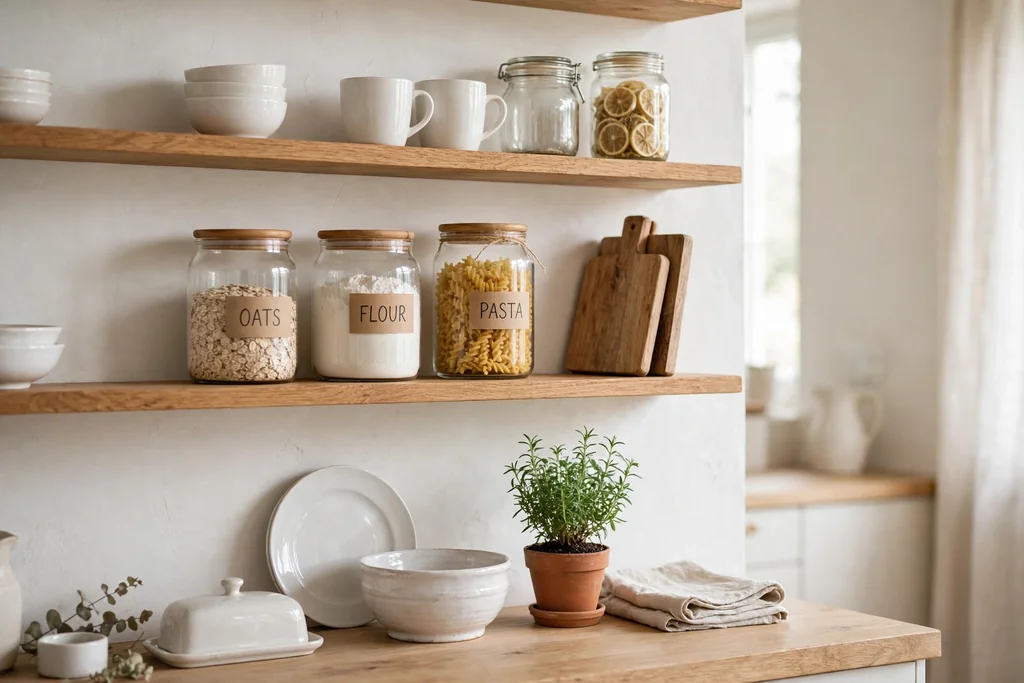
Take everything off one set of open shelves, clean the shelves, and put back only white or cream ceramics, glass jars, and a few wooden boards. The pared back shelves make a kitchen feel lighter and make daily items easier to find. Keep everyday plates and bowls within easy reach and move rarely used pieces higher.
Group items by use, such as mugs together and bowls together, and leave space between groups. Add one small plant or herb pot for a touch of green, and keep it where it gets light but stays clear of the stove. If a shelf still looks crowded, remove one item at a time until it feels settled.
8. Winter Bedding in Soft White Layers

Make the bed with white or cream sheets, a warm duvet, and a folded wool or cotton blanket at the foot. The layered look feels clean and restful, and extra layers can be added or removed as the night warms or cools. Choose a simple pillow arrangement, with sleeping pillows plus two or three decorative cushions at most.
Shake out the duvet and smooth the top blanket each morning so the bed looks made with little effort. Keep a spare blanket in a basket near the bed for cold nights. If the room feels cold in color, add warmth with a wooden tray, a warm toned lamp, or natural linen curtains.
9. A Winter Dining Table Centerpiece
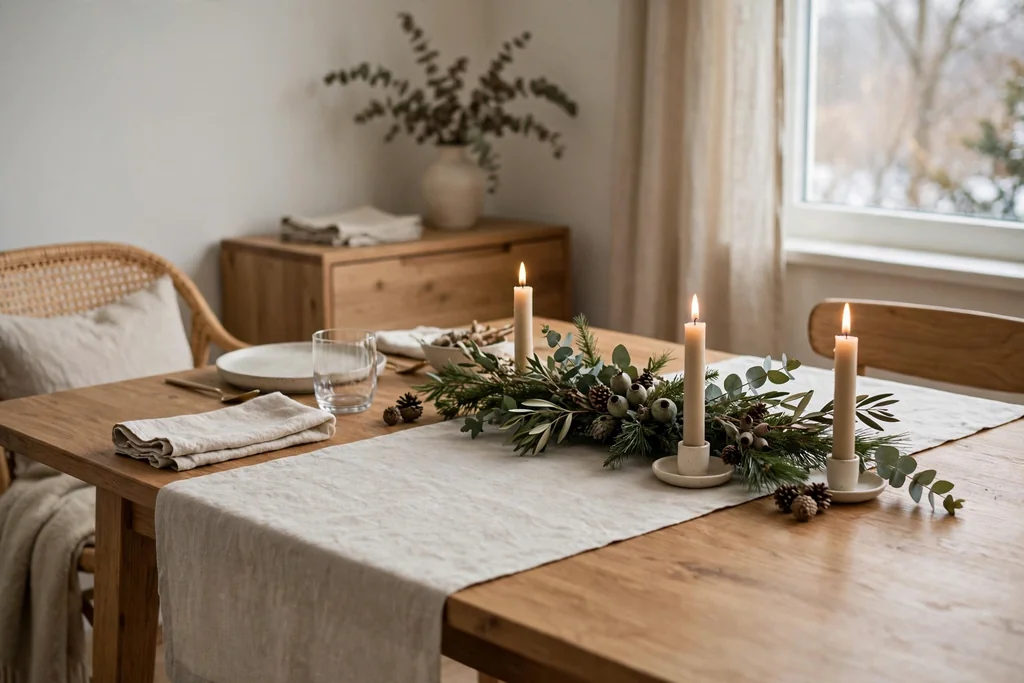
Build a low centerpiece with a plain runner, a few candles, and a short length of greenery or a bowl of pinecones. Keep it low and narrow so people can see and talk across the table, and keep it simple enough to lift off in one move for serving. A plain linen runner in cream or natural linen suits January well.
Use a tray under candles and greenery to protect the table and to keep the group together. For everyday meals, leave just the runner and one candle group in place, and add greenery or pinecones when guests come. Wipe the runner or shake it out weekly so it stays fresh.
10. Bare Branches as a Sculptural Focal Point
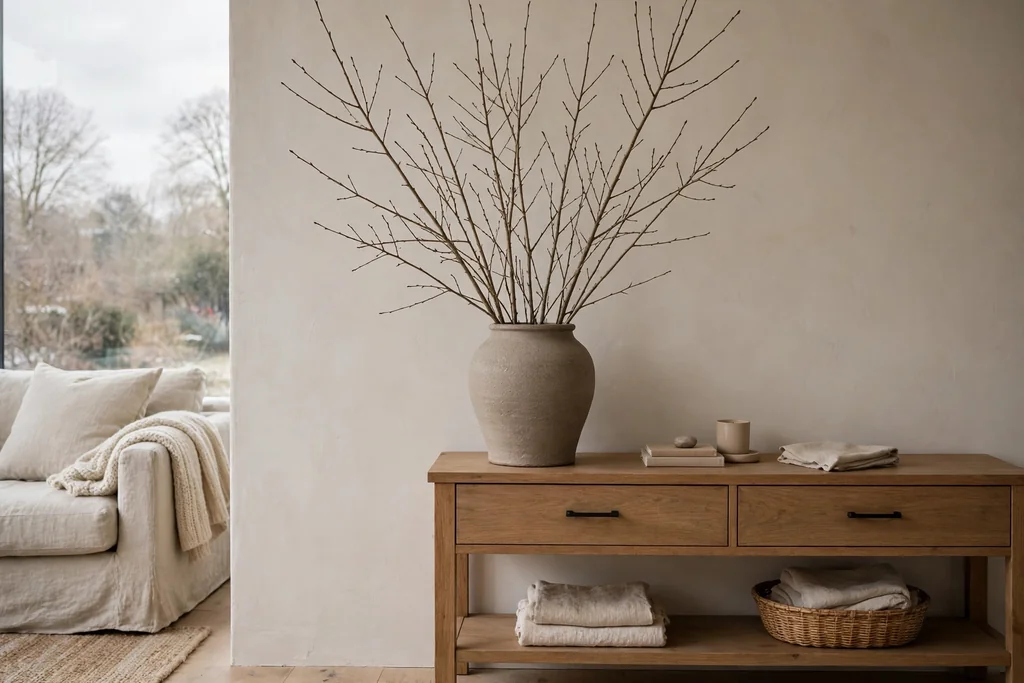
Place tall bare branches in a heavy vase on the floor or on a console, and let their shape carry the display. Bare branches suit January because they echo the season outside, cost little, and need no water once dry. Choose branches with interesting forks and a balanced shape, and trim any that crowd the vase.
Keep the vase heavy enough that it cannot tip, and place it where it will not block a walkway. A few branches are enough; too many will look like a thicket. If you want a hint of color, tie a single length of plain ribbon near the top, or add a small cluster of dried seed heads.
11. A Living Room Layout Moved Toward Conversation
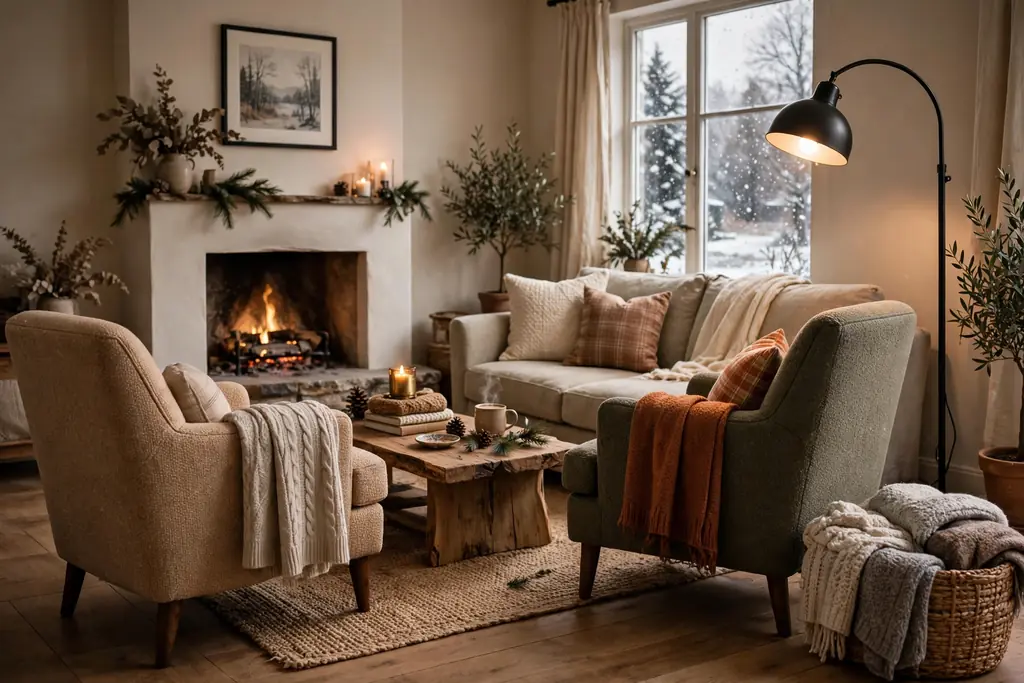
Pull chairs and the sofa a little closer together, angle chairs toward the sofa, and make sure every seat has a small table or surface nearby. A layout built around conversation feels warmer in winter, when people spend more time indoors. Check that walkways stay clear and that no seat has its back to the main light.
Try the change for a few days before moving heavy pieces back. Move a floor lamp near the main seating group so reading light lands where people sit. If the room has a fireplace or stove, angle seating toward it as a natural focal point, and keep a basket of throws nearby.
12. Mirrors to Bounce Winter Light
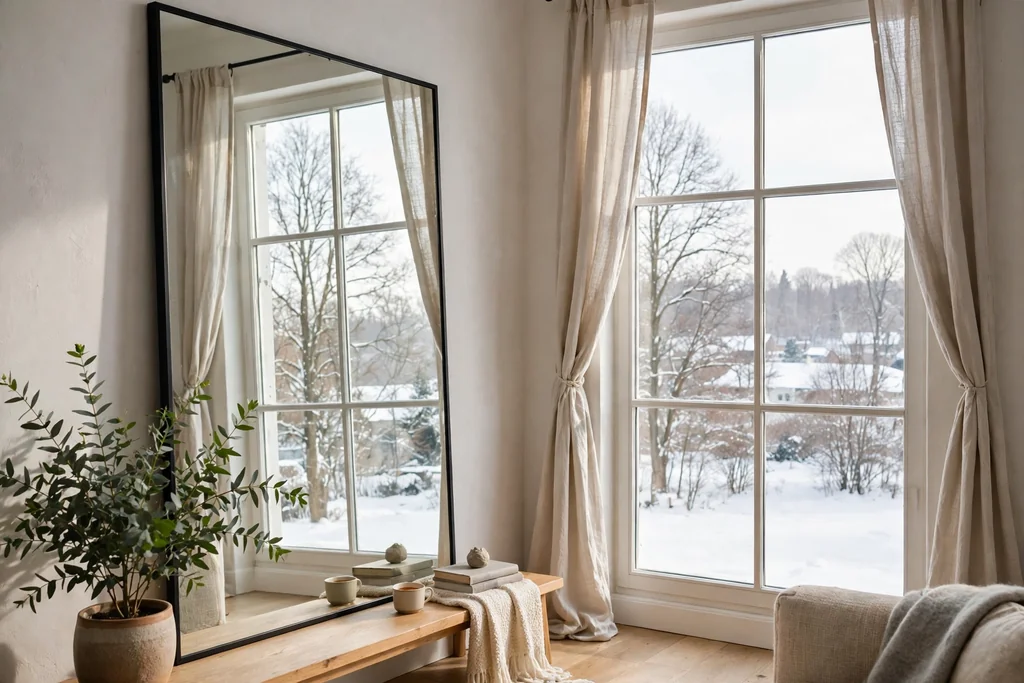
Hang a mirror opposite or beside a window so it reflects daylight deeper into the room. In January, when daylight is short, a mirror can make a room feel brighter without adding lamps. Choose a plain frame that matches the room, and hang the mirror at eye level for the view it reflects.
Check what the mirror reflects before fixing it in place: a window, a plant, or a calm wall works well, while a cluttered corner will look doubled. In a small room, a leaning floor mirror can open up a wall, but keep it secure and clear of walkways. Wipe the glass weekly so the reflection stays clear.
13. A Room by Room Declutter with One Basket
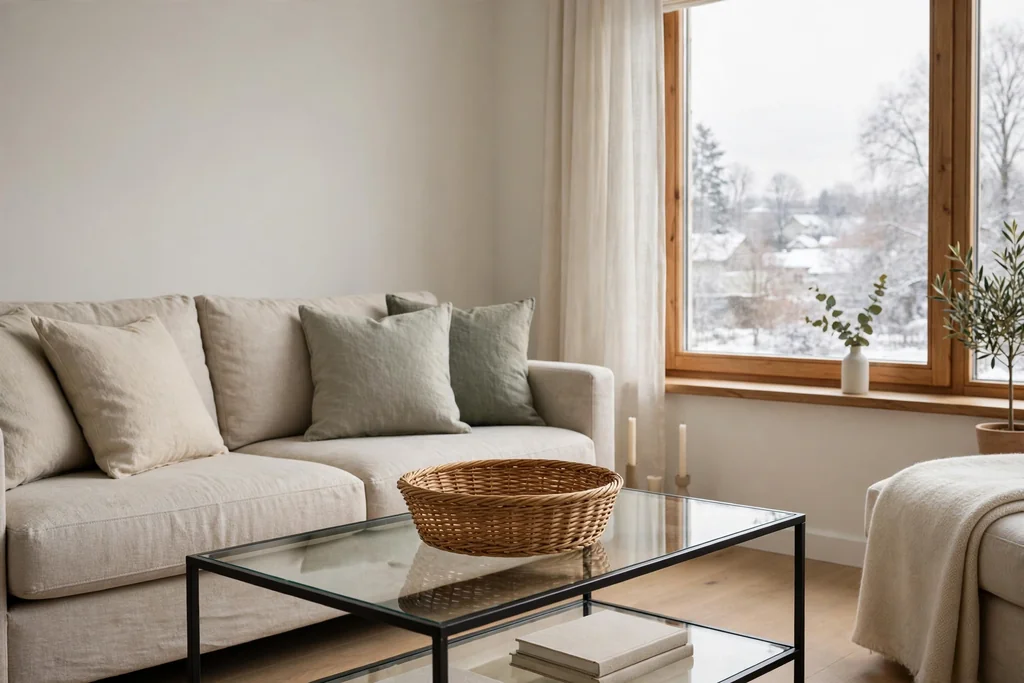
Carry one basket through a room and collect anything that belongs elsewhere, is broken, or has not been used in months. Work room by room, and put the basket contents away, donate usable items, or recycle what is worn out before starting the next room. The basket rule keeps the job short and stops clutter from moving to another room.
Set a timer for twenty minutes per room so the task stays doable. Start with visible surfaces, such as tables and counters, then move to one drawer or shelf. Keep a small box for items to pass on, and take it out of the house the same day so it does not become a new pile.
14. A Cozy Reading Corner by a Window
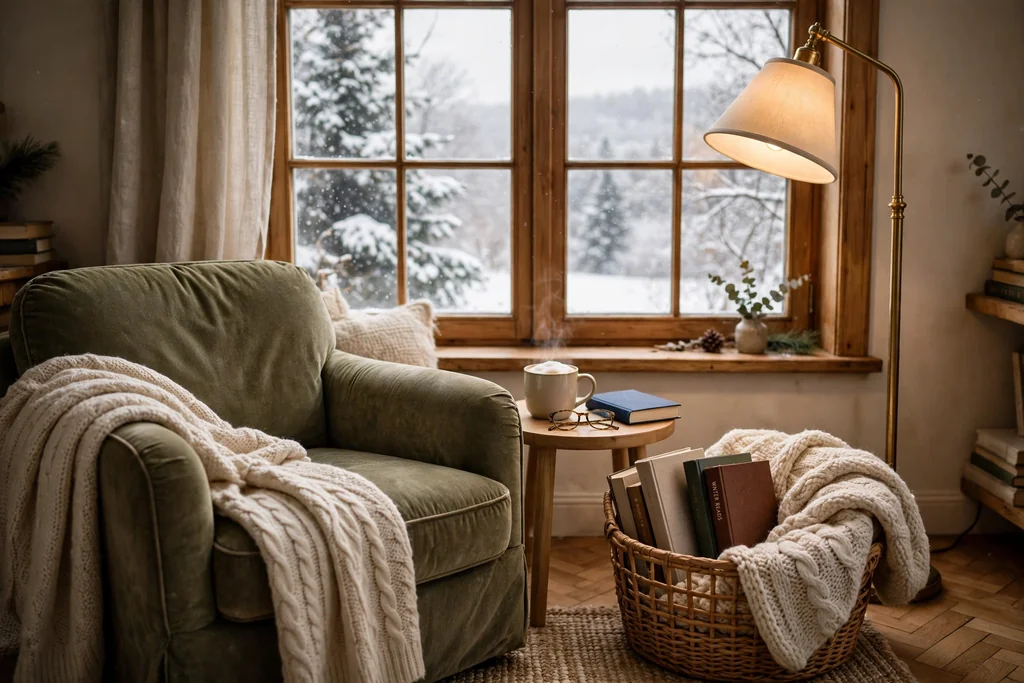
Place a comfortable chair near a window, add a floor or table lamp with warm light, and keep a basket with a throw and a few books beside it. A dedicated corner gives winter evenings a clear place to rest, and it needs little more than a chair, light, and a surface for a cup. Choose a chair with arms that support reading for a while.
Keep the corner simple: one chair, one lamp, one small table, and the basket. If the window is drafty, add a heavier curtain or a draft stopper, and place a small rug under the chair for warmth. Rotate the books and the throw cover each month so the corner feels cared for.
15. A Winter Wreath for an Interior Door

Hang a simple wreath of pinecones, dried seed heads, or plain greenery on an interior door or a wall. An interior wreath brings a winter note inside without holiday colors, and it suits a hallway, bedroom door, or kitchen wall. Keep the wreath flat and light so the door still closes easily.
Choose natural tones and one simple bow in linen or plain ribbon if you want a finish. Hang it with a removable hook so the door paint stays clean. If the wreath sheds, shake it outdoors and keep it away from heat sources and open flames.
16. Calm Winter Prints Swapped into Existing Frames
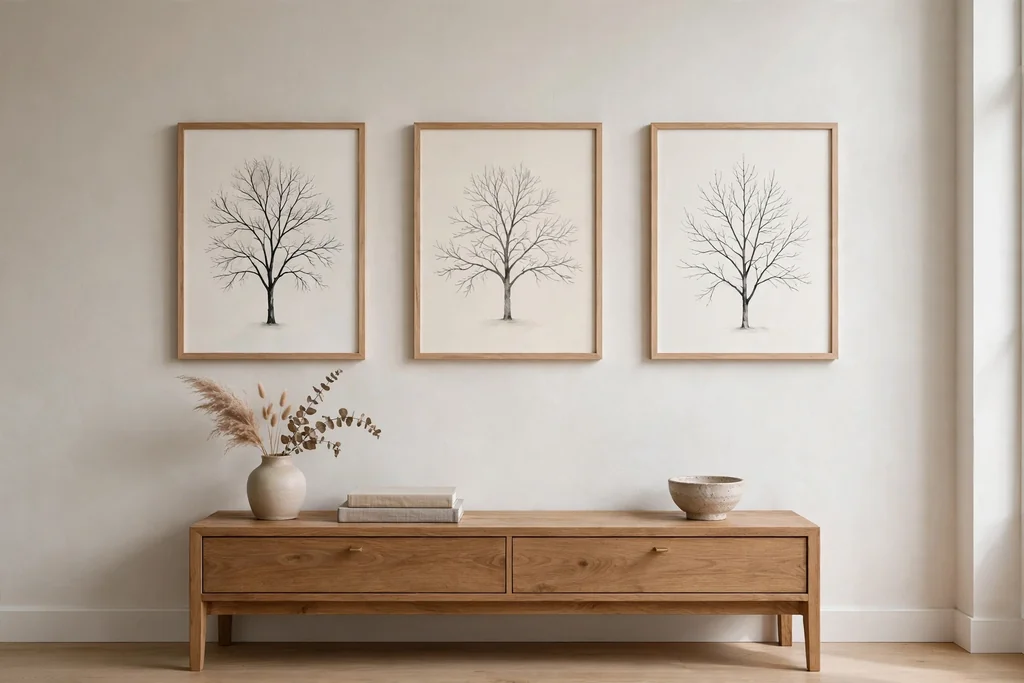
Swap bright or holiday prints for calm winter scenes, such as bare trees, quiet landscapes, or simple botanical prints, using frames you already own. Changing only the print is a quick, low cost way to shift a room toward January, and the old prints can be stored flat for later. Match print sizes to the frames so no trimming is needed.
Hang one larger print as a focal point, or group three small prints in a row over a console. Keep the wall color in mind: soft prints suit pale walls, while a darker frame can ground a print on a white wall. Step back after hanging to check height, with the center near eye level.
17. A Bathroom Reset with White Towels and a Wood Tray
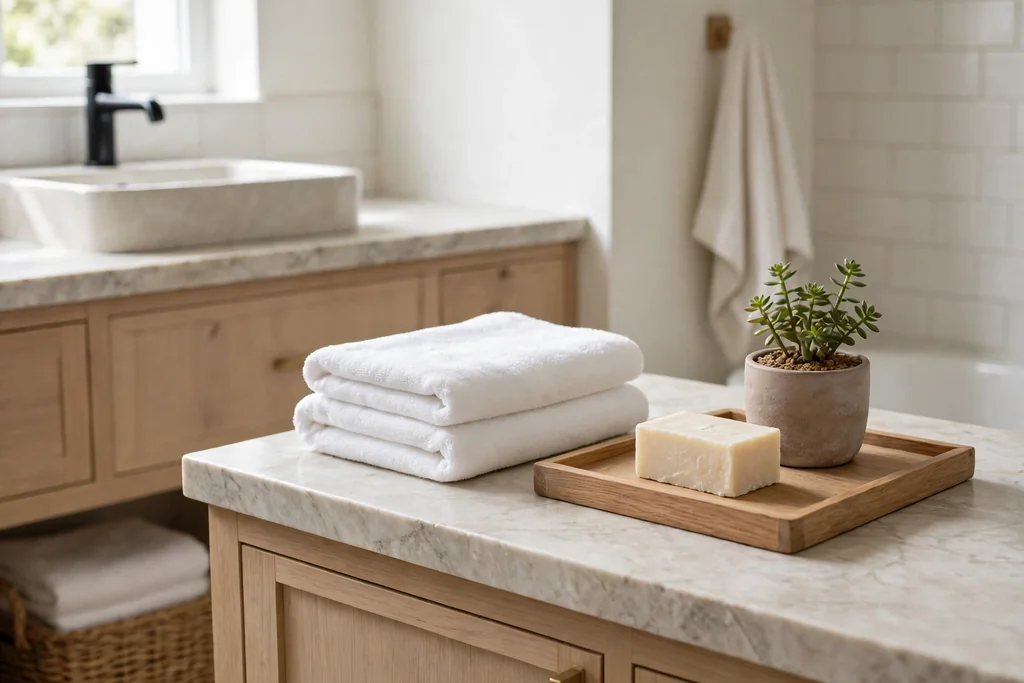
Replace patterned towels with plain white or cream towels, fold them neatly, and set a wooden tray on the counter with soap, a small plant, and a candle. The simple grouping makes a bathroom feel clean and calm, and the tray keeps daily items together. Keep only what is used daily on the counter.
Store spare towels rolled in a basket or on a shelf, and keep cleaning products under the sink. Wipe the tray and counter weekly, and swap hand towels often in winter when hands are washed more. A small plant that likes humidity, kept away from direct water, adds a soft green note.
18. A Hallway Gallery Given Breathing Room
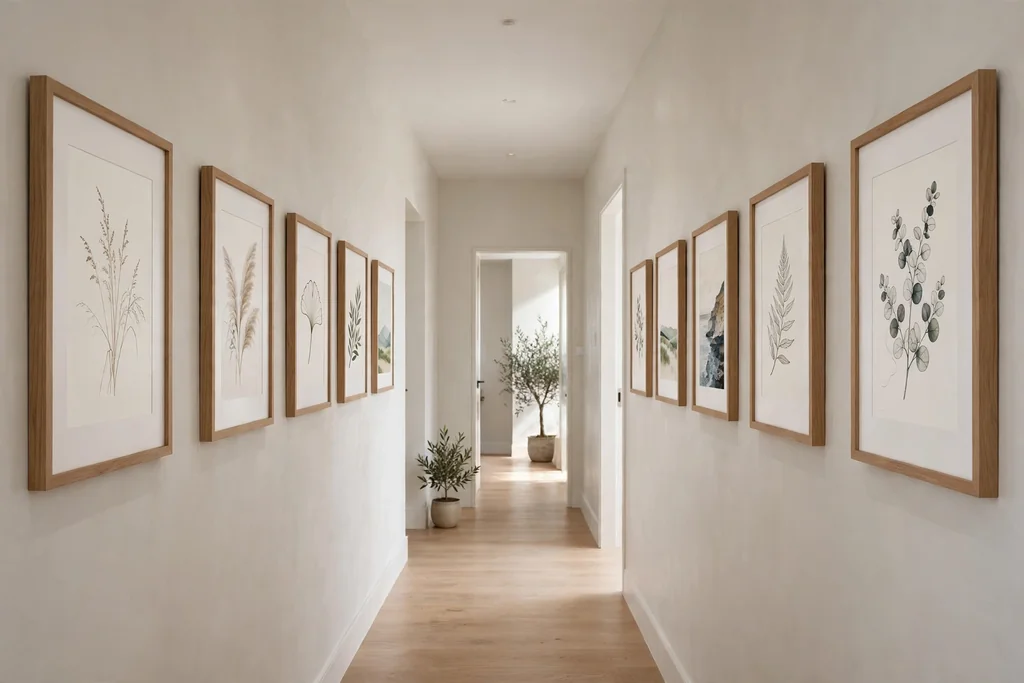
Take down crowded hallway frames, keep the pieces you like best, and rehang them with even spacing and a straight line at the center. A hallway with fewer, well spaced frames feels calmer and wider, and the walk through the home feels more settled. Measure spacing with a tape rather than guessing by eye.
Use matching frames or a single frame color to tie the group together. Hang larger pieces first, then fill gaps with smaller ones, leaving at least a hand width between frames. If the hallway is narrow, keep frames flat to the wall and avoid deep frames that jut into the walkway.
19. Layered Rugs for Warmth Underfoot

Layer a flat weave rug under a smaller wool or cotton rug in a living room or bedroom, keeping the top rug centered on the seating or bed. Layered rugs add warmth underfoot in cold months and let you use a favorite smaller rug over a plain larger base. Keep rug edges flat and use a rug pad so layers do not slip.
Choose rugs in the room palette, with the larger rug plain and the top rug carrying any pattern. Leave floor visible around the edges so the room does not feel covered. Vacuum layered rugs regularly, since dust settles between layers, and lift the top rug to clean beneath it.
20. Baskets That Give Blankets and Toys a Home
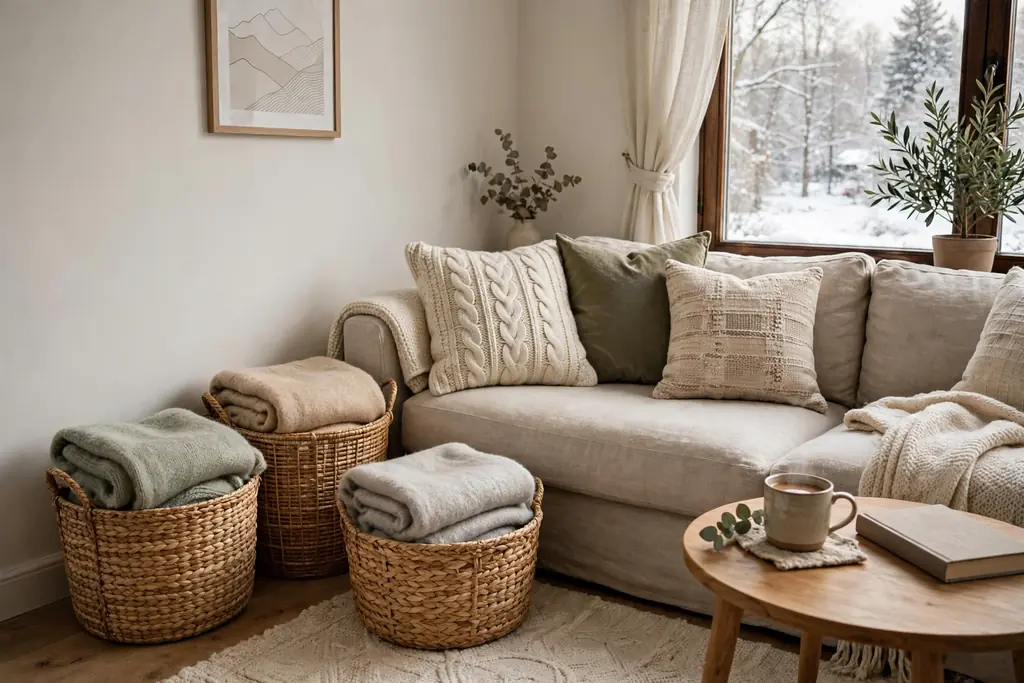
Place lidded or open baskets in the living room, bedroom, and entry for blankets, toys, chargers, and small clutter. Baskets make tidying quick at the end of the day, since each item has a clear home, and natural woven baskets suit a calm winter palette. Choose a size that fits the items, not a basket that invites overflow.
Assign one basket per category, such as blankets in one and toys in another, and label baskets in a shared family room if that helps. Empty baskets weekly and return stray items to their rooms. Keep basket handles clear so baskets can be carried for cleaning.
21. Winter Lanterns on the Porch
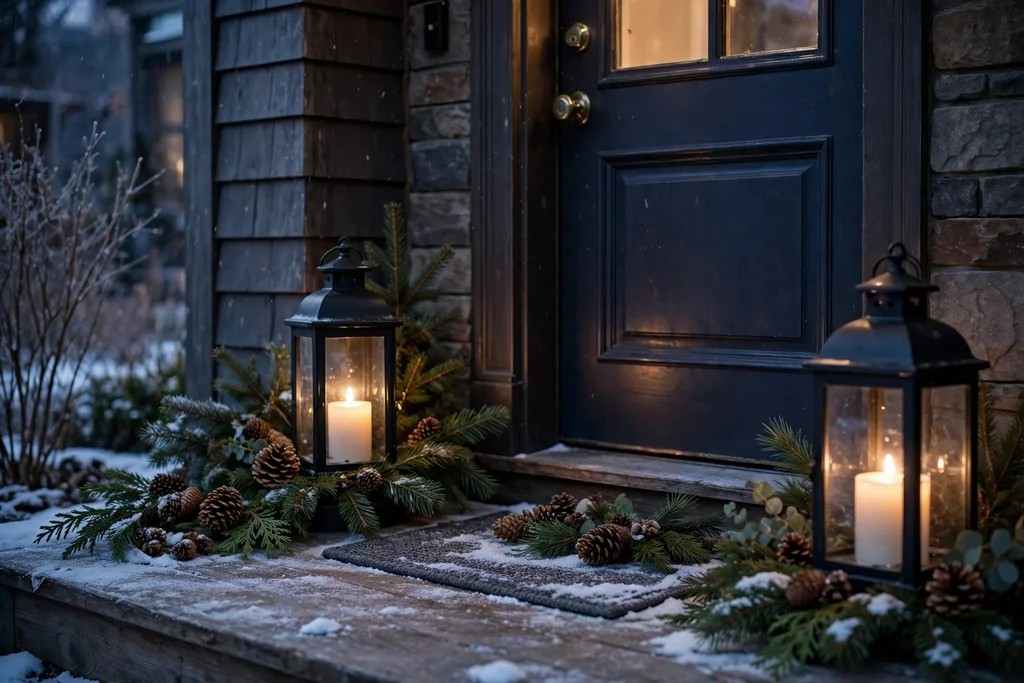
Set lanterns with battery candles on porch steps, beside the front door, or on a porch table, and add a small bundle of evergreen or pinecones at the base. Lantern light makes a January entry feel welcoming after dark, and battery candles stay safe outdoors in cold weather. Keep lanterns steady and clear of walkways.
Use lanterns of different heights in a group of two or three, and keep glass clean so light shows clearly. Bring fabric bows or paper decorations inside during rain or snow. Check batteries weekly in cold weather, since cold can shorten battery life.
Conclusion
January decorating does not need a full makeover. Clear the holiday clutter, keep a calm palette, and add soft light, greenery, and warm layers where you spend the most time. Start with one room, reuse what you own, and let each small swap settle before moving to the next. The result is a home that feels fresh, restful, and ready for the months ahead.
FAQs
How do I start decorating in January after the holidays?
Start by removing all holiday decor, then clean surfaces and look at each room in daylight before adding anything back. Choose one room first, keep a calm palette of cream, white, and wood, and add just greenery, soft light, and one or two cozy layers.
What colors work best for January decorating?
Cream, soft white, pale wood, sage, dusty blue, and warm gray work well for January, since they feel calm and bright in short winter days. Keep one muted accent and repeat it through the home, rather than mixing many strong colors at once.
How can I make my home feel cozy in January without clutter?
Use layered textiles, warm candlelight, and natural greenery, and keep surfaces mostly clear so each piece has space around it. Give blankets, toys, and small items a basket home, and remove one item from a crowded surface before adding another.
What is the simplest January refresh for a living room?
Swap cushion covers to cream or soft gray, drape a wool throw over the sofa, clear the mantel to a few winter pieces, and add a mirror or lamp to lift the light. Rearrange seating toward conversation, and keep the palette to three or four colors.
Should I keep any greenery up in January?
Yes, plain evergreen sprigs, eucalyptus, bare branches, and pinecones suit January well, since they echo winter without holiday colors. Replace fresh sprigs when they dry out, and keep greenery away from heat sources and open flames.
How do I decorate a small home in January?
Focus on light, clear surfaces, and multi use pieces, such as a basket that holds blankets, a mirror that brightens a room, and a tray that groups candles. Keep the palette light, leave floor and surface space visible, and decorate one small area at a time.