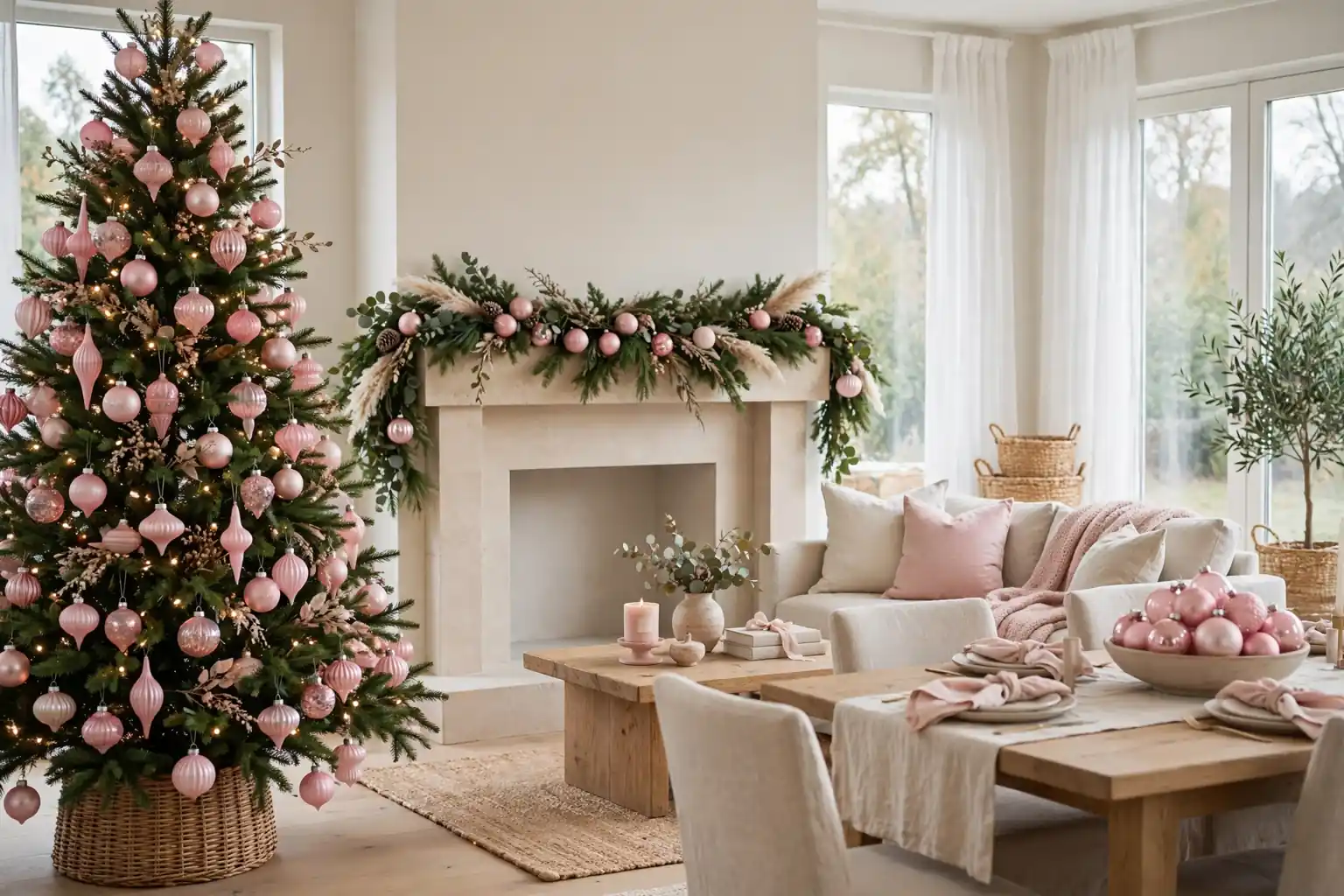
Pink ornaments work on trees, garlands, and tables when you pick one pink family, mix matte and shiny finishes, and repeat the same pink in at least two places in the room. Use glass for sparkle, velvet or felt for softness, and a simple gold, white, or green base so the pink stays calm and not busy.
Start by choosing blush, rose, or hot pink, and stay close to that family through the whole display. A green tree, a white tree, or plain greenery all suit pink, but mixing every pink shade at once can make a display look scattered. For more seasonal ideas to pair with these looks, browse the Dwell Ovell decor ideas index. Keep ornaments in a few sizes, leave space between the largest pieces, and repeat one accent, such as gold ribbon or white beads, so the tree, garland, and table feel connected.
Key Takeaways
- Pick one pink family, blush, rose, or hot pink, and use it in at least two places in the room.
- Mix matte and shiny finishes so pink ornaments read as layered, not flat.
- Pair pink with a calm base of green, white, cream, or gold.
- Use different materials, such as glass, velvet, felt, paper, ceramic, and wood, for texture.
- Vary ornament size, with large pieces deeper in a tree or display and small pieces near edges.
- Keep table displays low and stable so guests can see across the table and ornaments do not roll.
1. Blush Glass Balls on a Green Tree
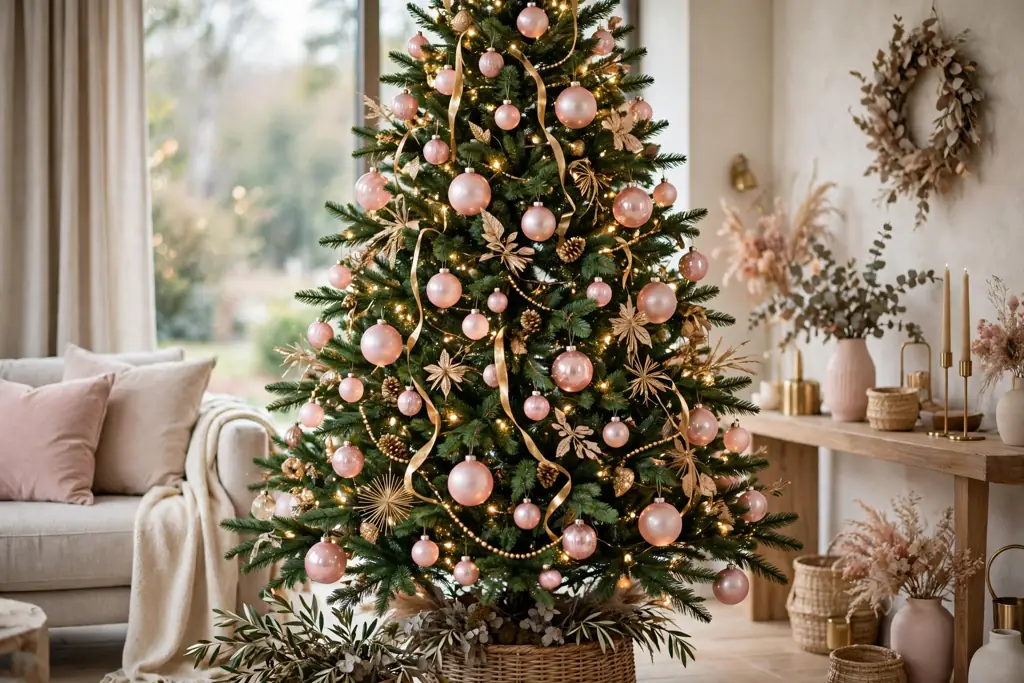
Hang blush pink glass balls in several sizes on a green tree, with larger balls set deeper in the branches and smaller balls near the tips. Add plain white or gold balls between the pink ones so the pink has room to show. Warm white lights help blush pink look soft rather than washed out.
Step back after hanging each group of five or six ornaments and check for gaps or crowded spots. If one side looks heavy, move a large ball to the lighter side instead of adding more ornaments. Store glass balls in divided boxes with tissue between pieces so they do not chip.
2. Velvet Pink Ornaments on a Flocked Tree
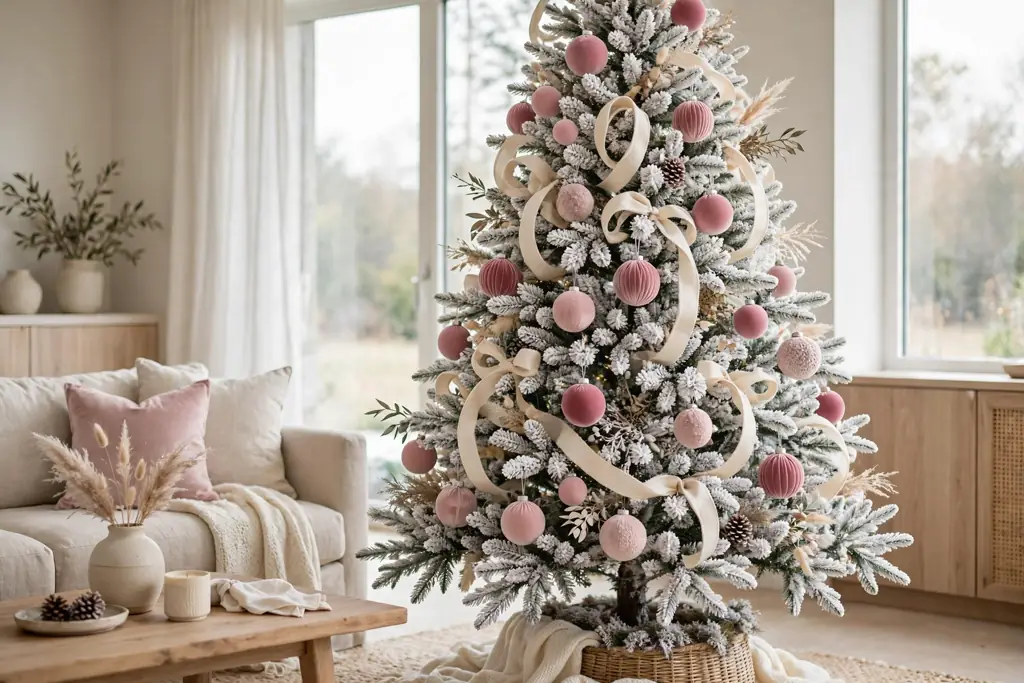
Hang velvet pink ornaments, such as balls, drops, and bows, on a flocked white or pale green tree. The soft fabric stands out against the frosted branches, and the matte surface keeps the pink gentle. Add a few satin ornaments in the same pink for a small amount of shine.
Use ribbon loops in cream or gold for hanging, and keep the loops short so ornaments sit close to the branches. Velvet shows dust more than glass, so brush ornaments lightly before hanging and store them in a closed box away from damp air. This pairing suits a living room tree that needs a quiet, cozy feel.
3. A Strung Pink Ornament Garland on the Mantel
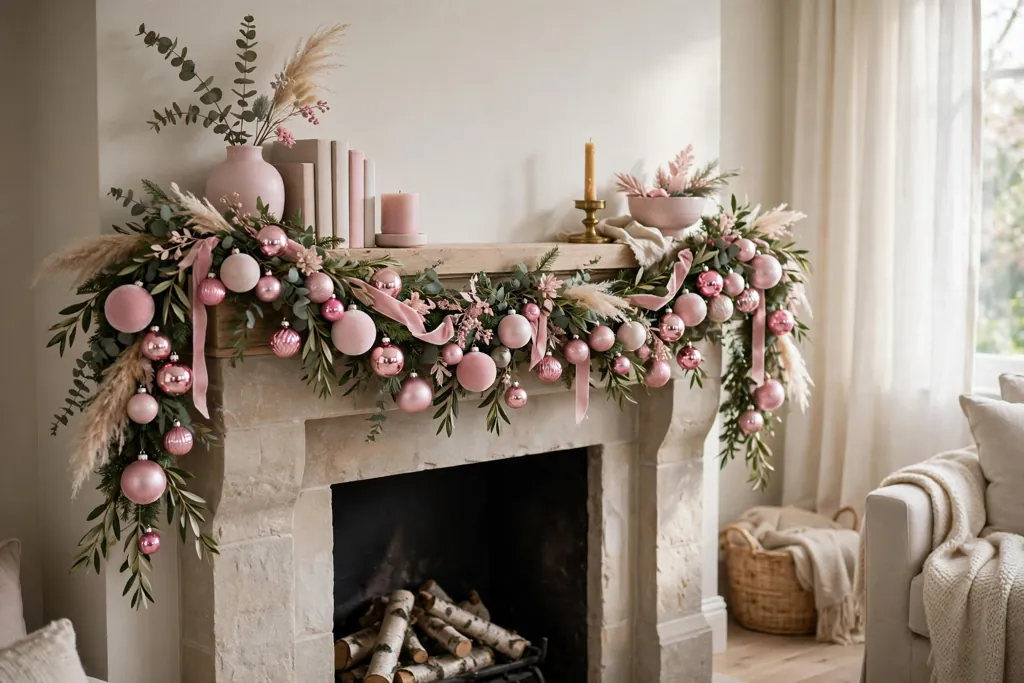
String pink ornaments of mixed sizes on sturdy cord or ribbon and drape the strand along a mantel in loose swags. Mix matte balls, shiny balls, and one or two shaped ornaments, such as stars or drops, for variety. Fasten the ends with small hooks so the garland stays in place.
Keep the swags shallow enough that stockings, candles, or framed photos below still show. If the mantel holds a fire, keep the garland and any fabric ribbon well clear of heat, and use battery candles nearby instead of real flames. A single pink garland can carry a mantel without a full tree in the room.
4. Hand Painted Pink Ceramic Ornaments on a Tabletop Tree
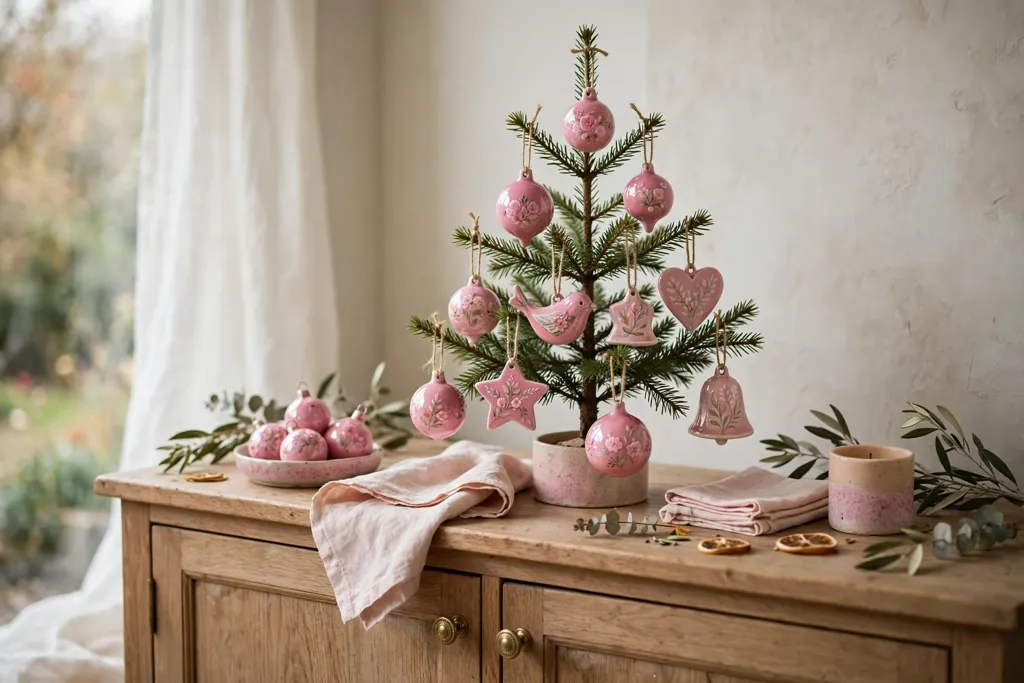
Hang small hand painted pink ceramic ornaments on a tabletop tree for a sideboard, desk, or bedroom dresser. Ceramic suits close viewing, since painted flowers, dots, or stripes show clearly at arm’s length. Keep the tree small and the ornaments light so thin tabletop branches do not bend.
Place the tree on a tray or a folded cloth to catch any dropped pieces and to make the display easy to move. Because ceramic can break if it falls, keep this tree away from table edges and busy walkways. A tabletop tree also works well in a room that has no space for a full size tree.
5. Pink Paper Honeycomb Ornaments in a Window
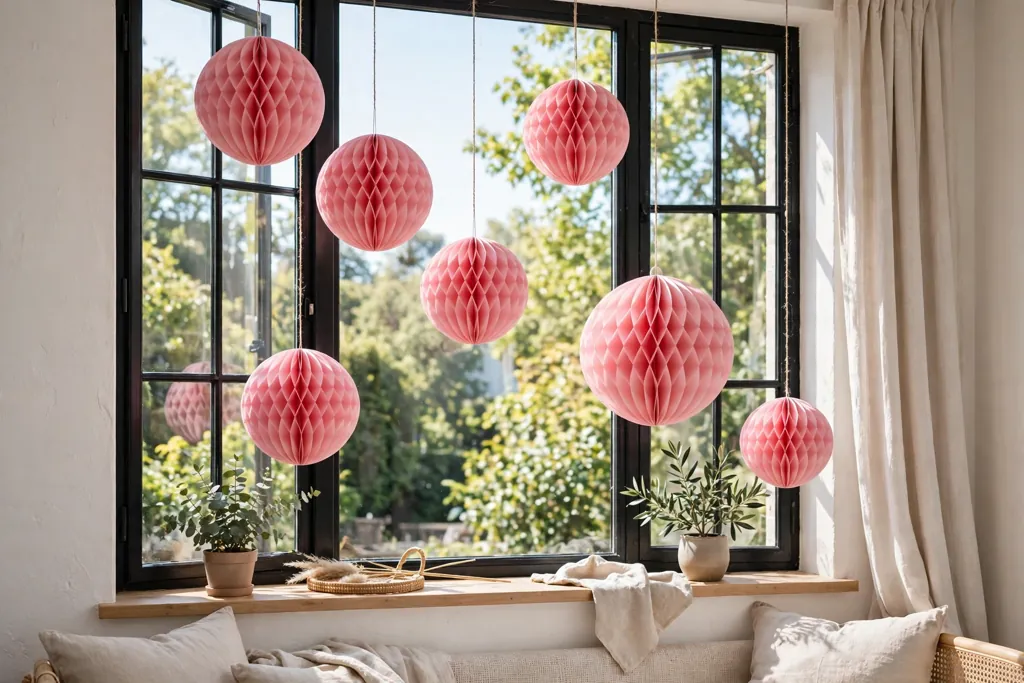
Hang pink paper honeycomb balls and fans in a window at different heights, using clear thread or thin ribbon. Daylight shows the folded paper texture, and the ornaments move slightly in air from a vent or an open door. Mix pale pink and deeper rose so the window display has depth.
Paper ornaments are light, so they suit a curtain rod, a tension rod, or small adhesive hooks on the frame. Keep them away from damp windows and direct rain, since paper softens when wet. Fold flat styles store neatly after the season and can be reused the next year.
6. Pink Felt Ornaments on a Small Bedroom Tree
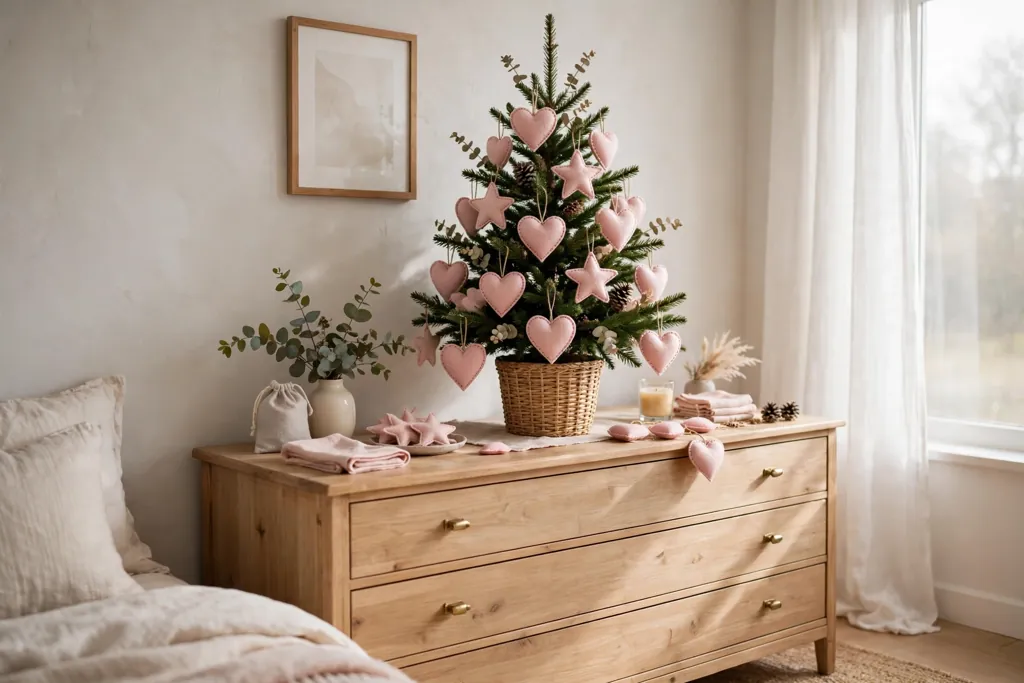
Hang pink felt ornaments, such as hearts, stars, and small trees, on a small tree in a bedroom. Felt is soft, light, and quiet, which suits a nightstand tree or a dresser tree. Mix plain felt shapes with one or two embroidered pieces for detail without clutter.
Use short ribbon loops in matching pink or cream so ornaments hang straight. Felt ornaments are a good choice where glass might break, such as a room used by children or pets. Store felt shapes flat with tissue between layers so they keep their shape.
7. Pink Glitter Acrylic Ornaments on a White Tree
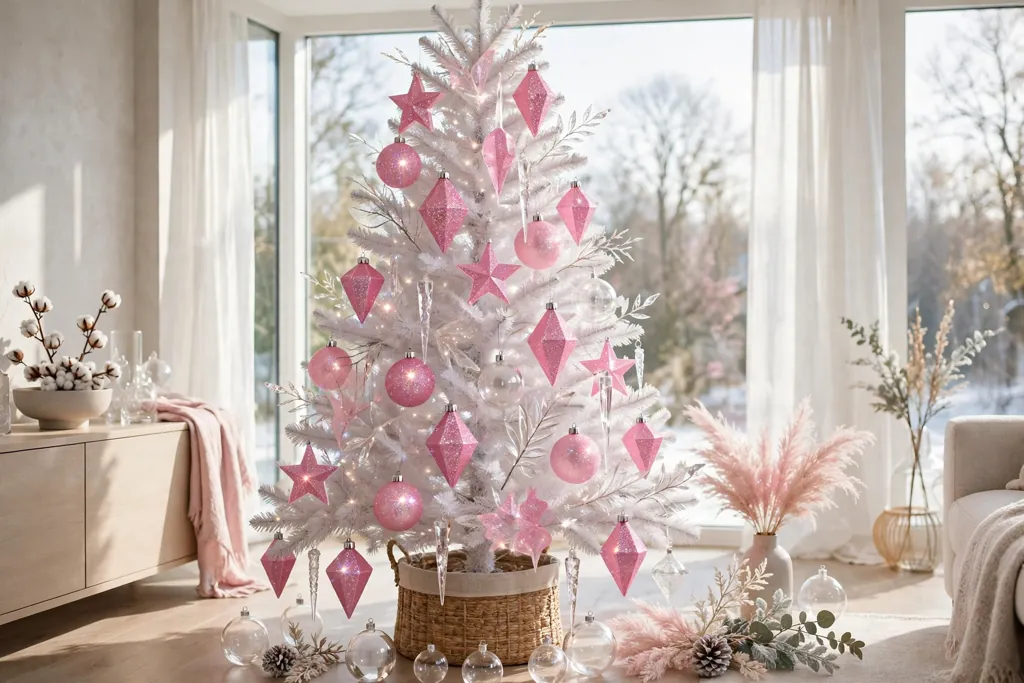
Hang pink glitter acrylic ornaments on a white tree for a bright, high shine look. Acrylic gives the sparkle of glitter without the weight or breakage risk of glass, and the white branches make pink read clearly. Add clear or silver ornaments between pink ones to keep the tree from looking solid pink.
Use white or silver lights so the glitter catches light evenly. Because glitter can shed, hang these ornaments over a surface that is easy to vacuum, and check loops before hanging so ornaments do not slip off branches. This pairing suits a modern living room or a party display.
8. A Pink Ornament Wreath on the Front Door
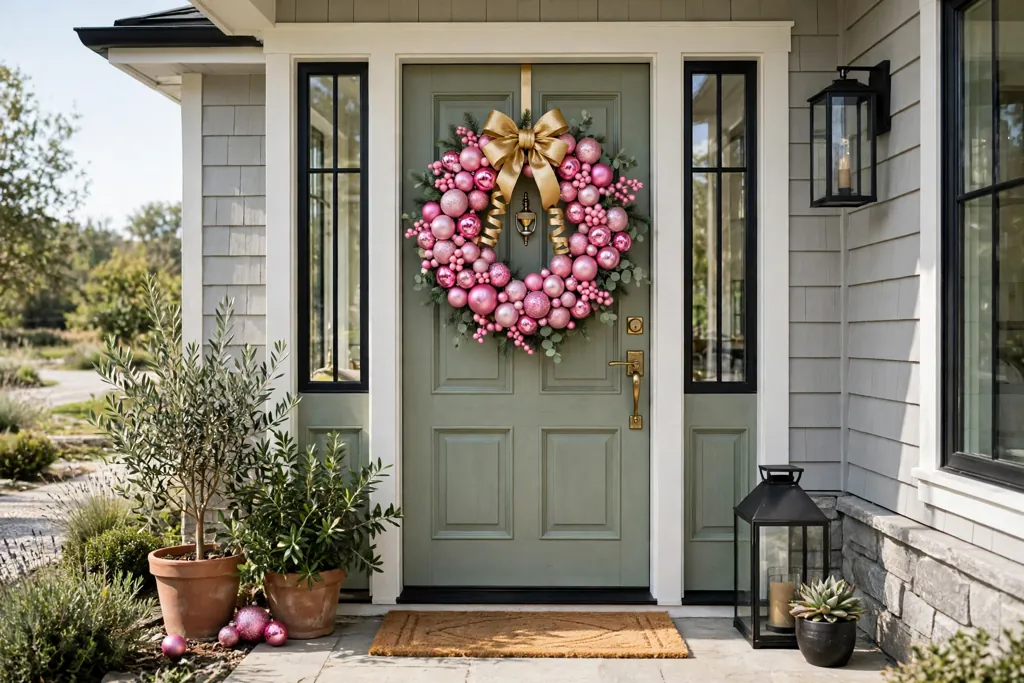
Wire pink ornaments in mixed sizes to a foam or wire wreath form to make a full ornament wreath for a front door. Mix matte, shiny, and glitter pink balls, and add a gold or cream bow at the top for a finished edge. The wreath gives strong color with no greenery needed.
Use light ornaments if the wreath will hang on a door that moves often, and save heavy glass balls for a wall display. Hang the wreath with a sturdy over door hook and check that it clears the door frame when the door opens. Store the wreath flat in a box with tissue over the front so ornaments do not shift.
9. A Bowl of Pink Ornaments as a Dining Table Centerpiece
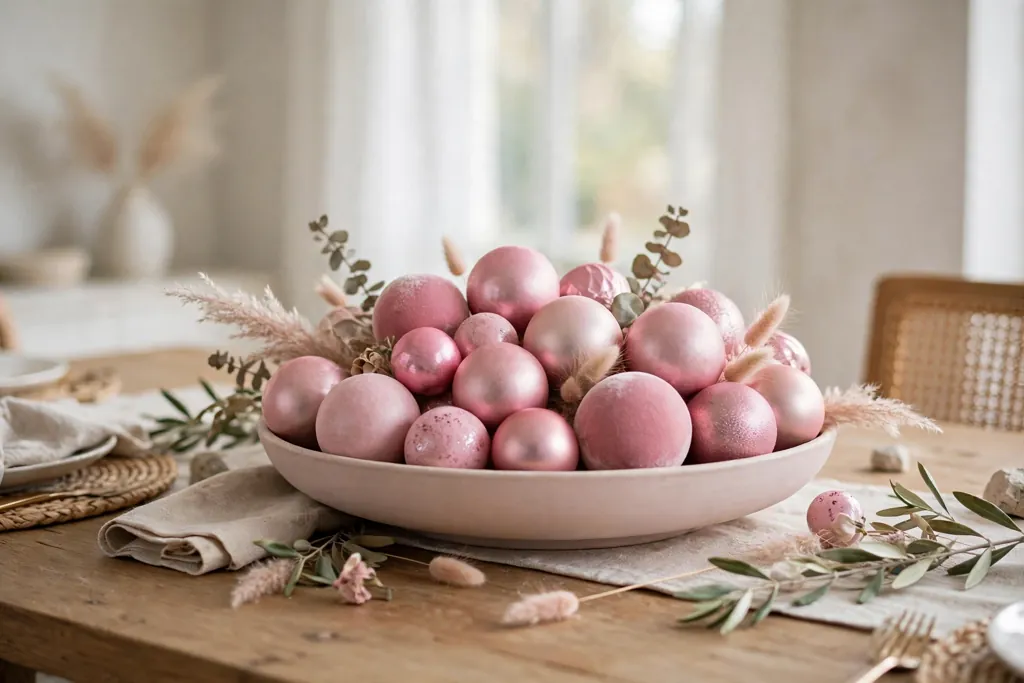
Fill a wide, low bowl with pink ornaments in mixed finishes and set it in the center of a dining table. Mix blush, rose, and one deeper pink, and add a few gold or white balls for contrast. A low bowl keeps the centerpiece in scale and leaves sight lines open across the table.
Choose a bowl with a flat base and a felt pad underneath to protect the table. If the bowl will stay on the table during meals, keep it narrow enough that plates and glasses still fit, and use shatterproof ornaments if children will be seated nearby. A runner under the bowl ties the centerpiece to the rest of the table.
10. Painted Pink Wooden Ornaments on Branches in a Vase
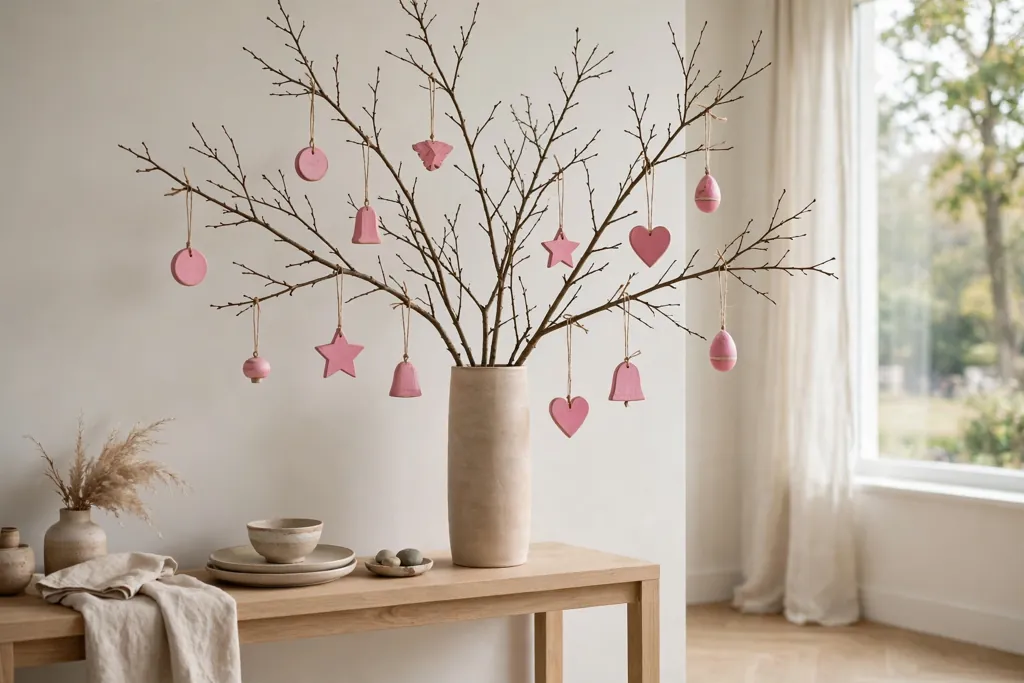
Hang small painted pink wooden ornaments from bare branches set in a tall vase on a console or sideboard. The branches give height without a tree, and the wood adds a handmade, rustic feel. Mix pink shapes, such as stars, hearts, and rounds, with a few plain wood pieces for balance.
Weight the vase with stones or sand so tall branches do not tip, and trim branches to fit the vase height. Keep the arrangement away from doorways where coats or bags might catch branches. This display suits an entry or hallway where a full tree would block the walkway.
11. Pink Ornaments Hung from a Chandelier with Ribbon
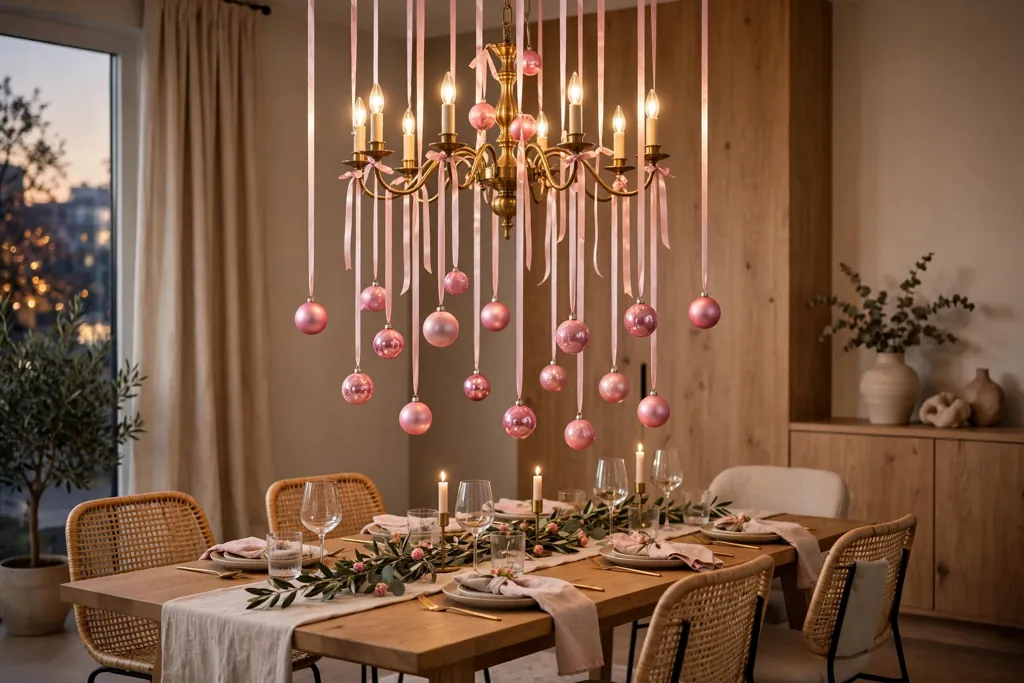
Hang pink ornaments from a chandelier or pendant light with ribbons cut to different lengths, so ornaments hang at staggered heights. Use light ornaments only, and keep ribbons clear of bulbs and heat sources. A mix of blush balls and small drops in pink and gold works well over a dining table.
Tie ribbons with a simple knot or a small bow, and trim ends evenly for a tidy look. Check the chandelier weight limit in practice by adding ornaments a few at a time and watching for any sway. Remove ornaments before cleaning the fixture, and store ribbons flat so they do not crease.
12. Pink Dried Flower Ornaments under a Glass Cloche
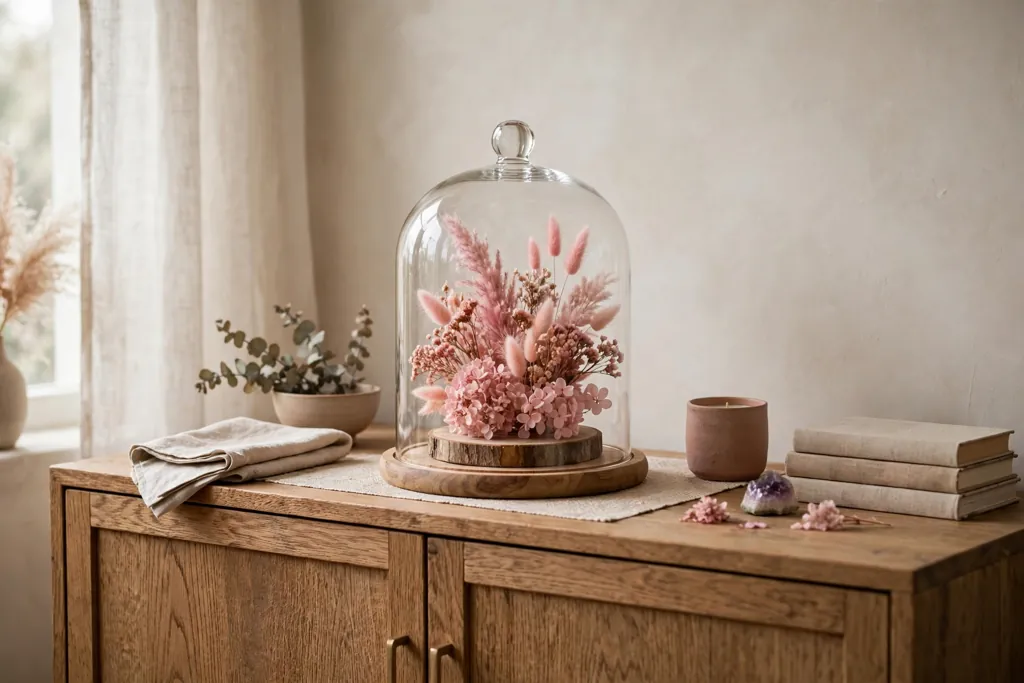
Place pink dried flower ornaments, such as small rose buds or pressed flower rounds, under a glass cloche on a sideboard or bookshelf. The cloche protects delicate dried flowers from dust and touch while letting their color show. Add a small linen cloth or a wooden base under the cloche to ground the display.
Keep the cloche out of direct sun, since strong sun can fade dried flowers. Handle dried pieces gently when setting up, and keep the display away from damp rooms, since moisture softens dried petals. A cloche display suits a quiet corner where a larger tree or garland would feel too busy.
13. Pink Yarn Wrapped Ornaments on a Family Tree
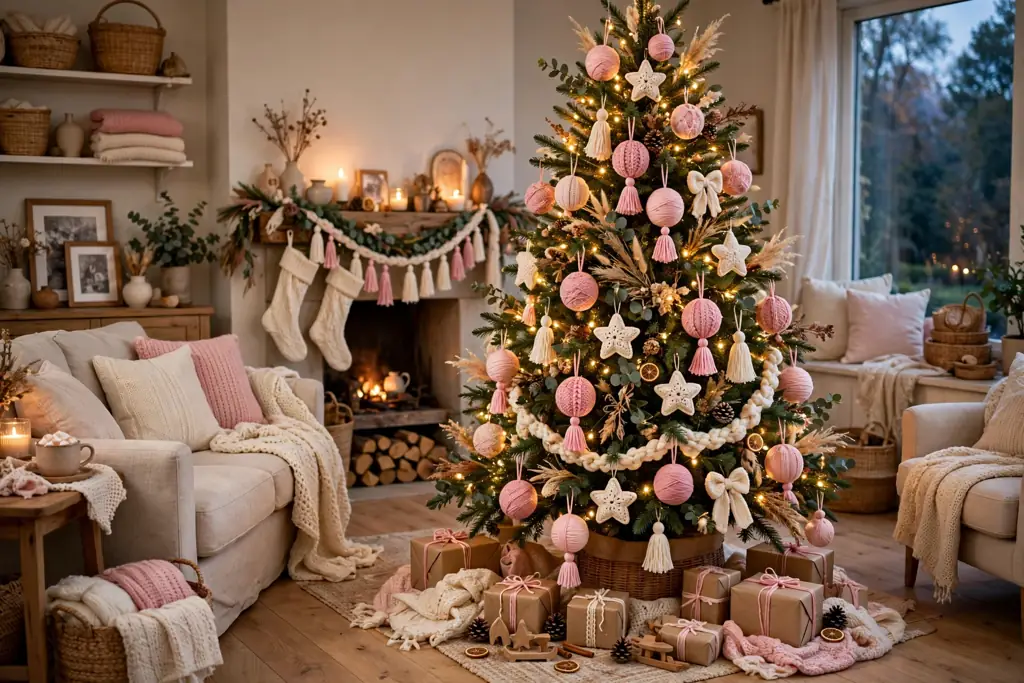
Wrap foam or plain balls in pink yarn, with a small pom pom or a felt star glued at the top, and hang them on a family tree. Yarn adds soft texture next to glass and metal ornaments, and the handmade look suits a tree decorated over time. Mix light pink, rose, and cream yarn for a varied but calm result.
Use a short loop of matching yarn or ribbon for hanging, and keep yarn ends tucked or glued so they do not unravel. Yarn ornaments are light and safe for lower branches where children can reach them. Store them in a dry box with tissue so yarn does not snag on other ornaments.
14. A Tall Glass Vase Filled with Pink Ornaments
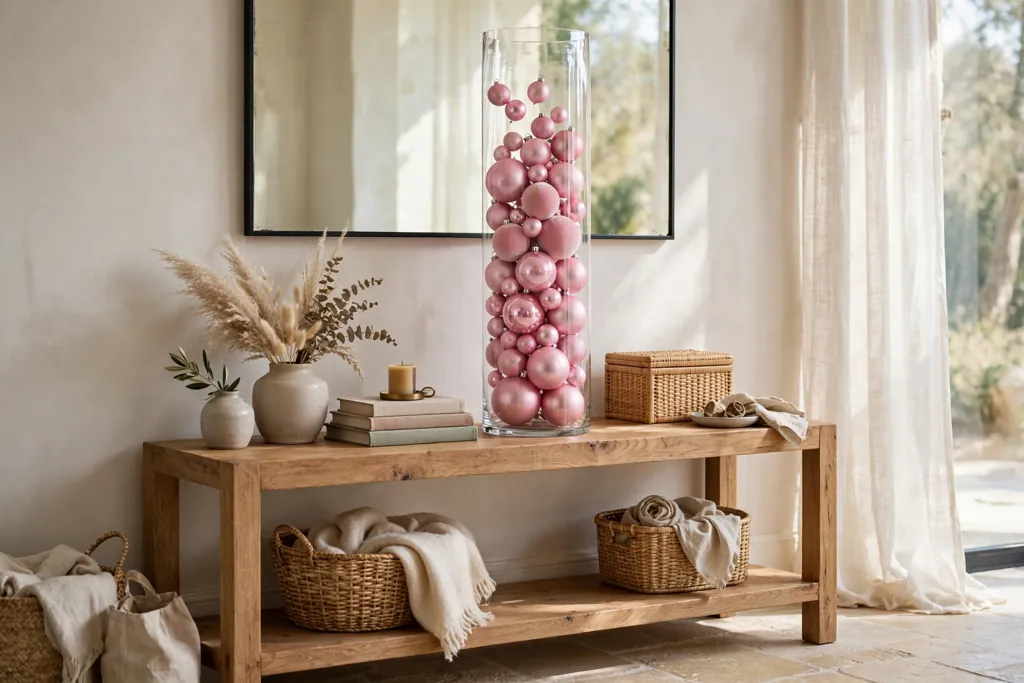
Fill a tall glass vase or hurricane with pink ornaments in graduated sizes, with larger balls at the bottom and smaller balls near the top, and set it on an entry console. The glass shows the full color stack, and the vase needs no tree or garland to make an impact. Add a single gold or white ornament near the top for contrast.
Choose a vase with a wide, stable base, and place it away from the edge of the console. If the vase sits near a door, use shatterproof ornaments so a bump does not scatter glass. A vase display is easy to change after the season, since ornaments lift out and pack away in minutes.
15. Pink Teardrop Ornaments on a Stair Banister Garland
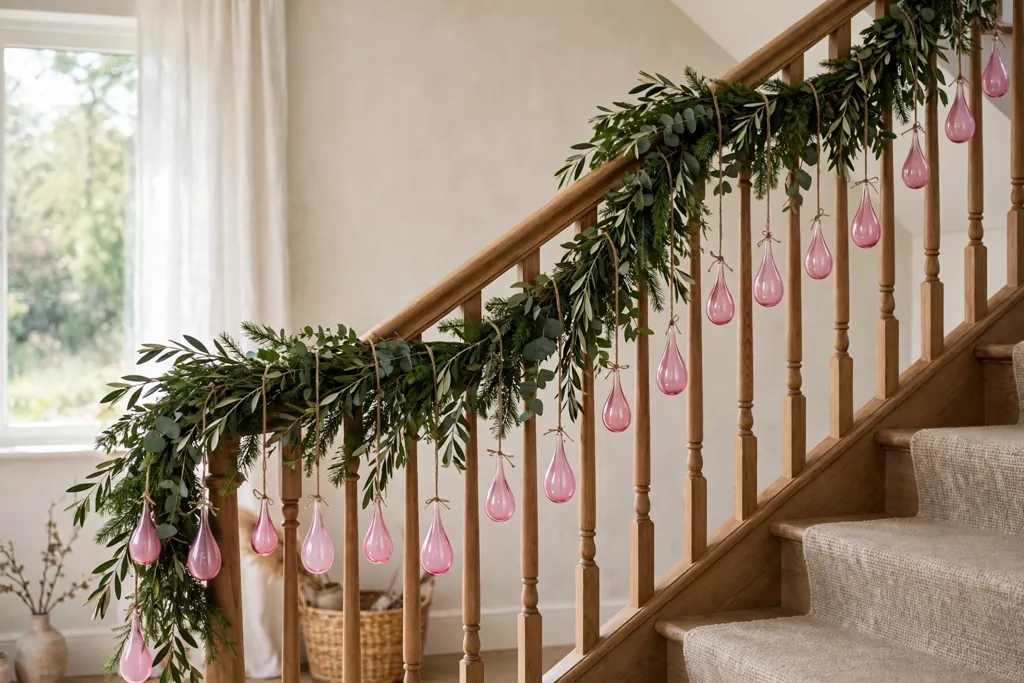
Hang pink teardrop and finial ornaments from a green garland draped along a stair banister. The long teardrop shape adds movement to the garland, and pink stands out clearly against green branches. Space ornaments evenly along the swags, with a small cluster at each newel post.
Fasten the garland with short ties or hooks rather than tape, so the banister finish stays clean. Keep ornaments high enough that hands can still grip the rail safely, and keep the swags clear of steps. Check ties after the first day, since garland can settle and pull ornaments lower.
16. Pink Striped Ornaments on a Small Kitchen Tree
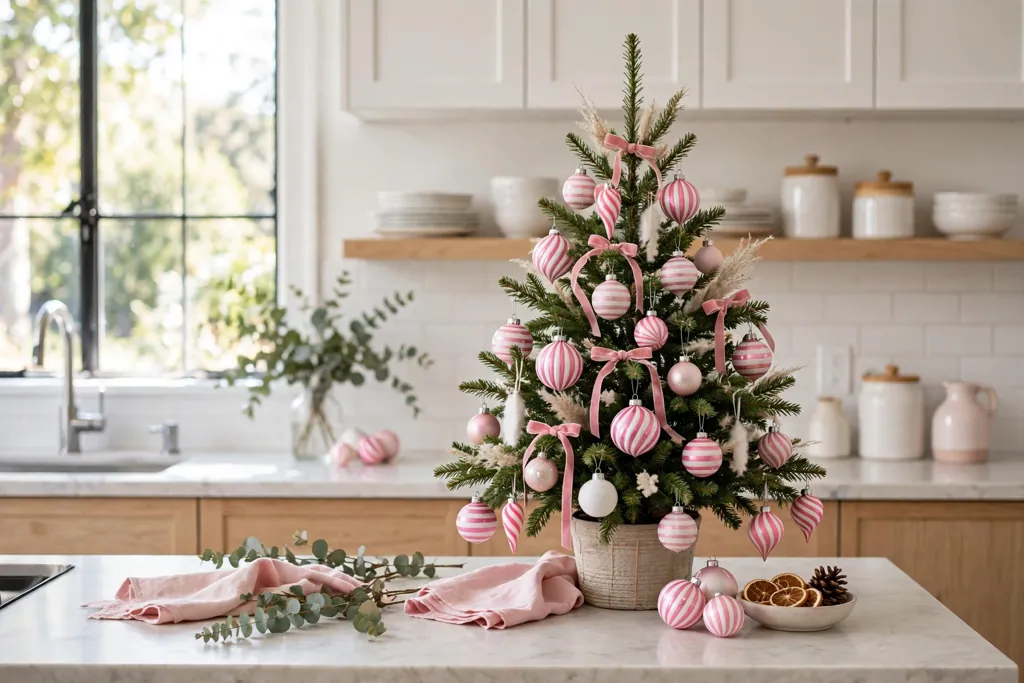
Hang pink and white striped ornaments on a small tree on a kitchen counter or a breakfast table. Stripes give a candy style pattern that suits a kitchen, and the small tree keeps counter space free for cooking. Mix striped balls with a few plain pink balls so the pattern does not overwhelm the tree.
Keep the tree away from the stove, sink, and cutting areas, and use shatterproof ornaments if the counter sees heavy use. A small tray under the tree catches fallen needles or ornaments and makes cleanup simple. This idea also works on a kitchen windowsill where the tree catches daylight.
17. A Pink Ornament as a Table Place Marker
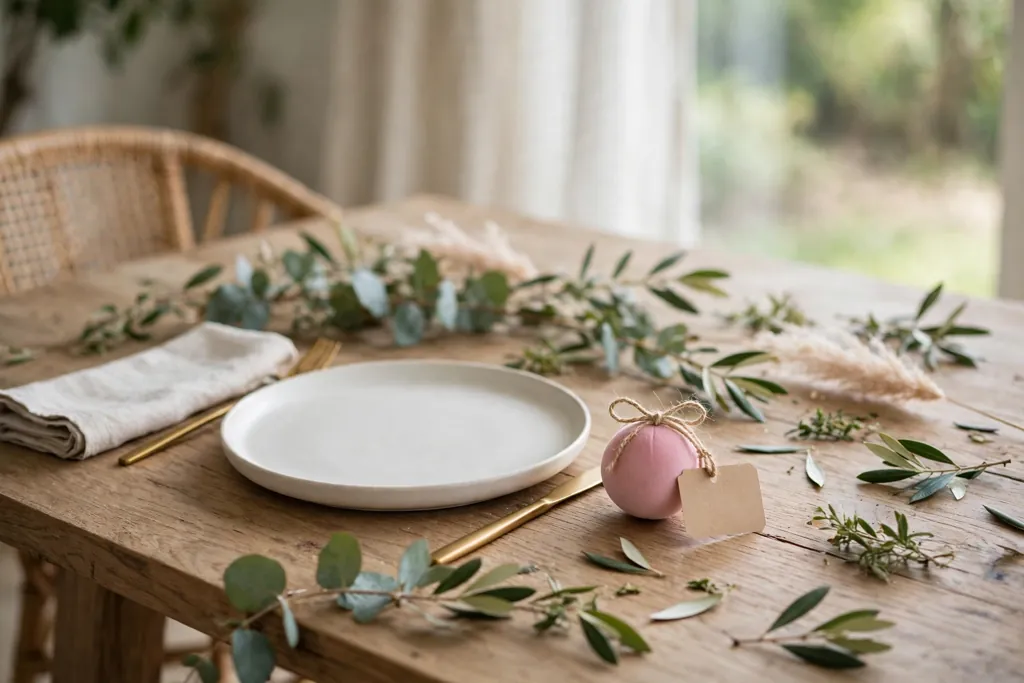
Set one pink ornament at each dining table place setting, tied with a small name tag or a sprig of greenery, as a place marker guests can take home. Use the same ornament shape in the same pink at every seat for a unified table, and match the ribbon to the table linens. The marker doubles as a small favor and a table decoration.
Keep ornaments flat or in a small dish at each setting so they do not roll off the table. If the table uses candles, keep ornaments and paper tags clear of flames, and use battery candles near paper or fabric. After the meal, guests can hang the ornament on their own tree, which makes the marker useful beyond one dinner.
Conclusion
Pink ornaments suit trees, garlands, and tables when one pink family leads and a calm base supports it. Start with the main tree, repeat the same pink on a garland or a table display, and vary the material so the pink feels layered rather than repeated. Choose the ideas that fit your rooms, your tree size, and your storage, and leave the rest for another season. A few well placed pink ornaments, in glass, velvet, felt, or wood, can carry a whole room without crowding it.
FAQs
What pink shade works best for ornaments?
Blush pink works best in most rooms, since it pairs with green, white, cream, and gold without looking loud. Rose pink gives a stronger color for a main tree or a door wreath, while hot pink suits a small accent display, such as a vase or a single garland, rather than a whole room.
How do I keep pink ornaments from looking childish?
Pair pink with a calm base, such as green branches, white, cream, or gold, and mix matte and shiny finishes instead of using only bright pink. Limit hot pink to one display, use larger ornaments with simple shapes on a main tree, and repeat the same pink family in a second place, such as a table bowl, so the look feels planned.
Can I mix pink ornaments with other colors?
Yes, pink mixes well with gold, white, cream, silver, and green, and it also pairs with soft blue or sage for a pastel display. Keep the second color to one or two accents, such as gold ribbon or white beads, so pink stays the main color and the display does not turn into a mix of unrelated shades.
Are pink ornaments only for Christmas trees?
No, pink ornaments work on mantel garlands, stair garlands, wreaths, chandeliers, window displays, table bowls, vases, and place settings. The same ornament can move from a tree to a bowl or a vase after the season, which makes pink ornaments useful for parties, spring tables, and bedroom displays as well as holiday trees.
How should I store pink ornaments?
Store glass ornaments in divided boxes with tissue between pieces, keep velvet and felt ornaments in closed, dry boxes, and store paper ornaments flat. Label boxes by color and material, such as blush glass or pink felt, so next season setup is quick and fragile pieces are easy to find.
How many pink ornaments do I need for a tree?
A small tabletop tree needs about 10 to 20 ornaments, a medium tree needs about 40 to 60, and a large tree needs 80 or more, depending on branch fullness. Start with fewer ornaments than you think you need, step back to check for gaps, and add small ornaments last to fill thin spots without crowding the tree.