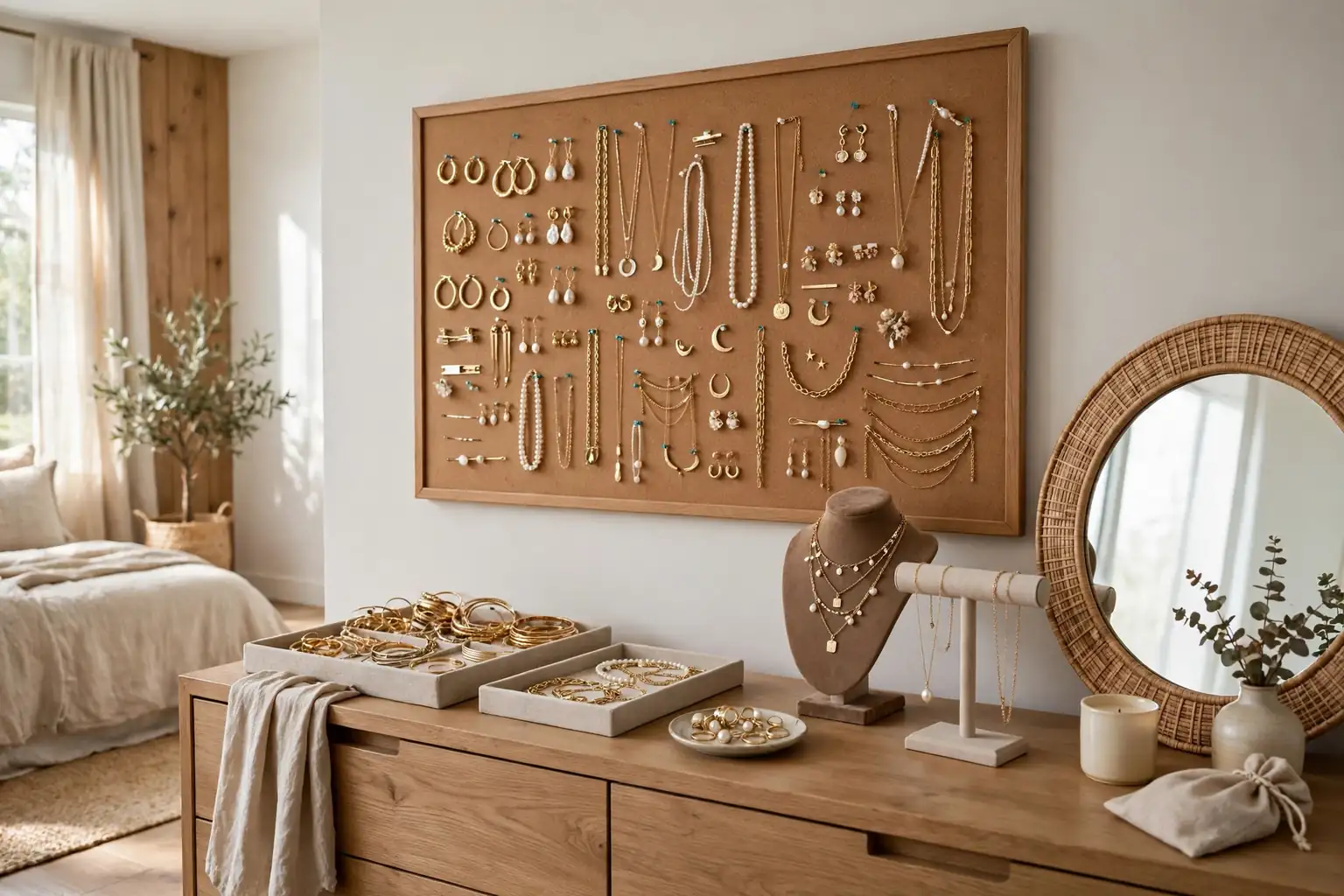
Jewelry is easy to collect and hard to keep in order. Necklaces tangle in a drawer, earrings lose their partners, and the piece you want is usually at the bottom of a box. A good display solves that by giving each type of jewelry a clear home, close to the mirror where you get ready. These 32 jewelry display ideas cover walls, dressers, closets, and small corners, from pin boards and trays to stands, cabinets, and closet systems. Pick the spot where you get dressed, start with the pieces you wear most, and add more display only where jewelry still piles up.
Key Takeaways
- Sort jewelry by type first: necklaces need height and hooks, earrings need a flat or pierced surface, and rings need small dishes or cones.
- Display daily pieces near the mirror and store occasion pieces in closed storage, so the open display stays easy to use.
- Use one display type per spot, such as a board, a tray, or a stand, so each piece has a single clear home.
- Keep necklaces apart on separate hooks or branches, since tangles happen when chains hang against each other.
- Leave empty hooks, dishes, and tray space free, so a new piece or a freshly worn set always has somewhere to go.
- Clean and check displays now and then, and move pieces you no longer wear into closed storage to keep the display tidy.
1. Hang a Framed Fabric Pin Board on the Bedroom Wall
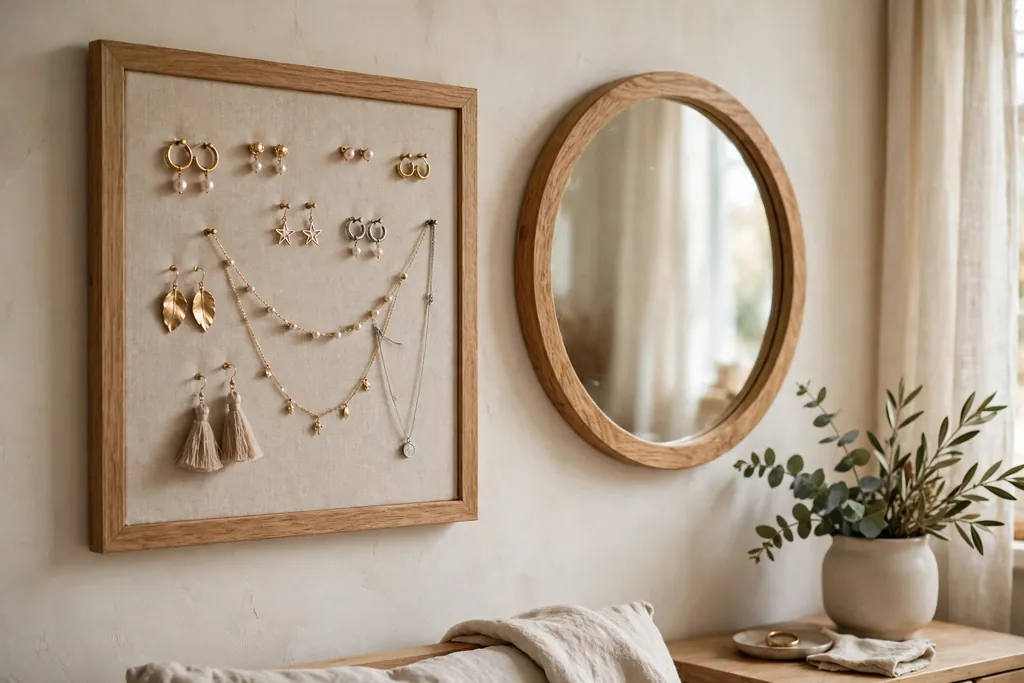
A framed fabric pin board turns a bedroom wall into a jewelry display you can change in minutes. Stretch linen or felt over a board, frame it, and pin earrings, brooches, and short necklaces in neat rows. This suits a dressing area where a drawer hides pieces you forget to wear, since the board keeps them visible at eye level. For wall sizing and placement above a dresser, see these bedroom wall art ideas.
Choose pins with a flat head that will not snag chains, and group pieces by color or type so the board reads as a display rather than a crowded noticeboard. Hang the board beside the mirror, not behind a door, so you can reach it while getting dressed. Keep heavier necklaces off the board and save it for lighter pieces, so pins stay firm and fabric does not sag.
2. Set a Tiered Tray on the Dresser
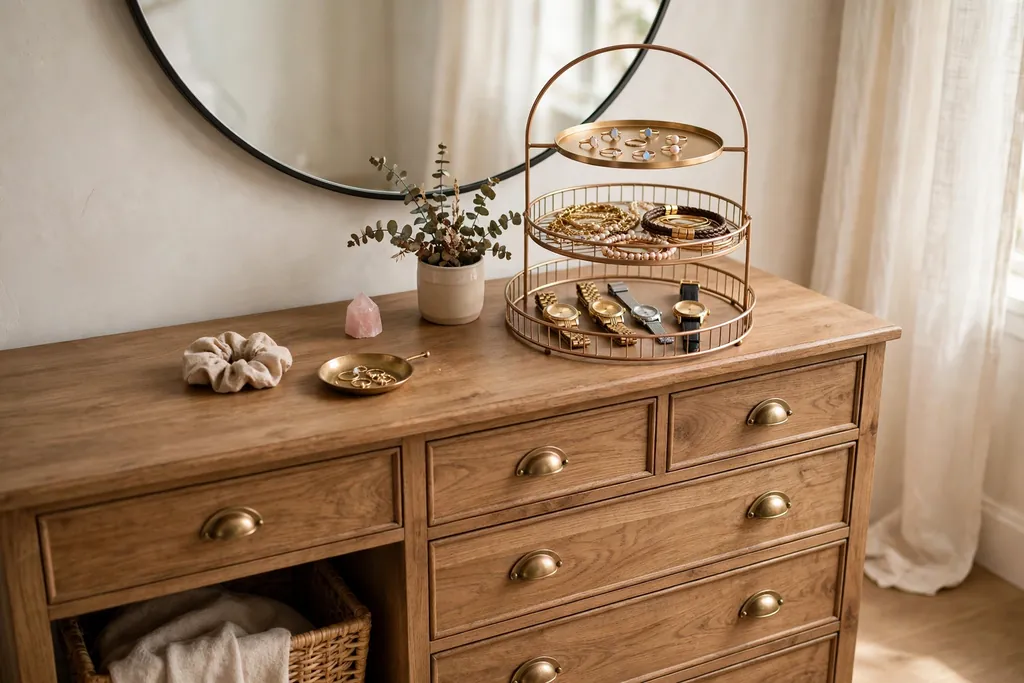
A tiered tray stacks two or three small trays on a central stem, giving a dresser more display space without a larger footprint. Use the top tier for rings and studs, the middle tier for bracelets, and the bottom tier for watches or larger pieces. This suits a dresser top that is already busy, since the tray rises upward instead of spreading outward.
Pick a tray in a material that matches the room, such as ceramic, wood, or metal, and keep each tier to a few pieces so nothing slides off when you lift one item. Place the tray near the mirror and away from the dresser edge, where a sleeve could catch it. Wipe the tiers weekly, since an open tray collects dust faster than closed storage.
3. Place a Rotating Carousel on the Vanity
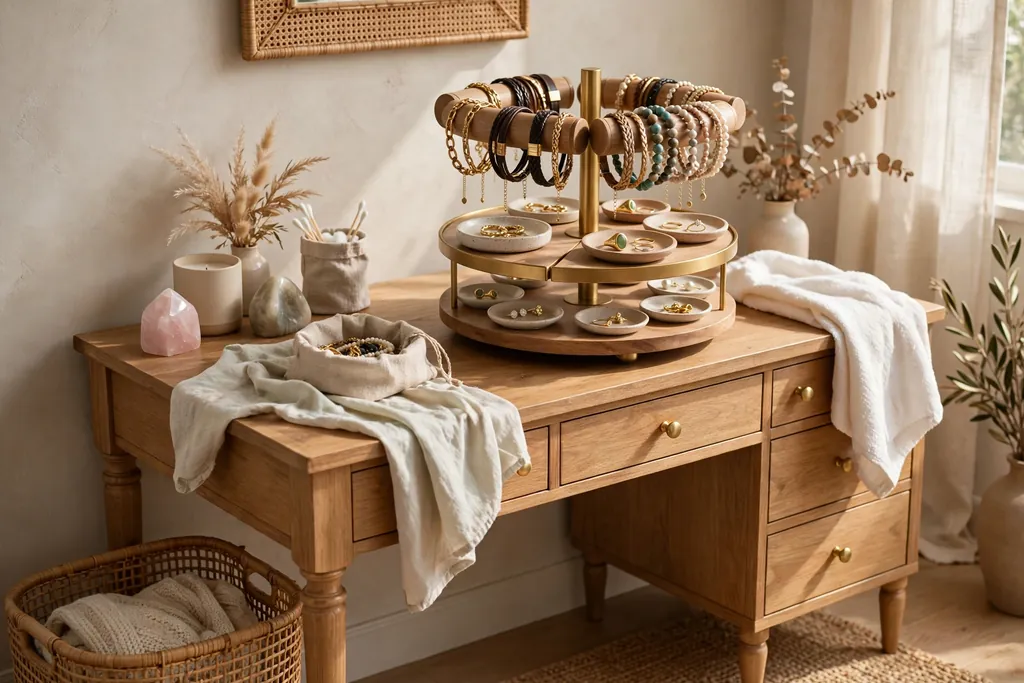
A rotating carousel, sometimes called a lazy Susan stand, holds jewelry on tiers that turn with a light push. This suits a vanity or a deep dresser top where pieces at the back are hard to reach, since a turn brings every side to the front. Use it for bracelets, watches, and small dishes of earrings, rather than long necklaces that need to hang.
Choose a carousel with a low profile and a steady base, so it does not wobble when it turns. Group one type per tier or per section, and leave a little space between groups, so you can lift a bracelet without catching its neighbor. Keep the carousel clear of perfume bottles and hair tools, which can knock pieces off the tiers.
4. Stand a Branch Jewelry Tree on the Dresser
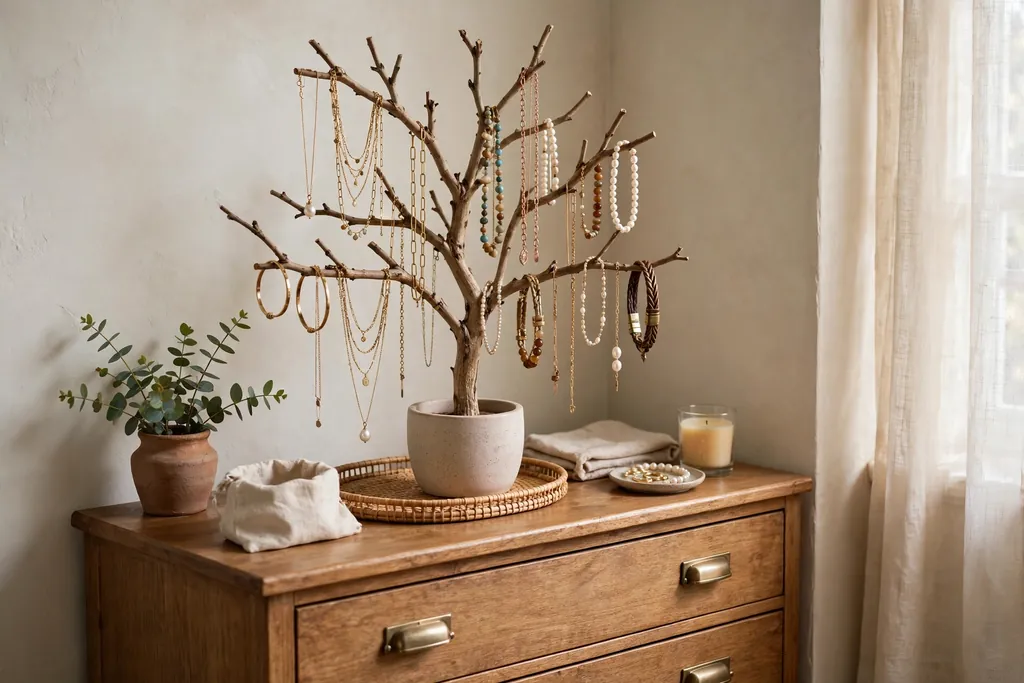
A branch jewelry tree uses a small tree form, in wood or metal, with branches that hold necklaces and bracelets at different heights. This suits a dresser corner where necklaces usually tangle in a pile, since each chain hangs on its own branch and stays separate. It also works as a decorative piece, since the tree shape adds height to a flat dresser top.
Hang the longest necklaces on the lowest branches, so they clear the dresser surface, and keep bracelets on the shorter upper branches. Choose a tree with a weighted base, so it stays steady when you lift a chain off a branch. Dust the branches now and then, and keep the tree away from a window where sun can fade beads and cords.
5. Fill a Shadow Box Frame for Statement Pieces
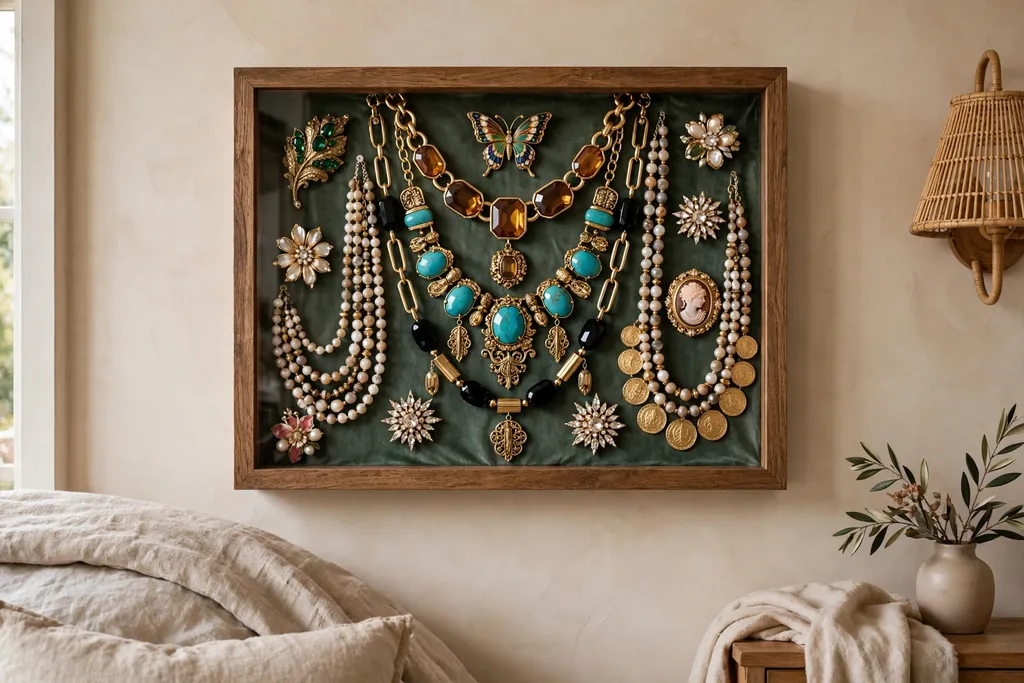
A shadow box is a deep frame with space inside for objects, which makes it a strong choice for statement necklaces, brooches, and vintage pieces you want to show rather than wear daily. Hang one shadow box on the bedroom wall, with pieces pinned or hooked inside, so the collection reads like art. This suits a room where a few special pieces deserve a focal point, rather than a full working display.
Line the back of the box with linen or velvet in a plain color, so metal and stones stand out. Fix hooks or pins at different heights, and leave space between pieces, so each one can be seen clearly. Keep the glass front clean, and check that the frame fixings suit the weight, since a filled shadow box is heavier than a flat print.
6. Group Teacups and Small Dishes on a Tray
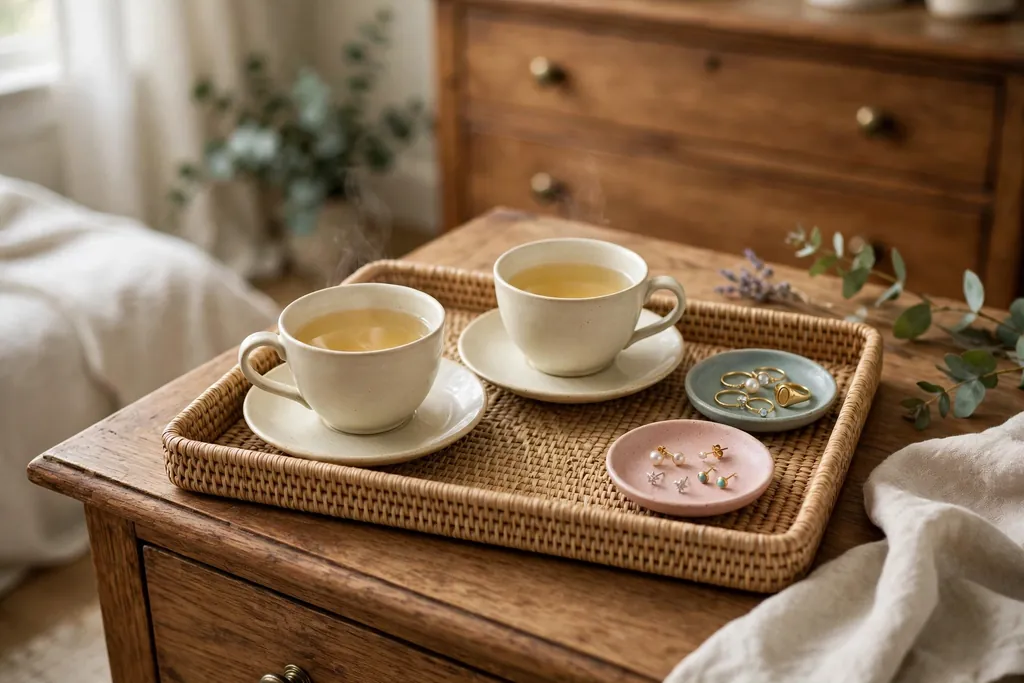
Teacups and small dishes, grouped on a single tray, make a charming jewelry display for rings, studs, and small bracelets. Each cup or dish holds one type, so a ring never hides under a bracelet, and the tray keeps the group together on the dresser. This suits a bedroom with a collected, vintage feel, where matching sets would look too formal.
Choose cups and dishes in one color family, such as cream, blue, or green, so the group looks planned even if the shapes differ. Place the tray near the mirror, and keep the cups upright and stable, since a tipped cup can scatter small pieces. Wash the cups now and then, and keep them away from the dresser edge, where they are easy to knock.
7. Hang a Pocket Organizer Behind a Door
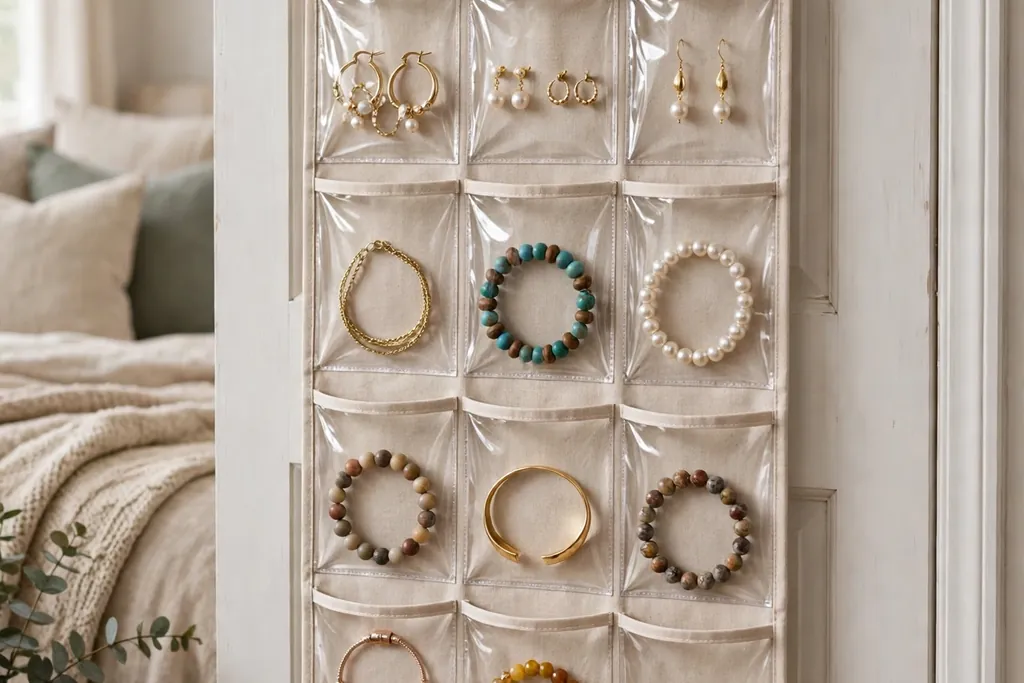
A hanging pocket organizer, fitted over a door or hung on a hook, adds many small clear pockets without any wall fixings. This suits a small bedroom or a rented home, since the organizer comes down in minutes and needs no screws. Use the pockets for earrings, bracelets, and small necklaces, with one type per pocket so you can see everything at a glance.
Choose an organizer with clear pockets, so you do not have to open each one to find a pair. Hang it on a door you use less often, such as a closet door, if the main door feels too busy. Keep heavy pieces out of the top pockets, and check the over-door hooks now and then, so the organizer stays level as it fills.
8. Fit Velvet Inserts Inside a Dresser Drawer
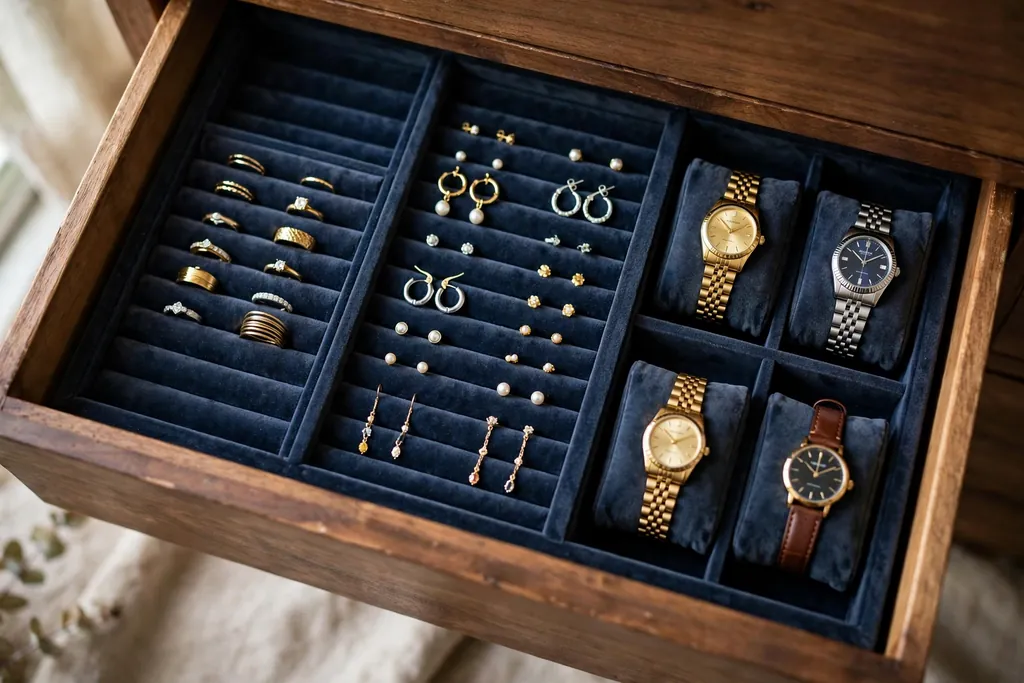
Velvet inserts divide a dresser drawer into small lined sections for rings, earrings, bracelets, and watches. This suits a bedroom where you prefer jewelry out of sight, since the drawer closes to a plain dresser front, yet opens to a tidy, lined layout. The velvet lining also keeps metal from scratching and stops small pieces from sliding.
Measure the drawer before you buy inserts, and choose a set that fills the drawer without gaps, so sections do not shift when the drawer opens. Put daily pieces in the top drawer, so you reach them without opening every drawer, and keep one section empty for pieces in current rotation. Vacuum or brush the velvet now and then, since lint gathers in lined sections.
9. Use a Dress-Form Bust for Necklaces
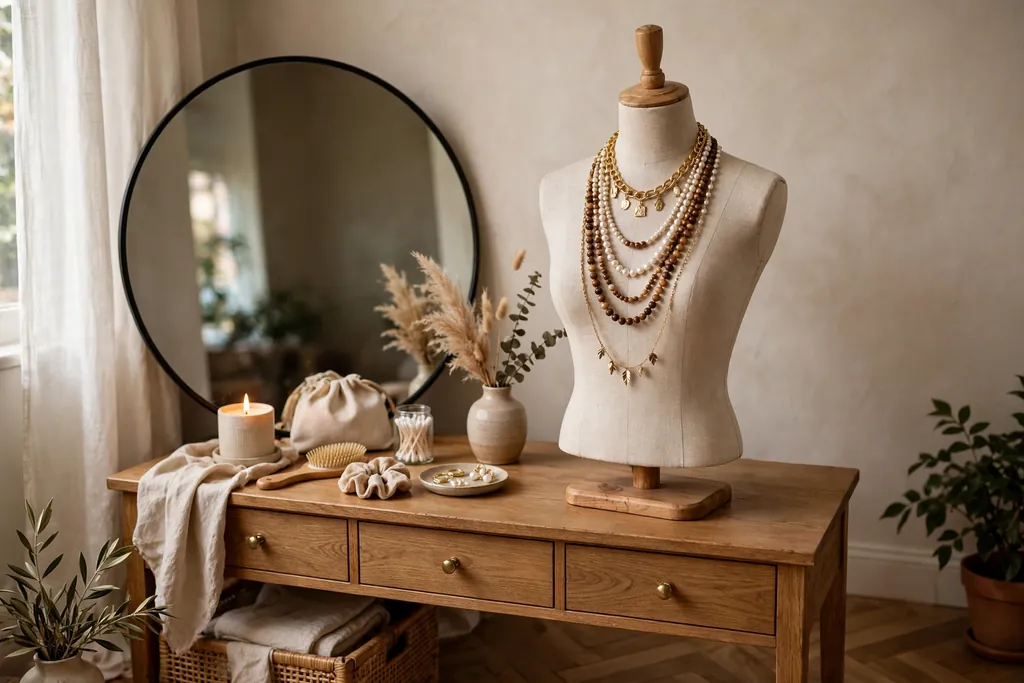
A dress-form bust, in linen, velvet, or resin, displays necklaces at the height and shape they sit on the body. This suits a dressing table or a bedroom corner where necklaces are the main collection, since you can see length, layering, and color together before you choose. It also helps when you plan an outfit, since a necklace on a bust reads more clearly than one lying flat.
Choose a bust with a stable base and a neck shape that holds chains without slipping. Layer two or three necklaces of different lengths on one bust, and keep the rest in a drawer, so the bust does not become crowded. Keep the bust near the mirror and out of direct sun, so fabric and beads keep their color.
10. Stand T-Bar Displays for Bracelets and Watches
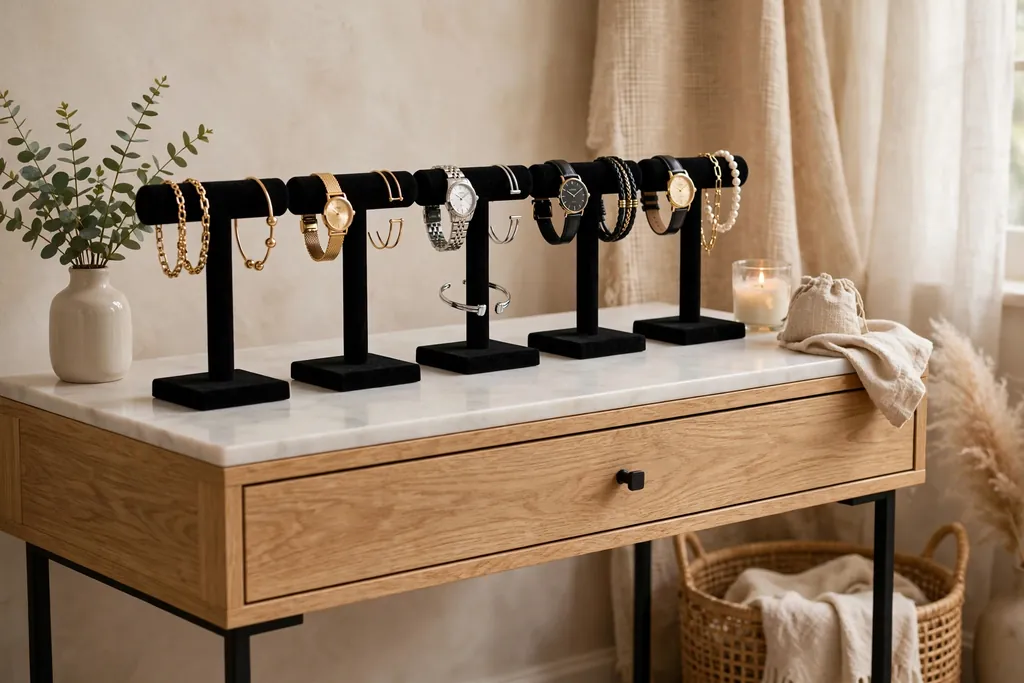
T-bar stands are upright posts with a horizontal bar, made for bracelets and watches to slide over and rest in a row. This suits a vanity where bracelets usually pile in a dish, since each bracelet keeps its shape on the bar and stays easy to lift off. A row of two or three T-bars can hold a whole bracelet collection in a small footprint.
Choose bars in a height that suits your bracelets, so bangles do not slide to the base and cuffs do not stretch. Group bracelets by color or material on each bar, and keep watches on a separate bar, so watch faces do not scratch against metal bangles. Place the stands on a tray, so they stay grouped and the vanity surface stays clean.
11. Fix a Brass Hook Rail Above the Dresser
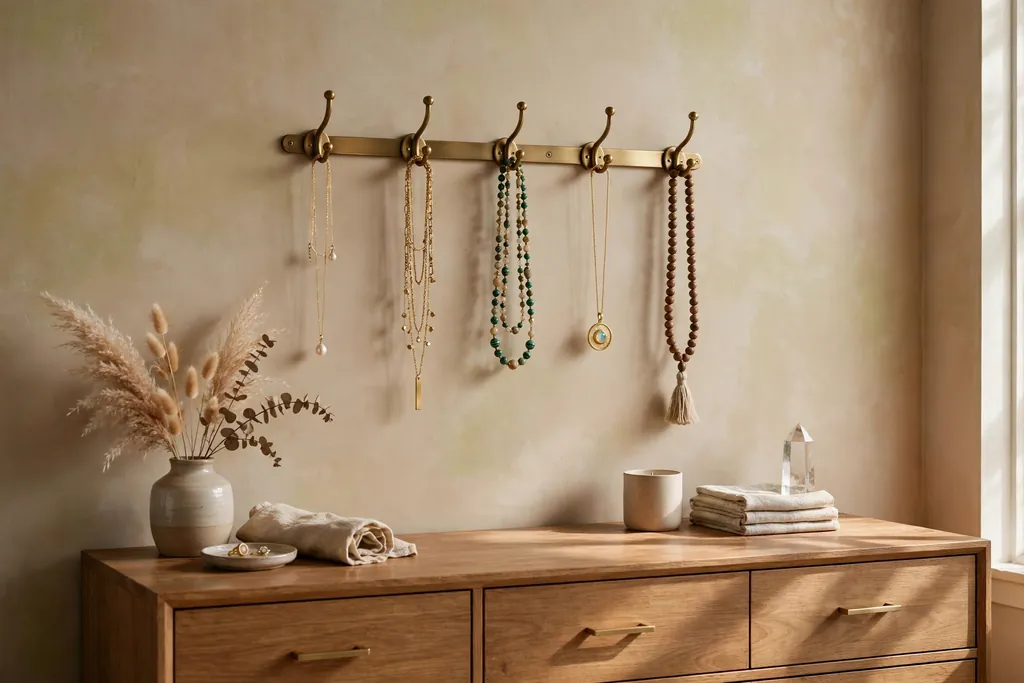
A brass hook rail is a slim bar with evenly spaced hooks, fixed to the wall above a dresser or dressing table. This suits a bedroom where necklaces and long chains need hanging space, since each chain gets its own hook and stays untangled. Brass adds a warm metal note that suits both plain and decorated rooms.
Fix the rail into wall studs or use fixings rated for your wall type, and hang it high enough that the longest necklace clears the dresser surface. Space hooks wide enough that chains do not touch, and hang one necklace per hook. Keep the rail near the mirror, and wipe the brass now and then, since an open rail collects dust.
12. Cover One Statement Piece With a Glass Dome
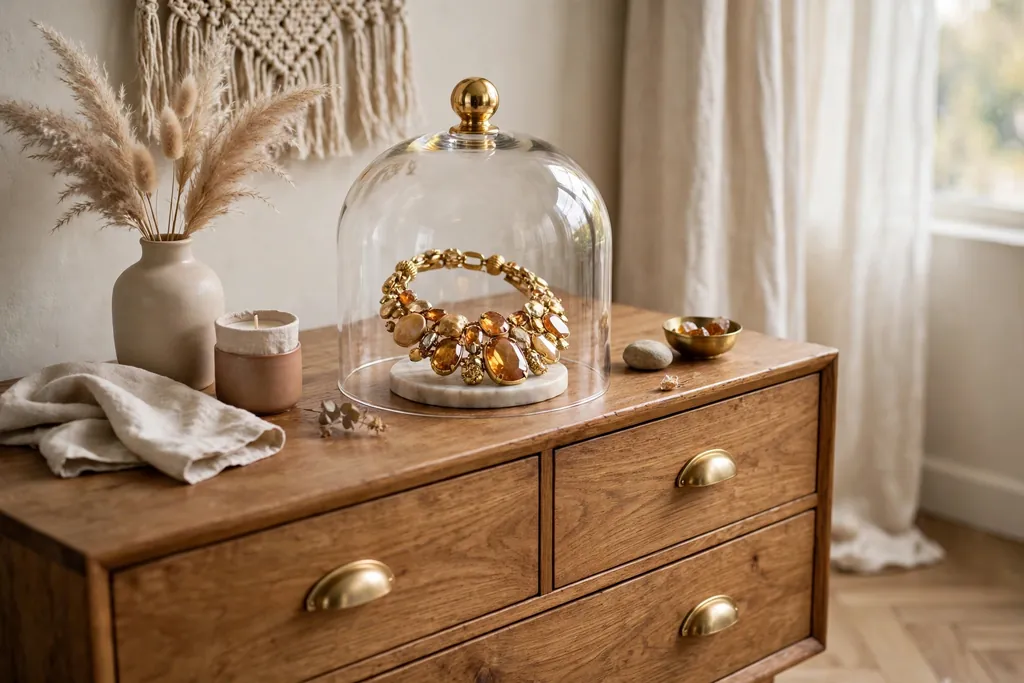
A glass dome, also called a cloche, covers a single statement piece on the dresser, giving it a shop-window feel. This suits a bedroom where one necklace, tiara, or vintage brooch deserves attention, since the dome protects it from dust while keeping it fully visible. It also works on a living room side table for a piece that doubles as decor.
Choose a dome tall enough that the piece sits clear of the glass, and set it on a small base or tray, so the dome does not slide. Keep the dome away from a sunny window, since glass can focus light and heat on delicate pieces. Lift the dome by its top knob with clean hands, and clean the glass inside and out, so the piece always looks its best.
13. Lean a Ladder With Hooks in a Corner
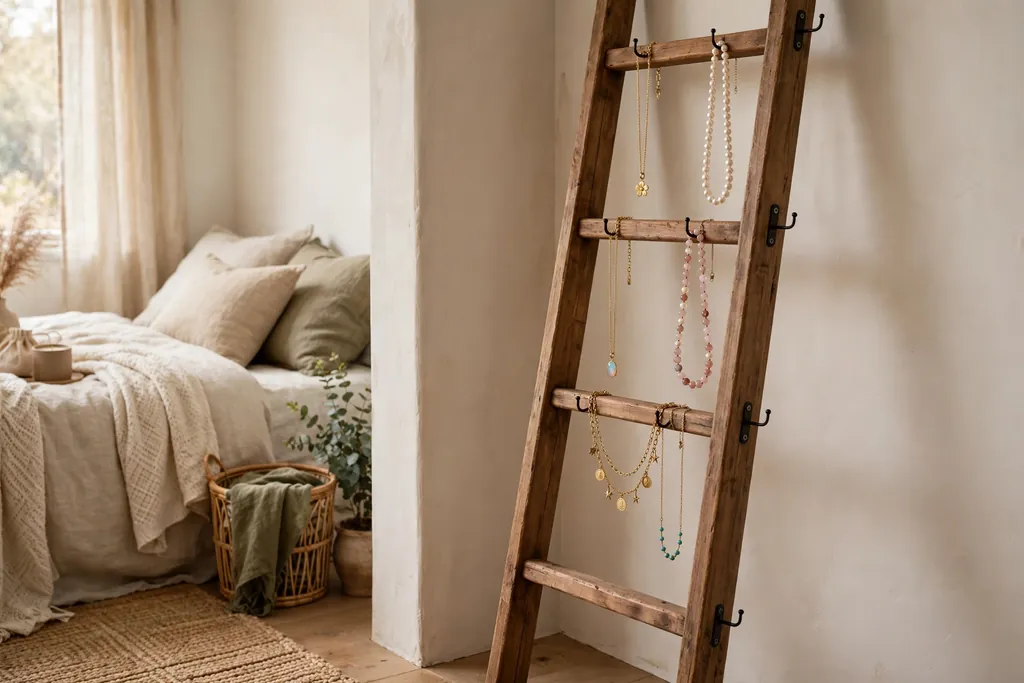
A leaning ladder, fitted with small hooks on its rungs, turns a bedroom corner into vertical jewelry storage. Hang necklaces and scarves from the hooks, and set small dishes on the lower rungs for bracelets and earrings. This suits a room with an empty corner and little wall space, since the ladder needs no fixings and moves easily.
Choose a ladder tall enough for your longest necklace, and add felt pads behind the top rail to protect the wall. Hang one necklace per hook, and keep heavier pieces low, so the ladder stays steady. Check that the ladder leans at a safe angle, and keep it clear of doors and drawers, so nothing catches when you reach for a piece.
14. Install a Mirror Cabinet for Hidden Jewelry Storage
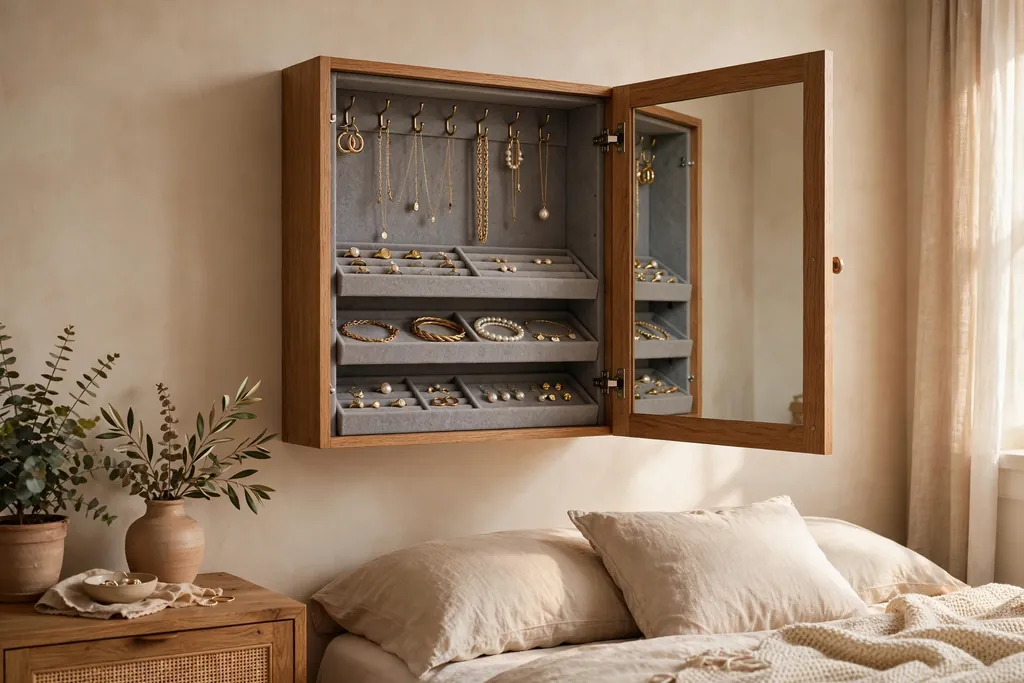
A mirror cabinet looks like a full-length mirror on the wall, but opens to reveal hooks, shelves, and small trays inside. This suits a bedroom where you want jewelry hidden, yet close to the mirror where you get ready. It is a strong choice for a small room, since the mirror itself makes the room feel larger while the storage stays out of sight.
Fix the cabinet into studs or use fixings rated for its weight, and check the door swing before you fit it, so it does not hit furniture. Arrange necklaces on hooks by length, earrings on a small panel, and rings in a tray, so the inside stays as tidy as the mirror front. Keep the mirror clean, and close the cabinet fully, so the room reads as a plain mirror wall.
15. Pin Pieces to a Cork Board in a Dressing Nook
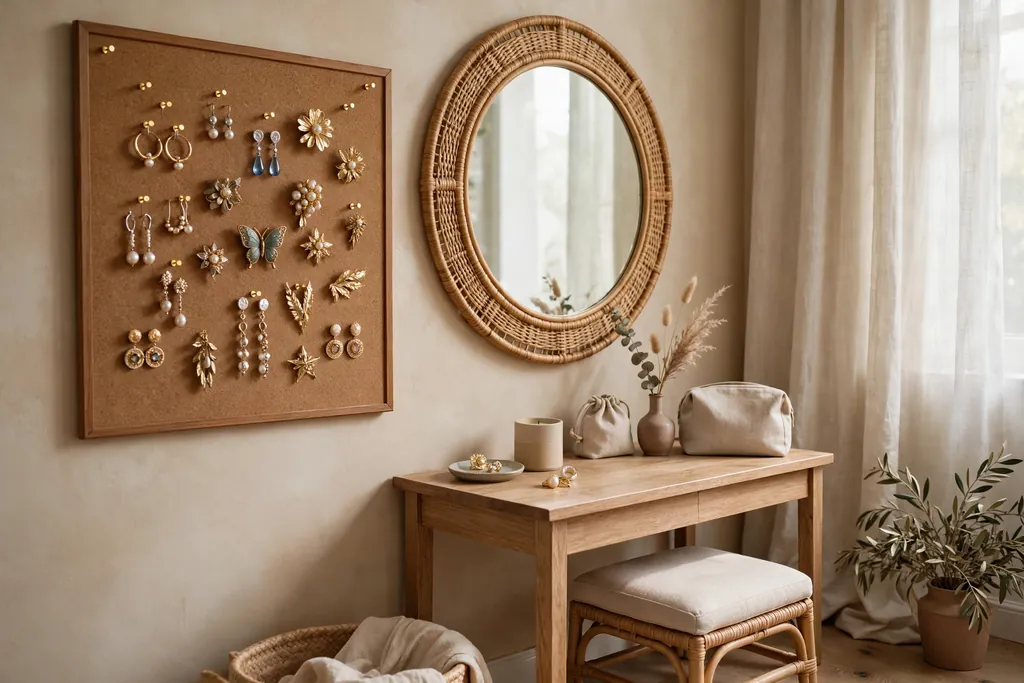
A cork board in a dressing nook gives earrings, brooches, and pins a changeable home that needs only pins to update. This suits a small nook or a closet corner where a framed board would feel too formal, since cork is light, plain, and easy to cut to fit an awkward wall. It also suits a growing collection, since you can move pins as pieces arrive.
Cover the cork with linen if you want a softer look, or leave it plain for a workshop feel. Use short pins with a flat head, and group pieces by type in rows, so the board stays readable. Hang the board at eye level beside the mirror, and keep long necklaces off it, since their weight can pull pins out of cork over time.
16. Use a Tiered Cake Stand for Earrings and Rings
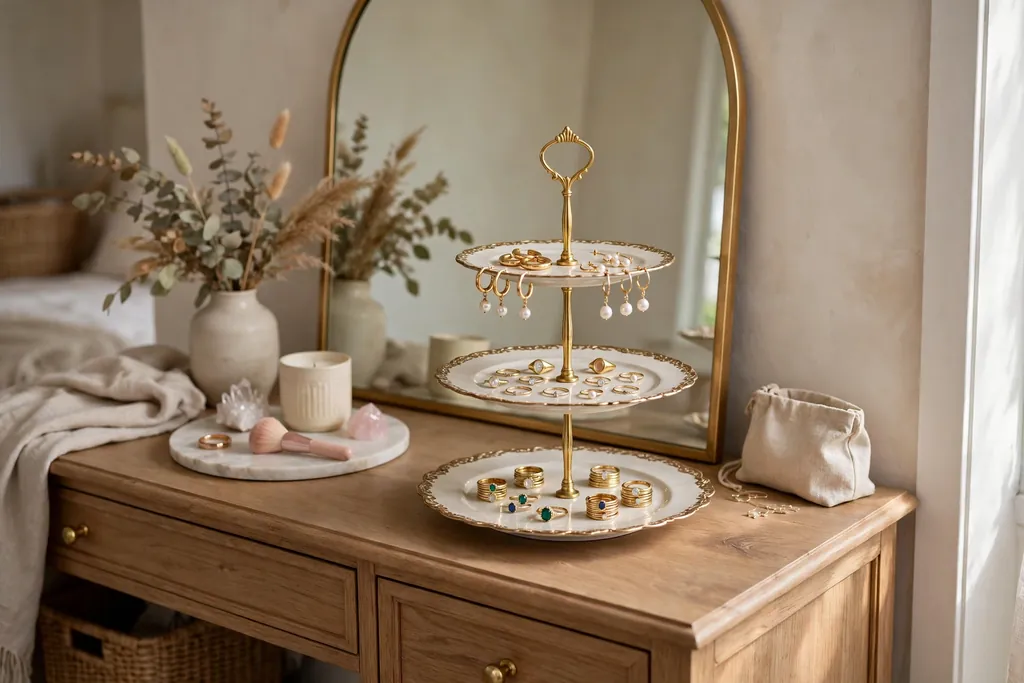
A tiered cake stand, with two or three plates on a stem, works well for earrings and rings, since each plate holds a small group at a different height. This suits a vanity where a flat tray would crowd rings and studs together, since the tiers separate them by type and keep each group visible. A glass or ceramic stand also adds a light, decorative note to the dressing table.
Put studs and small hoops on the top plate, rings in a small dish on the middle plate, and larger earrings on the bottom plate, so the heaviest pieces sit low. Keep each plate to a few pairs, and place the stand near the mirror, away from the table edge. Wash the plates now and then, since an open stand gathers dust and makeup powder.
17. Place a Tall Jewelry Armoire Beside the Dresser
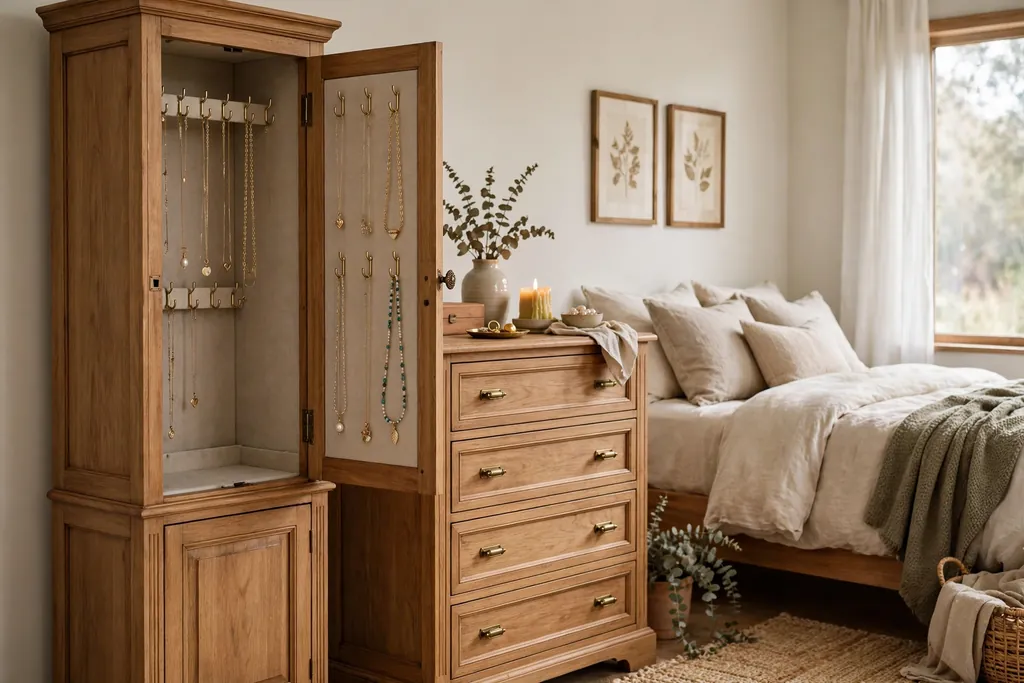
A tall jewelry armoire is a narrow cabinet with drawers, hooks, and side panels for necklaces, made for a full collection in one piece of furniture. This suits a bedroom where jewelry has outgrown a tray and a drawer, since the armoire holds necklaces, bracelets, rings, and watches in separate sections. Many armoires include a mirror on the door, which helps in a dressing area.
Choose an armoire sized to the wall beside the dresser, with room for the door or side panels to open fully. Put daily pieces in the top drawers and side hooks, and occasion pieces lower down, so the pieces you reach for most are at hand height. Keep the armoire closed when not in use, so dust stays out, and check the hinges now and then, since a full armoire door is heavy.
18. Fit Floating Shelves With Dishes and Stands
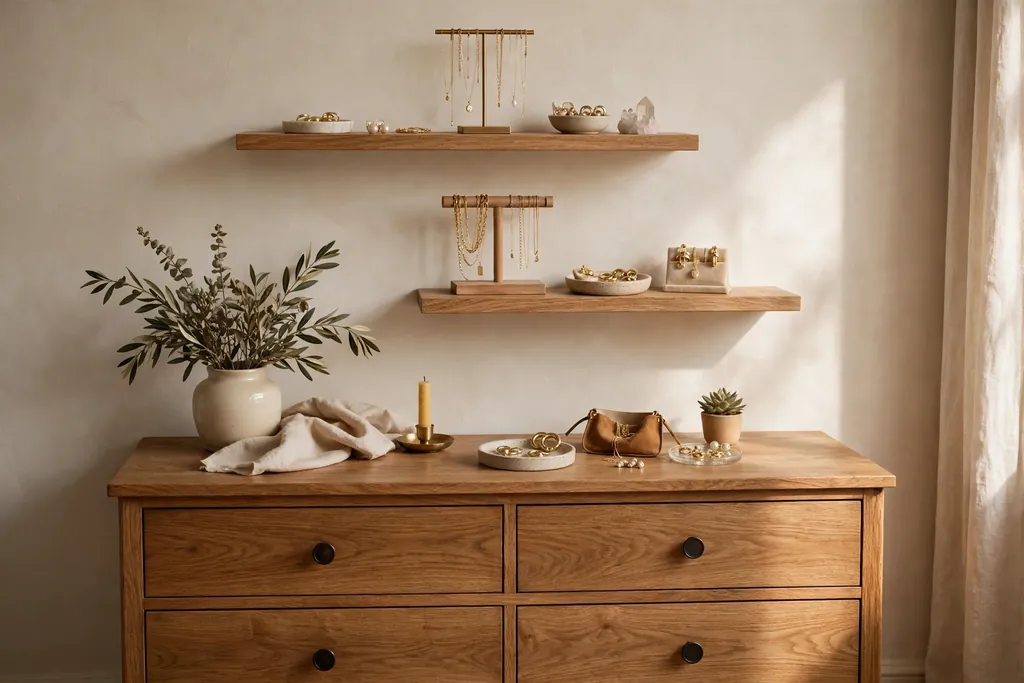
Floating shelves above a dresser give jewelry display a wall-based home that leaves the dresser top free. Set a small dish on one shelf, a T-bar stand on another, and a branch tree on a third, so each shelf holds one display type. This suits a bedroom where the dresser top is needed for a lamp and daily items, since the shelves move jewelry up the wall.
Fix shelves into studs or use fixings rated for the weight of the stands and dishes, and keep the lowest shelf at a height where you can reach pieces without a step. Leave space between shelves for taller stands, and keep one shelf partly empty, so the display does not look packed. Dust the shelves weekly, since open shelves show dust quickly.
19. Keep a Nightstand Tray for Nightly Pieces
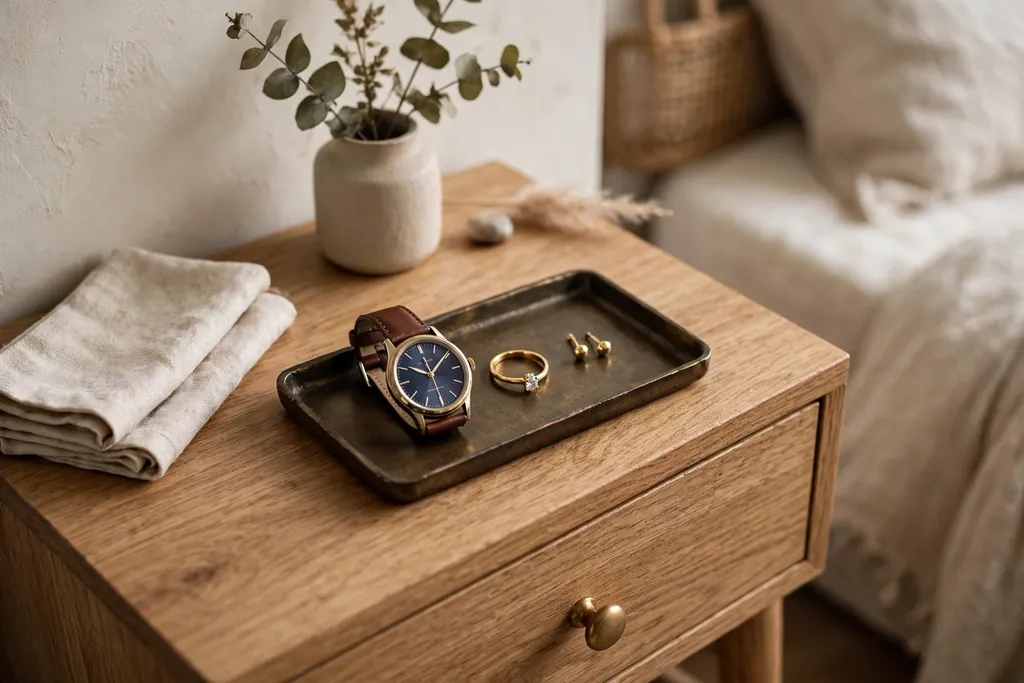
A nightstand tray holds the pieces you take off at night, such as a watch, a ring, and a pair of studs, in one small, clear spot. This suits any bedroom, since it stops nightly pieces from scattering across the nightstand or falling behind the bed. It also helps in the morning, since the pieces you removed last night are waiting in one place.
Choose a tray small enough for the nightstand, with a raised edge, so pieces do not slide off. Keep only nightly pieces in it, and move other jewelry back to its main display each morning, so the tray does not fill up. Place the tray on the side of the nightstand away from a water glass, so a spill cannot reach the jewelry.
20. Fix a Peg Rail Inside the Closet
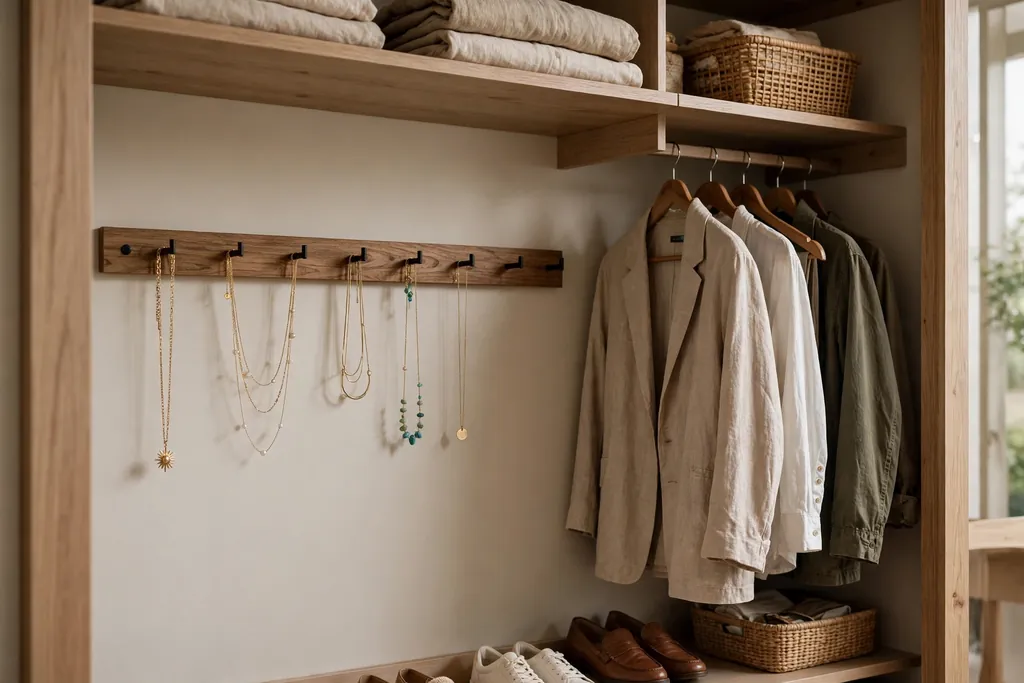
A peg rail inside a closet adds hooks along a wall or door frame, close to where clothes hang. This suits a dressing area where you choose jewelry with an outfit, since necklaces and bracelets hang beside the clothes they pair with. It also keeps jewelry out of the bedroom itself, which suits a shared room or a minimal bedroom.
Fix the rail at a height where necklaces hang clear of closet shelves, and use one hook per necklace, so chains do not tangle. Keep the rail on the side of the closet you reach first, and leave the closet door swing clear. Wipe the rail now and then, since a closet rail gathers dust behind clothes.
21. Use Clear Acrylic Stands on the Vanity
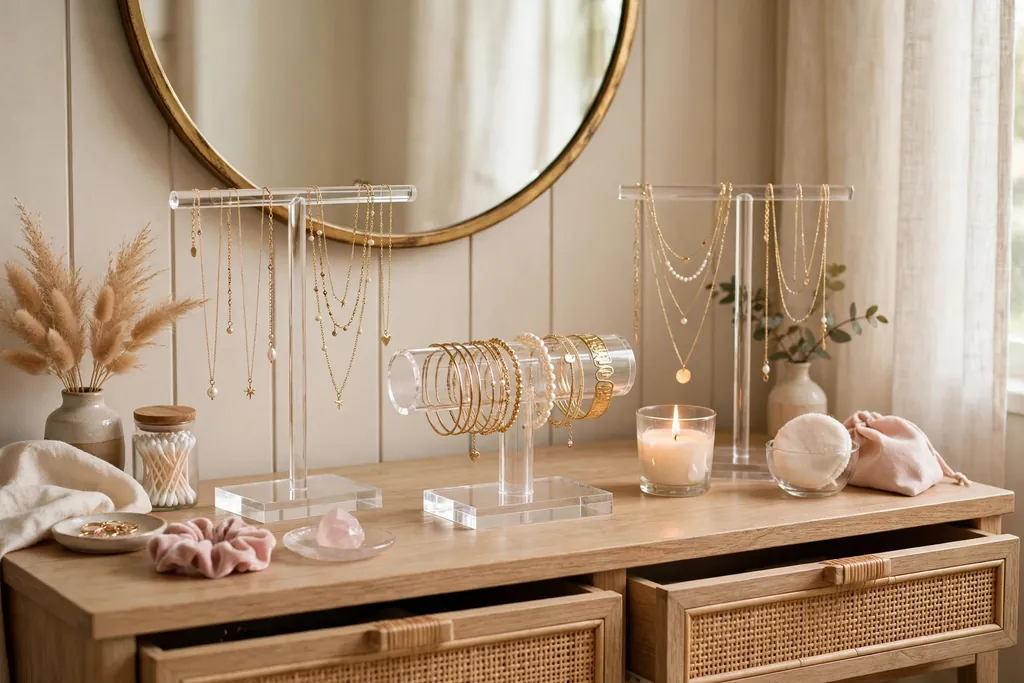
Clear acrylic stands, in T-bar, bust, or tray forms, display jewelry without adding color or pattern to the vanity. This suits a modern bedroom or a vanity with a strong color scheme, since the clear stands let the jewelry itself carry the color. They also suit a small vanity, since clear stands read as lighter than wood or metal ones.
Choose stands with a stable base and smooth edges, so they do not scratch the vanity surface. Group one stand per jewelry type, and keep the vanity background plain, so the pieces stand out against it. Clean acrylic with a soft cloth, since it shows fingerprints and dust more than wood or metal.
22. Open a Vintage Suitcase as a Dresser Display
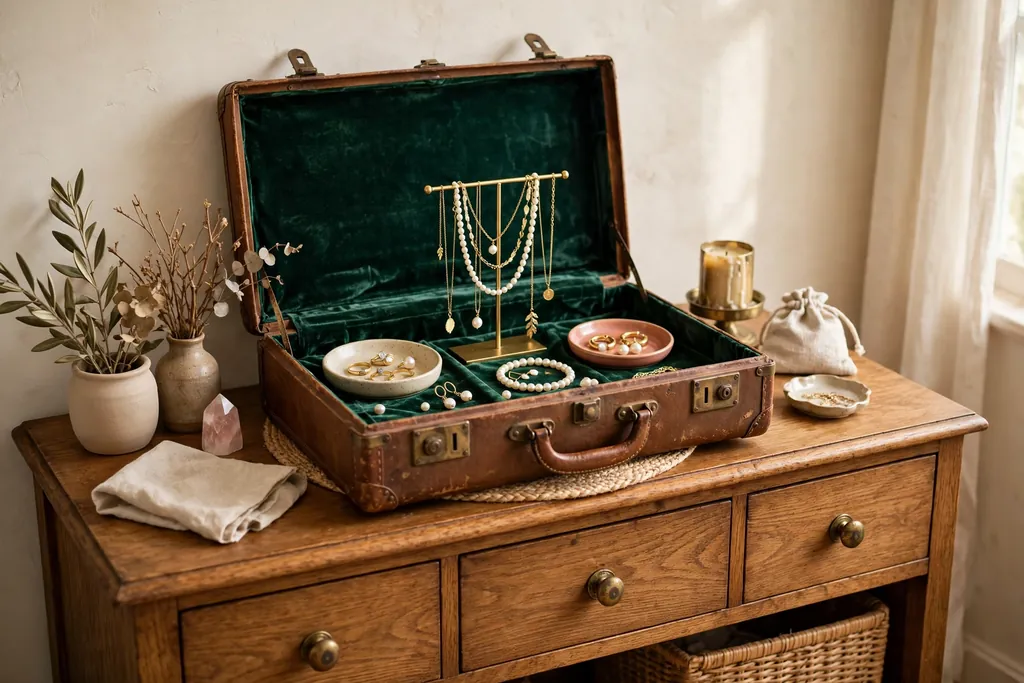
An open vintage suitcase, set on a dresser or a low table, makes a display with a lid that frames the pieces inside. Line the base with velvet or linen, add small dishes and a T-bar stand, and lean the lid against the wall as a backdrop. This suits a bedroom with a vintage or collected style, and it works well in a living room corner too, where a suitcase display can sit on a side table. For more collected, vintage styling in a living room, see these stylish rustic living room ideas.
Choose a suitcase in good condition, with hinges that hold the lid open safely, and keep it to a size that fits the dresser without crowding the mirror. Put heavier pieces in the base and lighter pieces near the lid, so nothing slides when the suitcase is moved. Dust the lining now and then, and keep the suitcase out of direct sun, so the case and its contents keep their color.
23. Hang Earrings on a Wire Mesh Frame
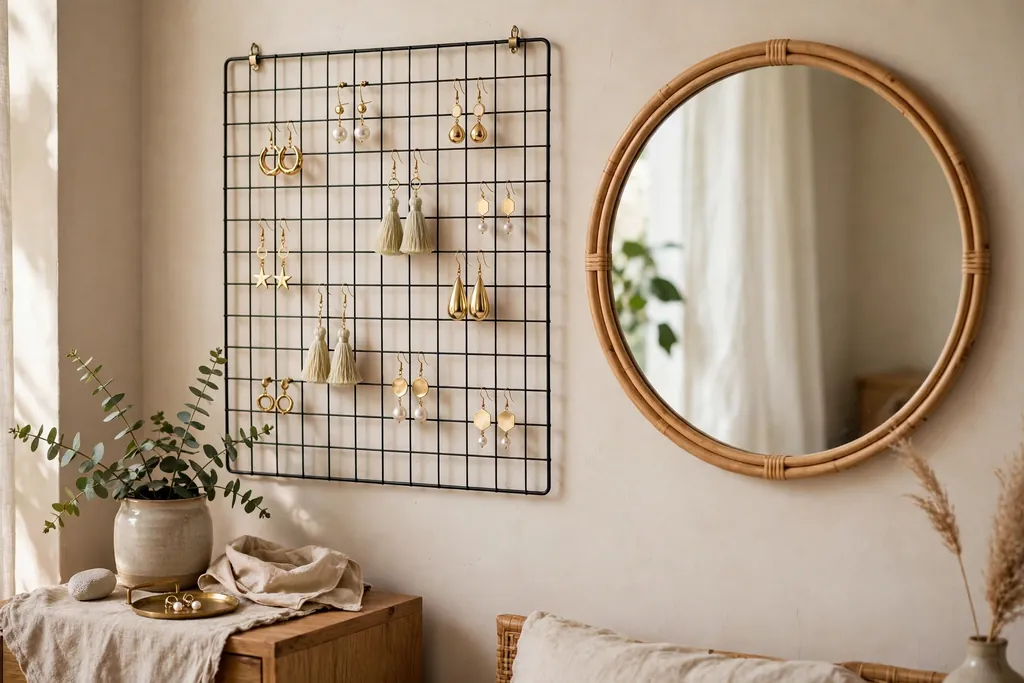
A wire mesh frame, made from a wooden frame fitted with mesh or wire grid, gives earrings a pierced surface to hook through. This suits a bedroom where earrings are the main collection, since each pair hangs in its own mesh square and stays matched. It also suits a dressing wall, since the frame hangs flat and takes little depth.
Choose a mesh size that suits your earring hooks, so studs sit in small dishes nearby and hook earrings hang through the mesh. Hang the frame beside the mirror at eye level, and group earrings by color or size in rows, so a pair is easy to find. Keep the frame steady on its fixings, since a frame full of earrings is heavier than an empty one.
24. Cluster Ring Cones and Dishes Together
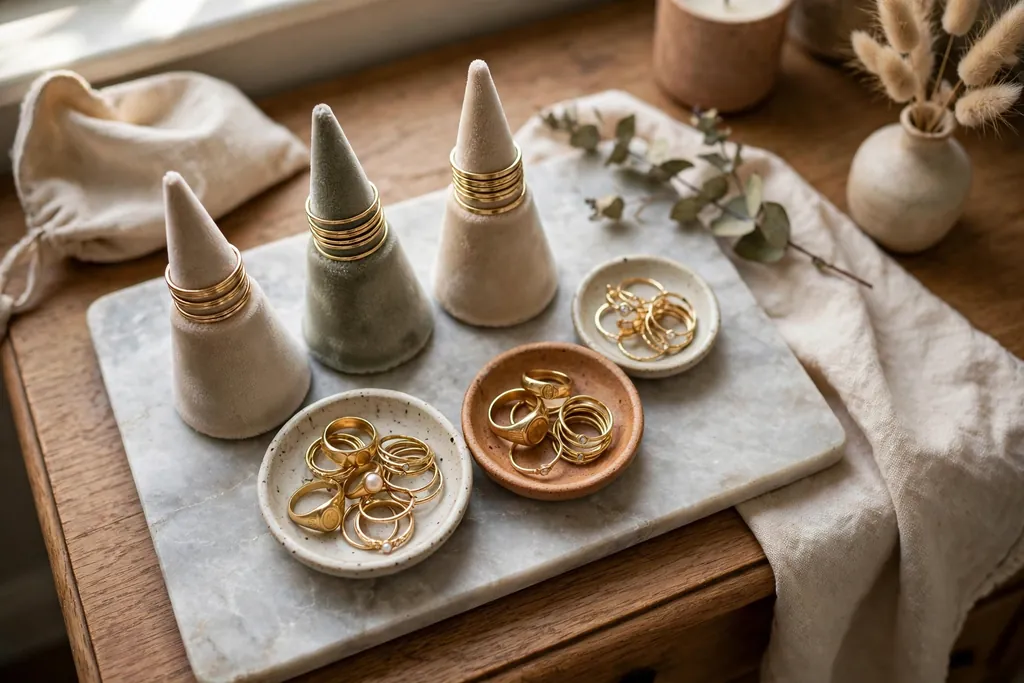
Ring cones, in ceramic, wood, or stone, hold rings upright on a pointed form, while small dishes hold a few more rings flat. Clustered together on a tray, they make a compact ring display for a dresser or nightstand. This suits a bedroom where rings are worn daily, since the cluster keeps every ring visible and within reach of the mirror.
Choose cones in one material family, so the cluster looks planned, and put the most worn rings on the tallest cone. Keep the tray near the mirror, and limit the cluster to the rings you wear often, so the display stays easy to use. Wash ceramic cones now and then, since an open ring display gathers dust and hand cream residue.
25. Add Hooks to the Inside of a Closet Door
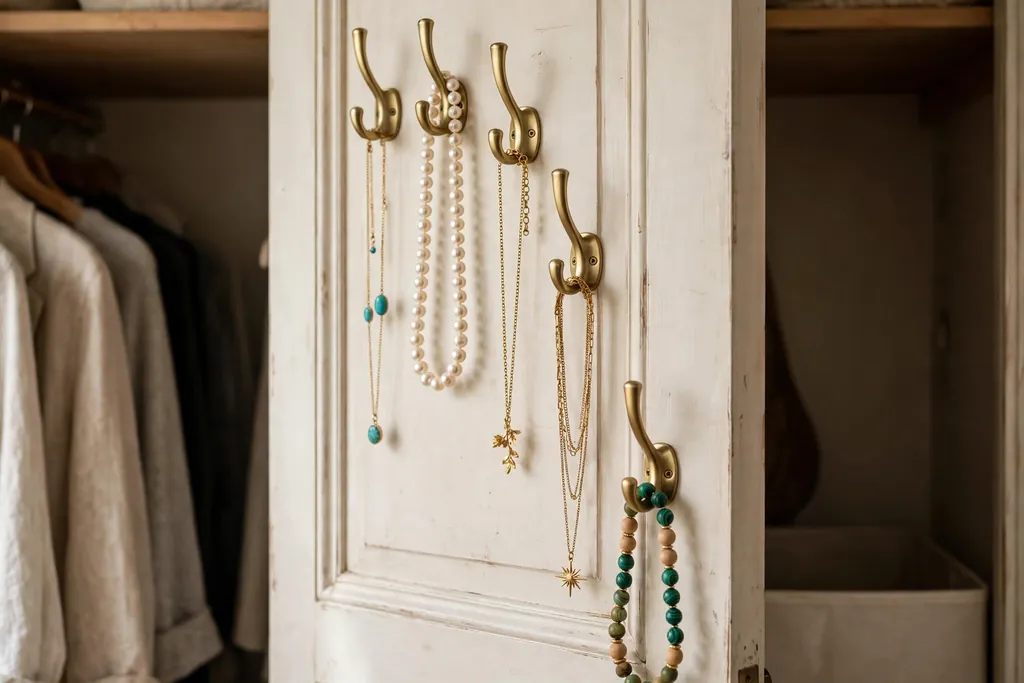
Hooks on the inside of a closet door turn unused door space into necklace storage that hides when the door closes. This suits a bedroom where wall space is taken by furniture, since the door interior is usually empty. Use adhesive hooks for a rented home, or screw hooks for a heavier collection, and hang one necklace per hook.
Space hooks so chains hang clear of each other and of the door frame, and check that the door still closes fully with necklaces in place. Hang the longest necklaces lowest, or on hooks placed higher, so they do not drag on the floor or catch in the door. Keep the door hooks for necklaces only, so the door does not become a crowded catch-all.
26. Fit a Slide-Out Tray in Closet Shelving
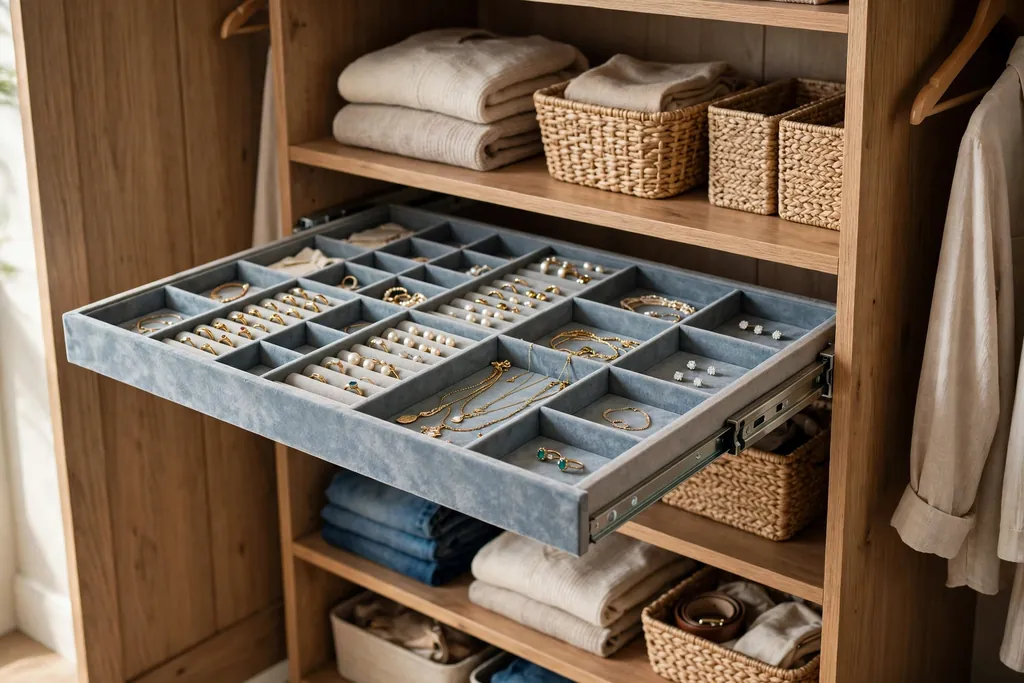
A slide-out tray, fitted into closet shelving, pulls out like a drawer and holds jewelry in lined sections. This suits a walk-in closet or a deep closet shelf, since the tray brings jewelry at the back of the shelf to the front. It also suits a shared closet, since each person can have a tray at their own height.
Measure the shelf depth and height before you buy, and choose a tray with a lip, so pieces do not slide off when it moves. Line the sections with velvet or felt, and sort by type, with rings and earrings in small sections and bracelets in larger ones. Push the tray fully back after use, so it does not block the closet door or catch on clothes.
27. Line Glass Jars on a Shelf for Small Pieces
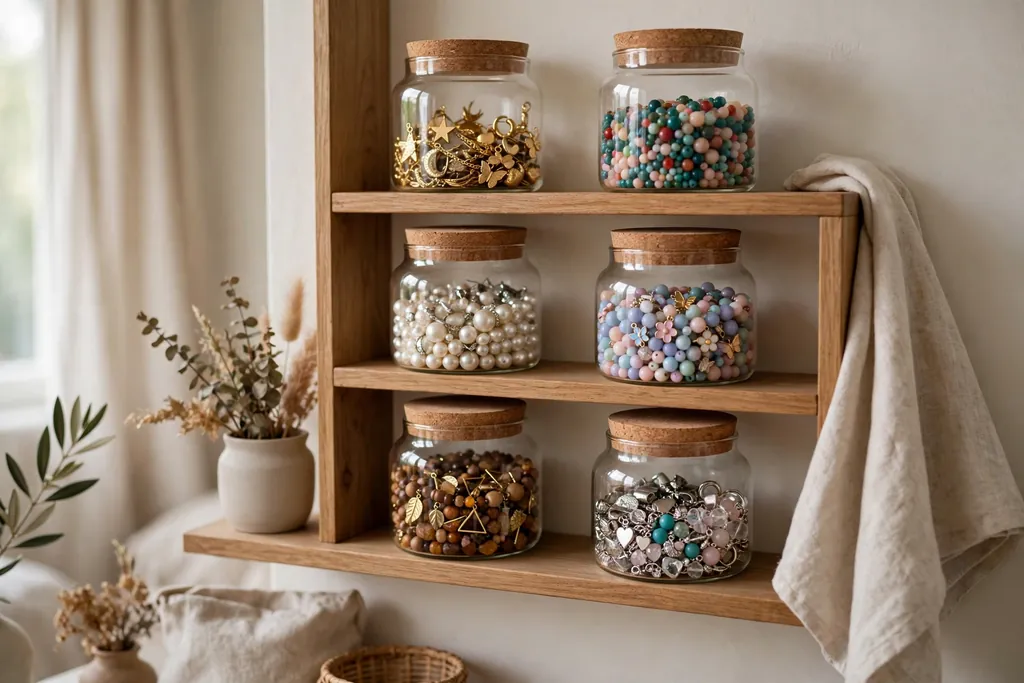
Glass jars, in a row on a shelf, hold small jewelry pieces such as beads, charms, studs, and spare earring backs, where you can see them without opening each jar. This suits a dressing shelf or a craft corner, since the jars keep tiny pieces sorted and visible. It also suits a collection of beads or charms that are sorted by color, since the jars themselves add color to the shelf.
Choose jars with lids that close firmly, and label the base or lid, so you know which jar holds which type. Keep the jars on a shelf you can reach easily, and limit the row to jars you use often, so the shelf does not fill with pieces you never wear. Wash the jars now and then, and keep them away from the shelf edge, where a knock could scatter small pieces.
28. Set a Vanity Tray in the Bathroom
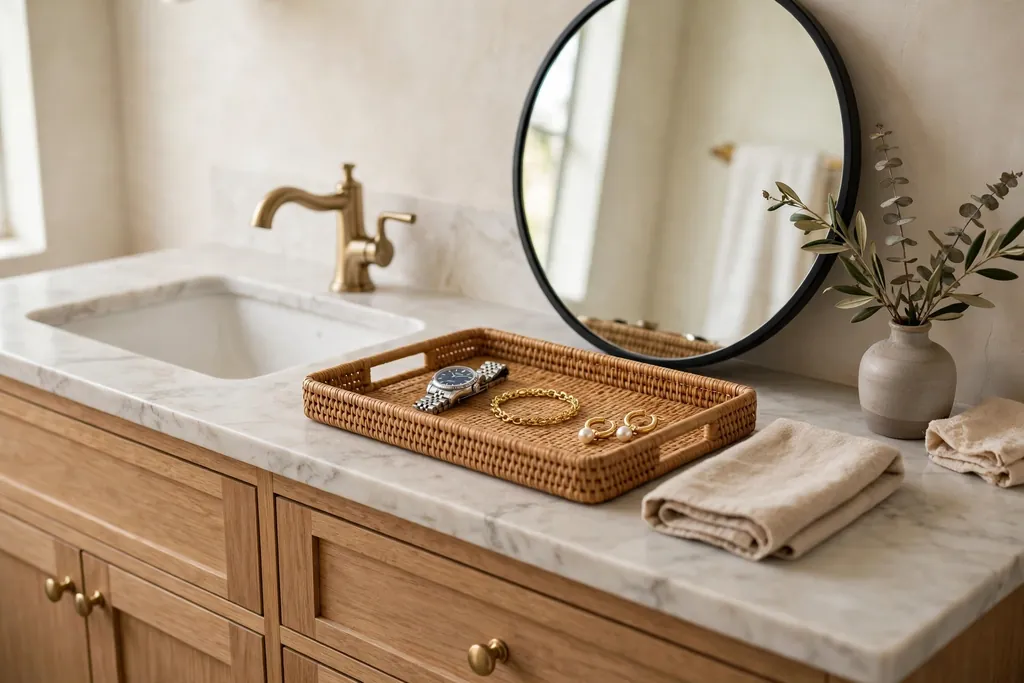
A vanity tray in the bathroom holds the pieces you wear after getting ready, such as a watch, a bracelet, and a pair of earrings, close to the bathroom mirror. This suits a home where getting ready happens in the bathroom, since the tray stops jewelry from sitting on a wet sink edge or a towel. Use a tray with a raised edge and a wipe-clean base, such as ceramic, stone, or sealed wood.
Keep only the pieces you wear that day in the bathroom tray, and return them to the bedroom display each evening, so the tray does not become a second, scattered collection. Place the tray away from the tap and from hair products, so sprays and water do not reach the jewelry. Dry the tray after cleaning, and check metal pieces for damp, since a bathroom stays humid.
29. Place a Console Dish by the Entry Door
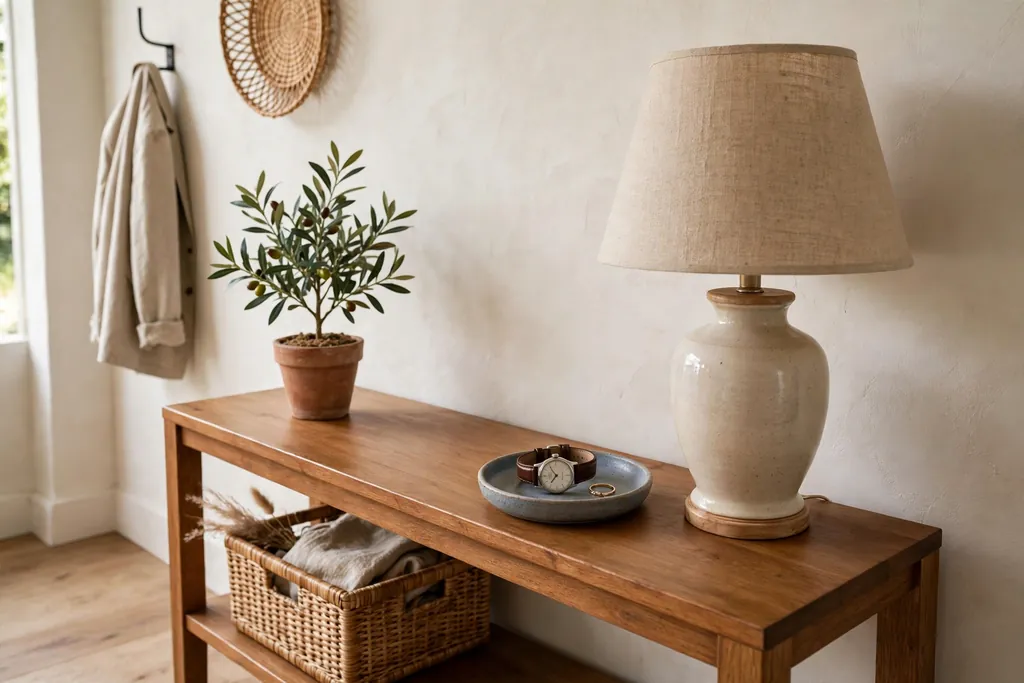
A small dish on an entry console holds everyday jewelry, such as a watch, a ring, and keys, in the spot where you leave the house. This suits a home where you put jewelry on last, at the door, rather than at the bedroom mirror. It also helps when you come home, since the dish gives those pieces a clear landing spot instead of a pocket or a hallway table pile.
Choose a dish with a raised edge and a size that fits the console without crowding a lamp or mail tray. Keep only everyday pieces in it, and move occasion pieces back to the bedroom display, so the dish stays for daily use. Empty the dish each week, and return any piece that has sat unused, so the entry display stays useful.
30. Add a Lighted Shelf Above the Dressing Table
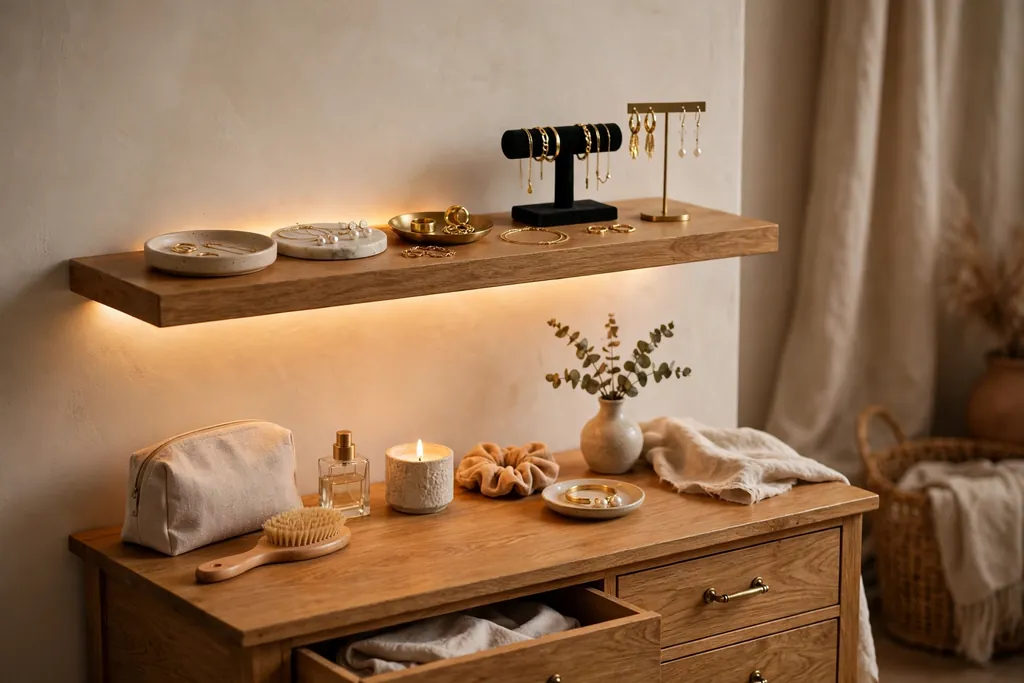
A lighted shelf, with a slim LED strip under the shelf or behind it, lights jewelry from above or behind, so metal and stones show clearly in the morning and evening. This suits a dressing table in a dim corner, since the light helps you see color and detail without a harsh overhead lamp. It also makes the shelf itself a feature, since the glow draws the eye to the display.
Fix the shelf into studs or use fixings rated for its weight, and choose a warm white light, so jewelry colors read naturally. Set dishes and stands on the shelf with space between them, so light reaches each piece, and keep cords tidy behind the shelf. Turn the light off when not in use, and check the strip now and then, since a dimming strip is easy to miss.
31. Hang a Metal Grid Panel With Clips and Hooks
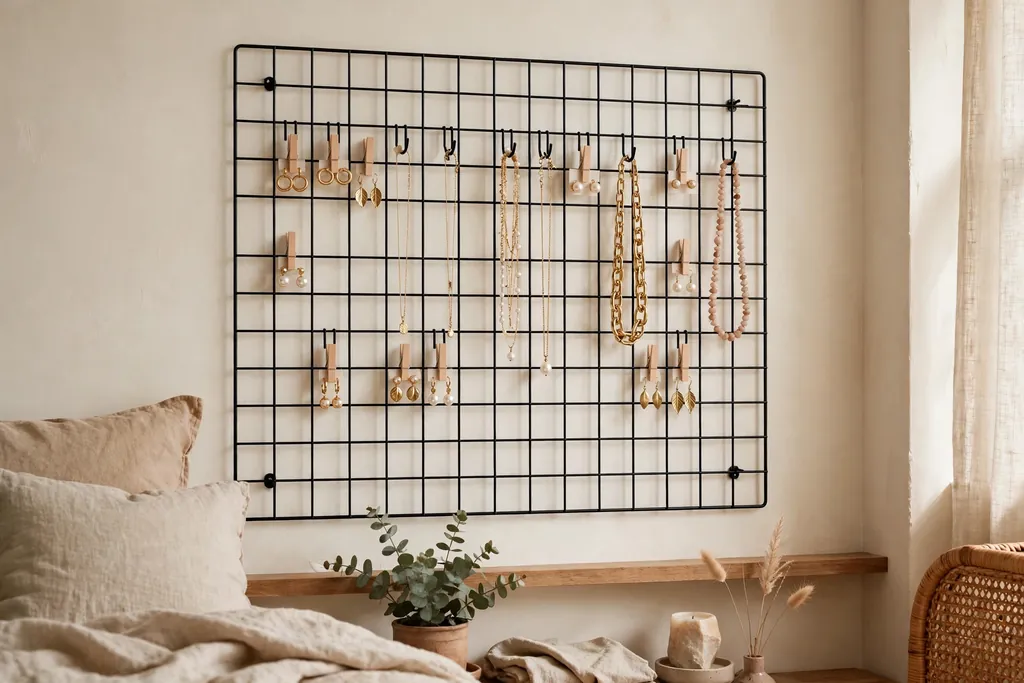
A metal grid panel, hung on the bedroom wall, holds jewelry with clips, S-hooks, and small baskets that hook onto the grid. This suits a dressing area where the collection changes often, since clips and hooks move in seconds without new holes in the wall. It also suits a small room, since the panel uses wall space and leaves the dresser top free.
Choose a panel sized to the wall beside the mirror, and fix it firmly, since a full panel is heavy. Hang necklaces on S-hooks, clip earring cards or small bags to the grid, and add a small basket for bracelets, so each type has its own fitting. Keep the panel to one wall, and leave some grid squares empty, so new pieces have room and the panel does not look crowded.
32. Build a Cubby Shelf for a Collection by Type
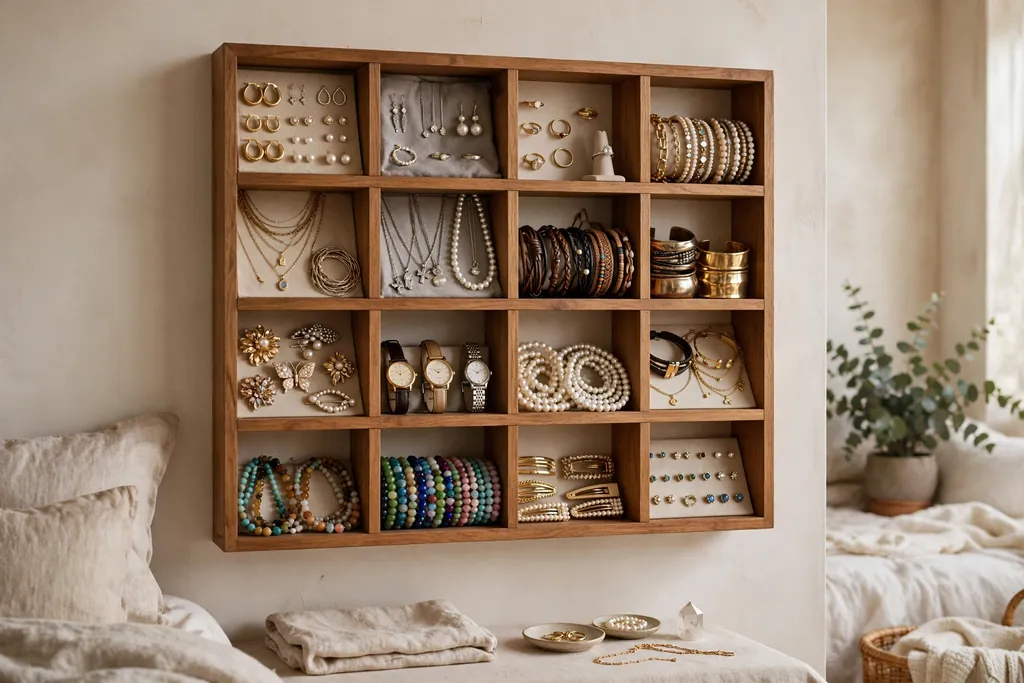
A cubby shelf, with small square or rectangular openings, sorts a jewelry collection by type, with one cubby for necklaces, one for bracelets, one for earrings, and one for rings. This suits a bedroom where the collection is large, since the cubbies keep types apart and make it easy to see what you own. It also suits a dressing room wall, where the shelf can run above a dresser or beside a mirror.
Choose cubbies sized to the pieces they hold, with taller cubbies for hanging necklaces and shallow cubbies for ring dishes. Label the cubby edges only if it helps, and keep one cubby empty for new pieces, so the system can grow. Dust the cubbies now and then, and move pieces you no longer wear to closed storage, so the shelf stays a working display rather than a full archive.
Conclusion
Jewelry display works best when it matches how you actually get ready. A board or hook rail for necklaces, a tray or stand for bracelets, and a dish or cone for rings cover most collections, and the other ideas here fill the gaps those three leave. Start with the pieces you wear most, give each type its own home near the mirror, and keep one spot free for new pieces. When every piece is visible and easy to reach, getting dressed takes less time, pieces stay untangled, and the room itself gains a display worth looking at. Save this list for your next room refresh, and try one new idea this week.
FAQs
How do I display necklaces without tangling them?
Hang each necklace on its own hook, branch, or peg, with enough space that chains do not touch. A hook rail, a branch tree, a peg rail, or hooks inside a closet door all work, as long as one hook holds one chain. Hang the longest necklaces where they clear the surface below, and close clasps before hanging, so a loose chain cannot catch its neighbor.
What is the best jewelry display for a small bedroom?
Wall displays suit a small bedroom best, since they use no floor or dresser space. A framed pin board, a hook rail, a metal grid panel, or hooks inside a closet door can hold a full collection on one wall. Pair one wall display with a single small tray for rings and nightly pieces, and keep the rest in a drawer insert, so the room stays tidy.
How should I store earrings so pairs stay together?
Keep pairs together on one surface, such as a mesh frame, a pin board, or a single dish per pair type. A wire mesh frame suits hook earrings, since each pair hangs in its own square, while studs suit a small dish or a lined tray section. Avoid a single large dish for all earrings, since pairs separate quickly when they mix.
Can I display jewelry in a rented home without wall fixings?
Yes. A hanging pocket organizer behind a door, a leaning ladder, a branch tree, a tiered tray, a rotating carousel, and a freestanding armoire all need no wall fixings. If you do want a wall display, use adhesive hooks rated for the weight, and check the wall surface first, so hooks come off cleanly when you leave.
How do I keep an open jewelry display from looking cluttered?
Limit each display to the pieces you wear often, and move occasion pieces to closed storage. Use one display type per spot, group pieces by type and color, and leave empty hooks, dishes, and shelf space free. Clean displays weekly, since dust shows fast on open jewelry, and remove any piece that has sat unworn for months.
Should jewelry be kept away from sunlight and bathrooms?
Direct sun can fade beads, cords, and some stones, so keep displays off sunny windowsills and away from strong afternoon light. Bathrooms suit only a small daily tray, since humidity can dull metal over time, so return pieces to the bedroom display each evening. For pieces you wear rarely, closed storage in a dry bedroom drawer or cabinet is the safer choice.