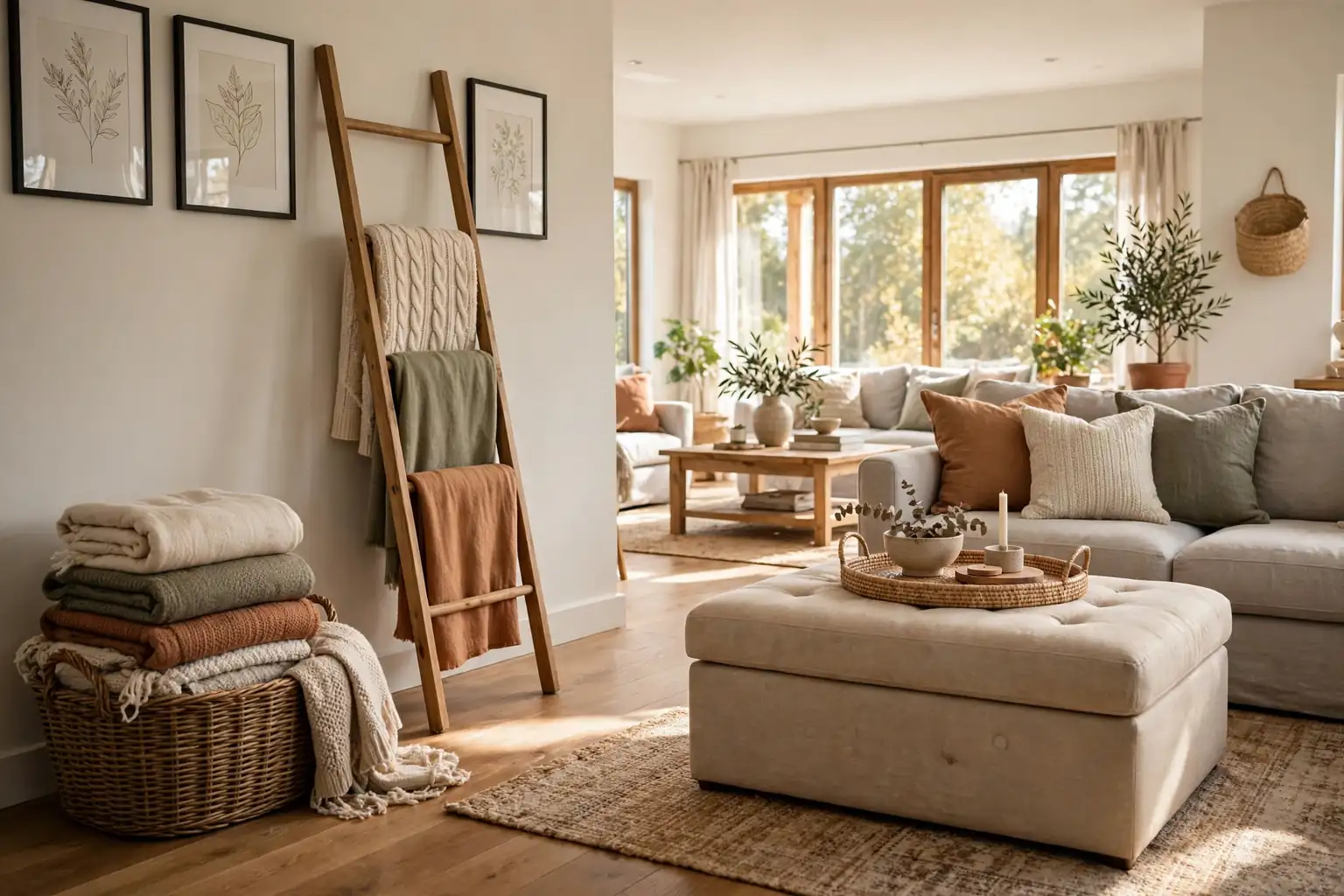
Blankets make a home feel warm, but they also pile up fast. One lives on the sofa, one waits on the bed, and two more sit folded on a chair that no one can use. The fix is not fewer blankets. It is a clear home for each one, close to where you actually use it, so grabbing a throw is easy and putting it away is just as easy. These 23 blanket storage ideas cover bedrooms and living rooms, from baskets and ladders to under-bed bins and closet shelves. Pick the spot that bothers you most, start there, and add more storage only where blankets still gather.
Key Takeaways
- Store blankets where you use them: living room throws by the sofa, bedroom blankets by the bed, and guest blankets in the guest room.
- Use one storage type per spot, such as a basket, a ladder, or a chest, so each blanket has a single clear home.
- Fold or roll blankets the same way in each container, so a full basket still looks tidy and you can see what is inside.
- Keep daily throws open and easy to reach, and move off-season blankets to closed bins, bags, or high shelves.
- Wash and dry blankets fully before closed storage, and add a cedar block or lavender sachet to keep them fresh.
- Leave one empty spot free, so a new blanket or a freshly washed throw always has somewhere to go.
1. Keep a Large Woven Basket Beside the Sofa
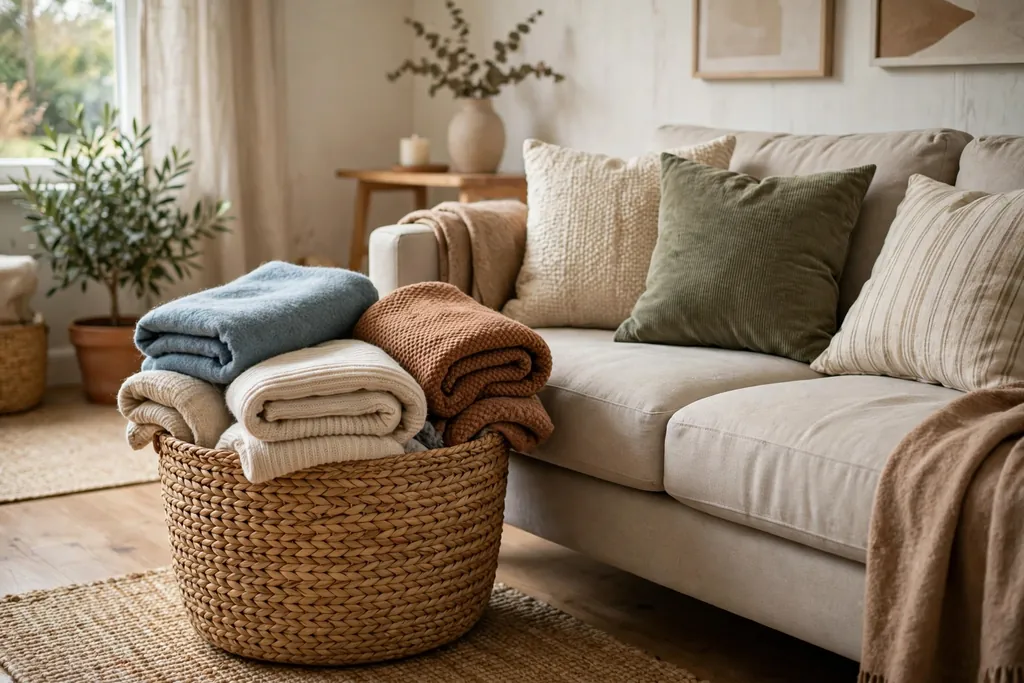
A large woven basket beside the sofa is the simplest blanket storage for a living room. Folded throws stack inside, rolled throws stand upright, and the basket itself adds natural texture beside soft seating. This suits a room where blankets end up draped over sofa arms, since the basket sits exactly where people reach for a throw. For more basket styling in a living room, see these stylish rustic living room ideas.
Choose a basket tall enough that folded blankets sit below the rim, or use a shorter basket for rolled throws you want to show. Keep two or three throws in it at most, so pulling one out does not drag the rest with it. Place a small tray or a folded cloth at the bottom if the weave snags knit blankets, and empty the basket now and then to shake out dust and refold anything that has slipped.
2. Lean a Wooden Blanket Ladder Against the Wall
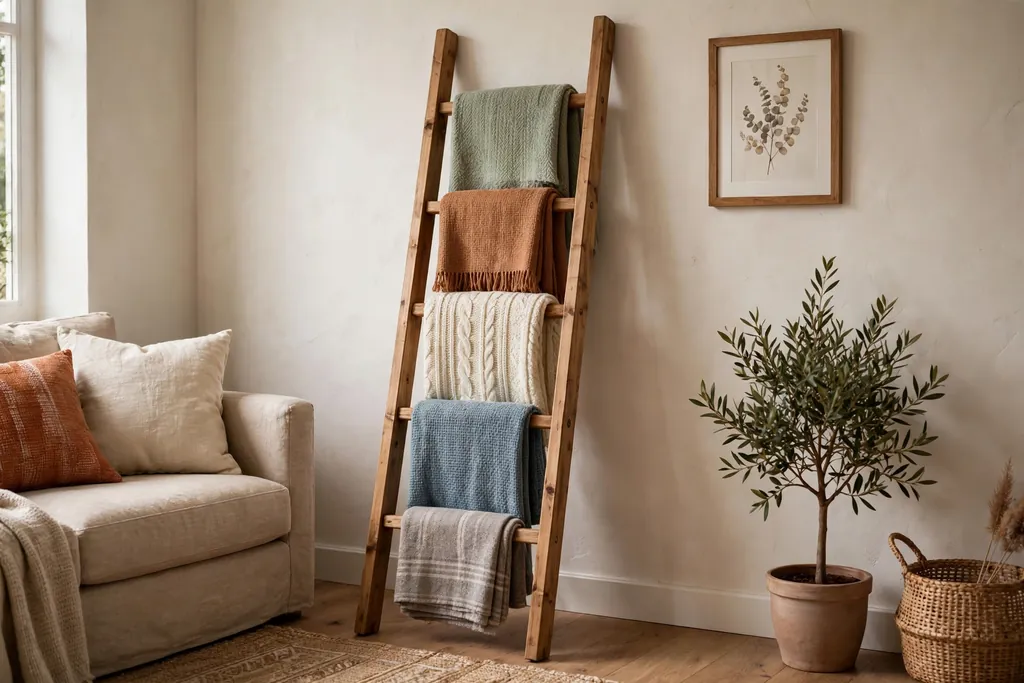
A wooden blanket ladder leans against the wall and holds three or four throws on its rungs, so blankets stay visible, aired, and easy to grab. This suits a living room corner or a bedroom wall beside an armchair, where a basket would hide blankets you use every evening. Fold each throw in half lengthwise before draping it, so it hangs evenly and does not slide off the rung.
Pick a ladder tall enough for your throws without crowding the wall, and add felt pads behind the top rail to protect paint. Keep the ladder clear of radiators and fire openings, and do not hang heavy quilts on a light ladder. If the room is small, choose a slim ladder in a tone close to other wood in the room, so it reads as furniture rather than an extra piece.
3. Choose a Storage Ottoman for the Living Room
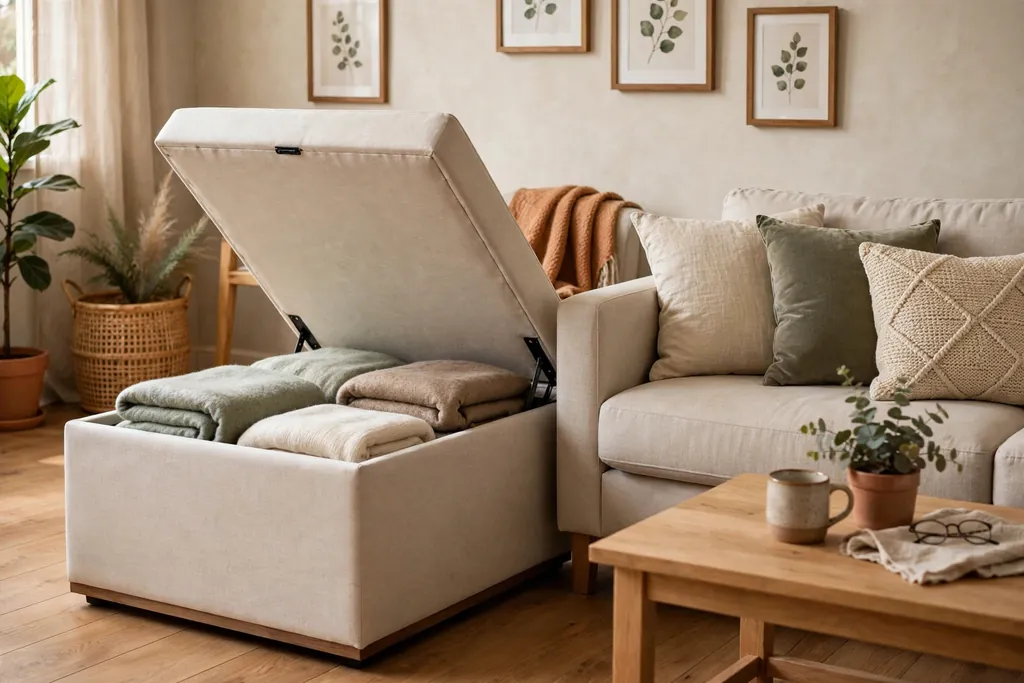
A storage ottoman works as a footrest, an extra seat, and a closed box for blankets. With the lid shut, the room looks tidy, and guests never guess that the ottoman holds the throws for the whole seating group. This suits a living room where open baskets look messy, or where a coffee table already takes the center of the room.
Pick a size that leaves a clear path around it, and choose a fabric you can wipe or wash, since ottomans get daily use. Keep only living room throws inside, so the ottoman does not fill with items from other rooms. If you also need a table surface, add a firm tray on top for drinks, and lift the tray off when you need to open the lid.
4. Place a Blanket Chest at the Foot of the Bed
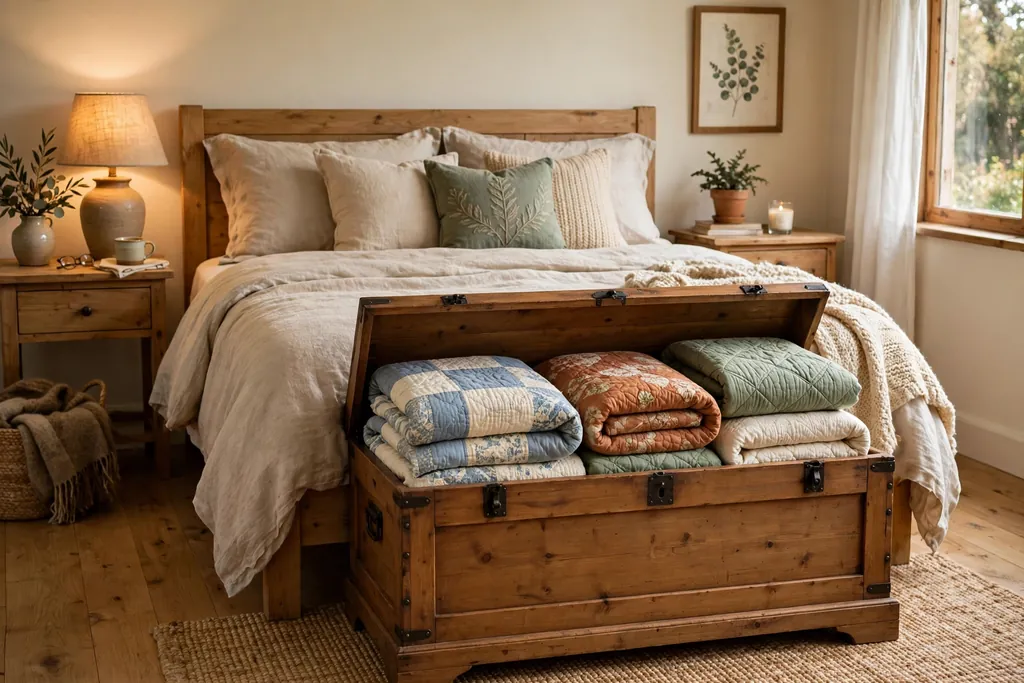
A blanket chest at the foot of the bed gives bedroom blankets a closed home and a flat top for a folded throw or a small tray. This suits a main bedroom where spare quilts and heavy winter blankets have no closet space, and it works as a bench in a larger room if the lid is flat and sturdy. For art and frame choices on the wall above the bed, see these bedroom wall art ideas.
Choose a chest slightly narrower than the bed, so it does not crowd the walkway on either side. Line the inside with a clean cotton cloth if you store bedding for months, and keep the lid hinges in good order so it stays safe to open. Store the heaviest blankets at the bottom and the lightest on top, so the blanket you want is never buried under a winter quilt in summer.
5. Slide Rolling Bins Under the Bed
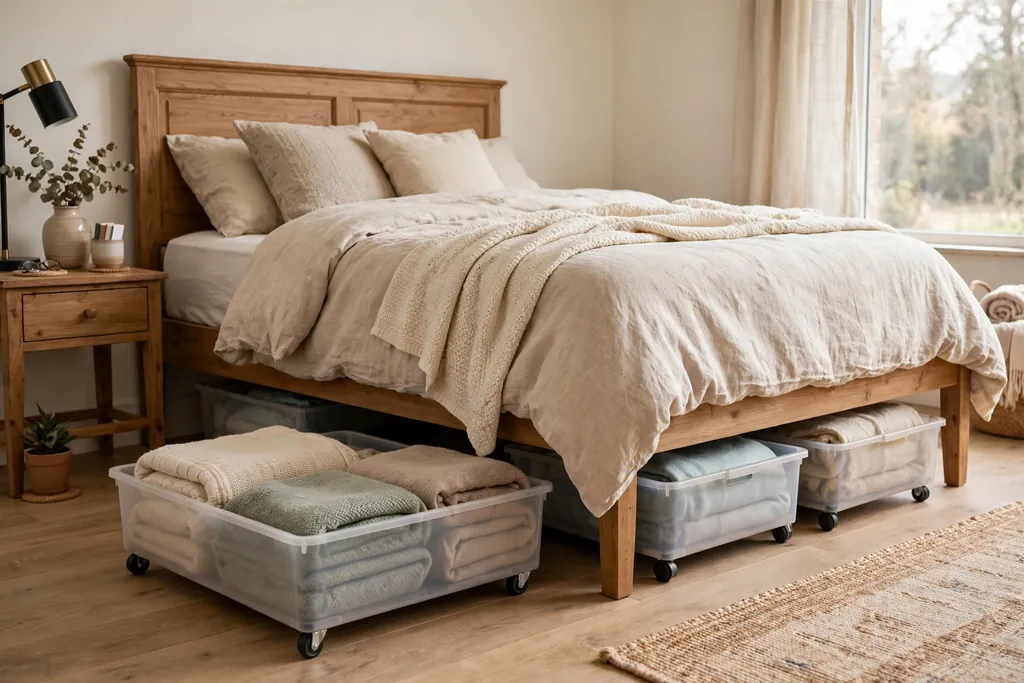
Low rolling bins under the bed turn unused space into blanket storage that pulls out like a drawer. This suits a bedroom where the closet is full and blankets are stored only for part of the year, such as heavy quilts in summer or light throws in winter. Because the bins roll out fully, you can reach the back of the bed without moving the frame.
Measure the clearance under your bed before you buy, since bed frames vary, and choose bins with lids if dust is a problem. Group one type per bin, such as spare duvets in one and guest blankets in another, and label the end you see first. Keep daily throws out of these bins, so you are not crouching down every evening for the blanket you use most.
6. Hang Blankets on an Over-Door Rack
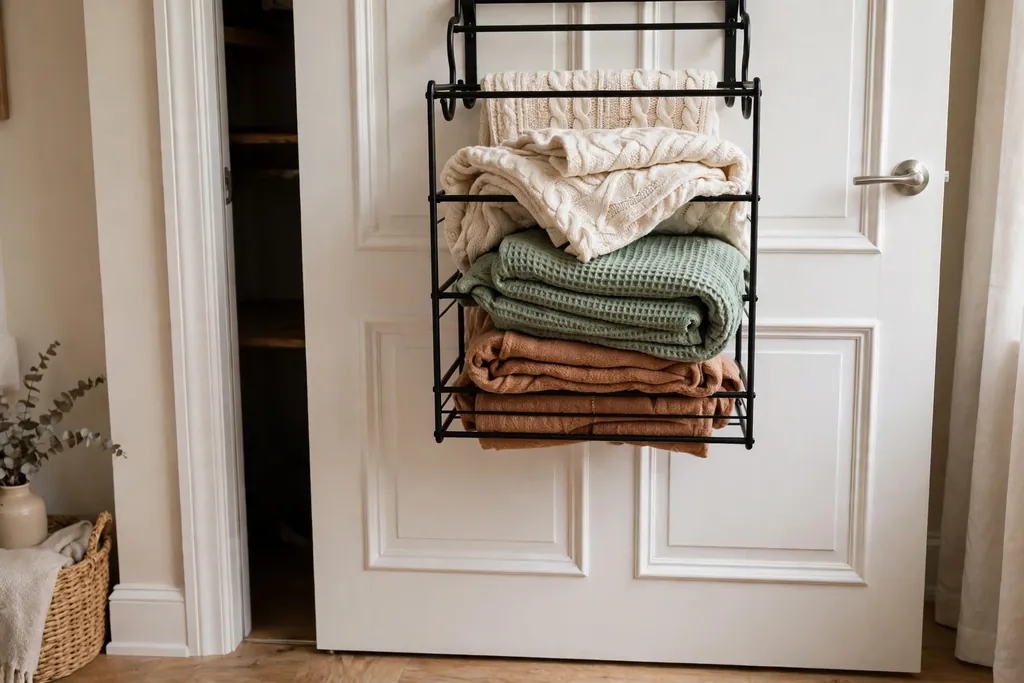
An over-door rack hooks over the top of a door and needs no screws, which makes it a strong choice for rented homes. Use its bars for one or two throws you reach for daily, and the door still opens and closes as normal. This suits a bedroom or a guest room where wall space is taken by furniture and there is no room for a ladder or a basket.
Hang the rack on a door you use less often, such as a closet door, if the main door feels too busy. Keep heavier quilts off the rack and use it for light throws only, so the rack stays steady and the door still latches. Check that the hooks clear the door frame, and add a small felt pad behind the rack if it rattles when the door moves.
7. Fit a Wall-Mounted Blanket Bar
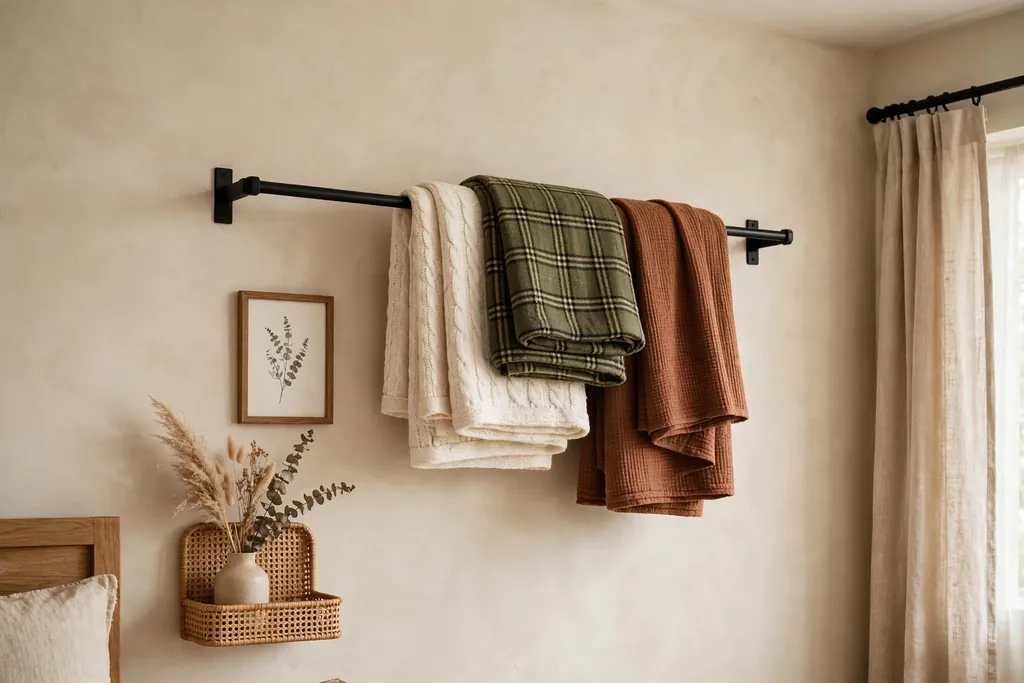
A wall-mounted blanket bar is a single rail fixed to the wall, much like a towel bar, sized for folded throws. It keeps one or two blankets flat, aired, and visible, which suits a bedroom wall beside the bed or a living room wall near the sofa. Unlike a ladder, it takes no floor space at all, so it works in a narrow room or a hallway nook.
Fix the bar into wall studs or use fixings rated for your wall type, and hang it at a height where a folded throw clears the floor. Fold throws to the same width, so the row looks even, and limit the bar to two throws, since a crowded bar looks like a drying rack. Keep the bar away from direct sun, so blanket colors do not fade unevenly.
8. Stack Folded Blankets on Open Living Room Shelves
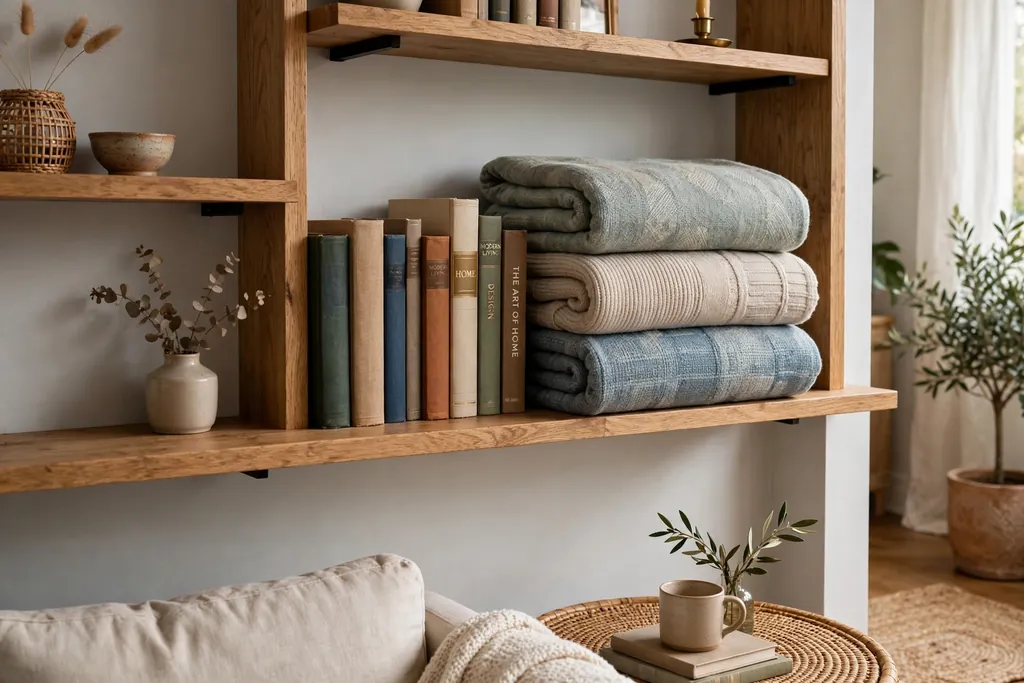
Open shelves in a living room can hold a neat stack of folded blankets beside books and a plant, turning storage into part of the room display. This suits a home where blankets are chosen for color as well as warmth, since a stack of folded throws in two or three tones adds soft color to a plain wall. Keep the stack on one shelf only, so the rest of the shelves stay free for books and decor.
Fold every blanket to the same size, and place the largest at the bottom and the lightest on top, so the stack stays stable. Limit the stack to four or five blankets, and refold the top blanket after use, since a leaning stack is the first thing to look untidy. Dust the shelf weekly, and keep blankets off shelves near a fireplace or a sunny window.
9. Sort Linen Closet Shelves With Labeled Baskets
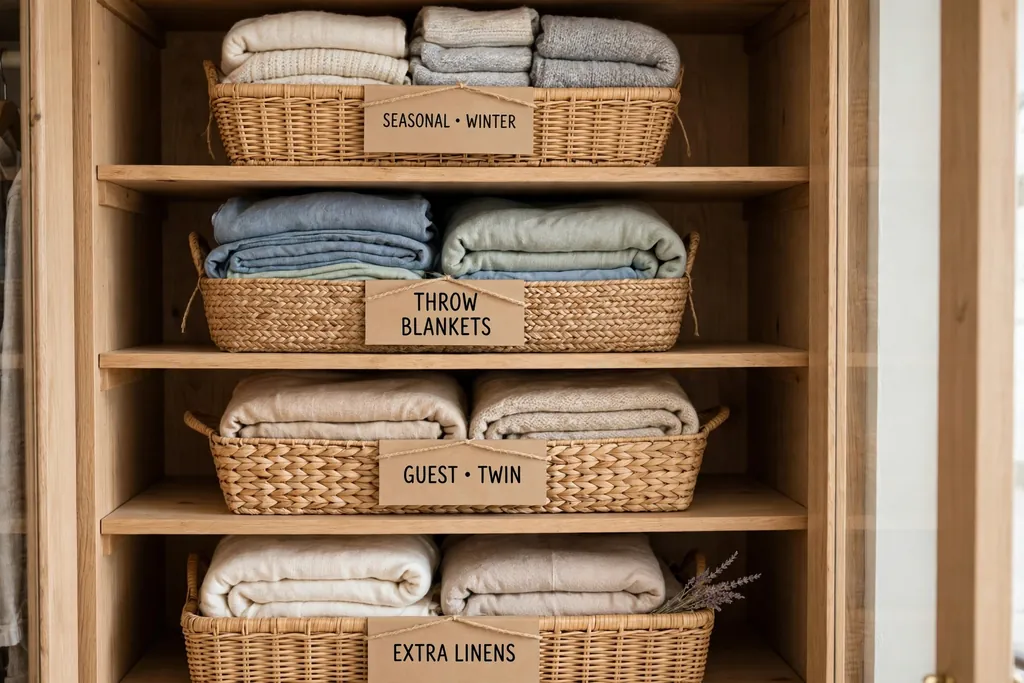
Labeled baskets on linen closet shelves give every blanket type its own box, so you stop pulling out three stacks to find one throw. Use one basket for bed blankets, one for living room throws, and one for guest bedding, and label the front of each basket clearly. This suits a home with a linen closet that has deep shelves, where stacks at the back disappear from view.
Choose baskets that fit the shelf depth with a little room to spare, so they slide out without catching. Roll lighter throws and fold heavier blankets, and keep the basket you use most at eye level. Wash blankets before they go back in the closet, and check the baskets each season, so blankets you no longer use do not quietly fill the closet again.
10. Pack Off-Season Blankets in Vacuum Bags
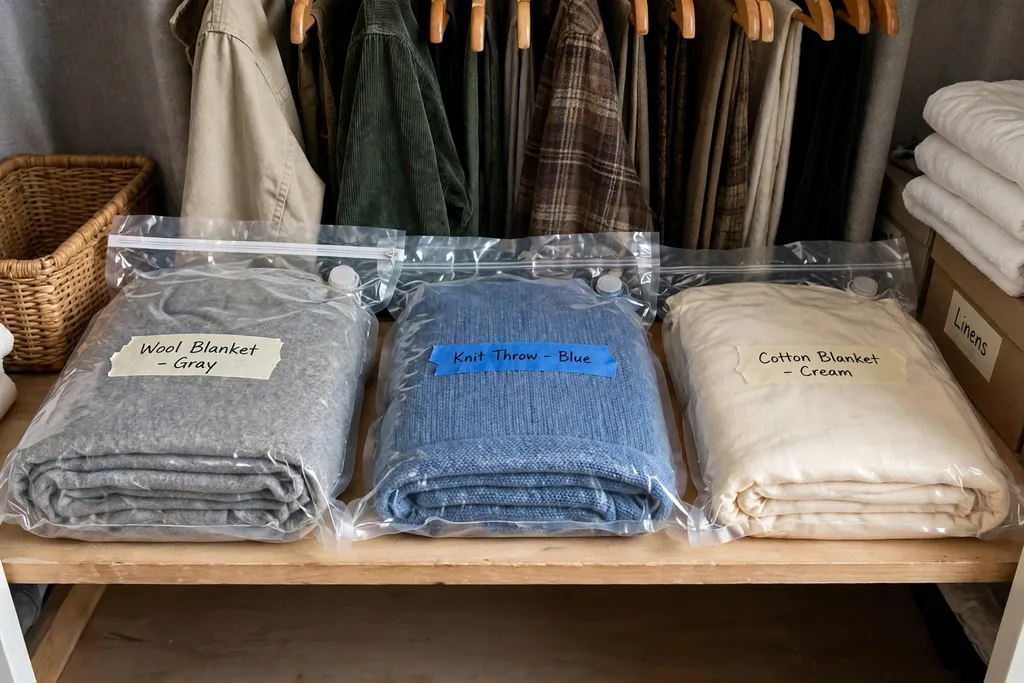
Vacuum bags shrink bulky off-season blankets to flat packs that slide onto a high shelf or under a bed. This suits a small home where winter quilts take a whole closet shelf all summer, or where guest blankets are needed only a few times a year. Flat packs also keep blankets clean and dry while they wait.
Do not vacuum seal wool, down, or delicate blankets for very long periods, since long compression can damage loft and fibers, and check the maker guidance for each blanket first. Label every bag with the blanket type and size before you seal it, so you do not open three bags to find one quilt. Store sealed bags flat, not standing on edge, and keep them away from sharp shelf edges that could puncture the seal.
11. Use a Storage Bench in the Entryway
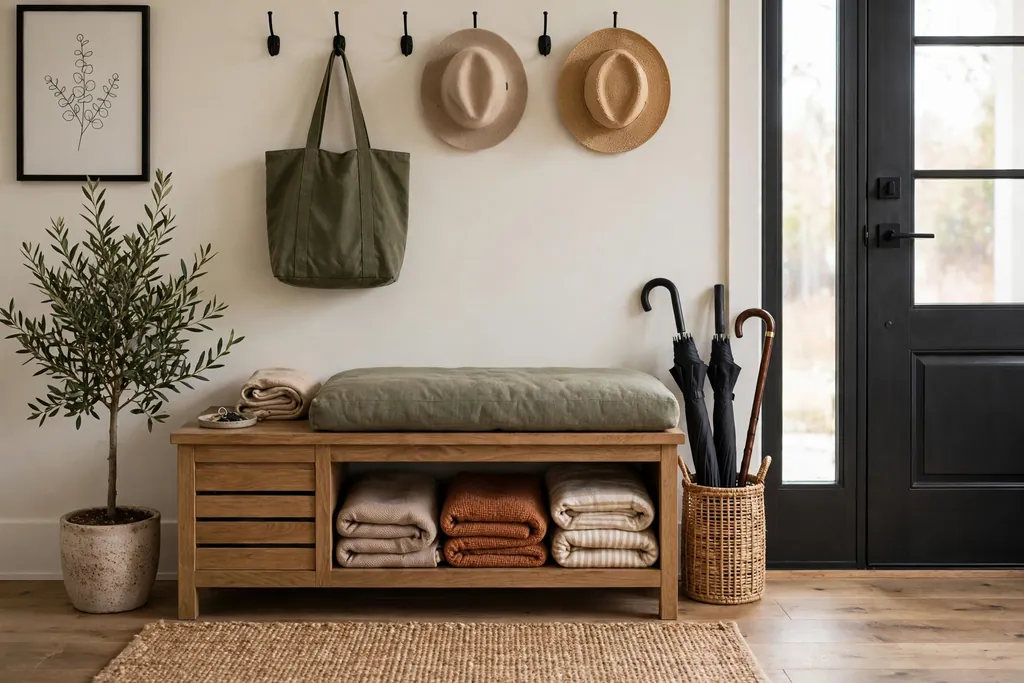
A storage bench in the entryway gives blankets a home near the door, which suits a home where throws are grabbed for the porch, the car, or a garden chair. The bench seat gives you a place to sit while you put shoes on, and the storage below holds folded blankets out of sight. This works best in an entry with a little wall space beside the door, not in a narrow hallway where a bench blocks the path.
Choose a bench with a lift-up seat or open baskets below, and keep only outdoor or porch blankets inside, so indoor throws stay by the sofa and bed. Add a folded cloth on the bench top if wet blankets come in from outside, and wipe the bench often in rainy months. Keep the bench top mostly clear, so it stays useful as a seat rather than a second shelf.
12. Stand a Freestanding Quilt Rack in the Bedroom
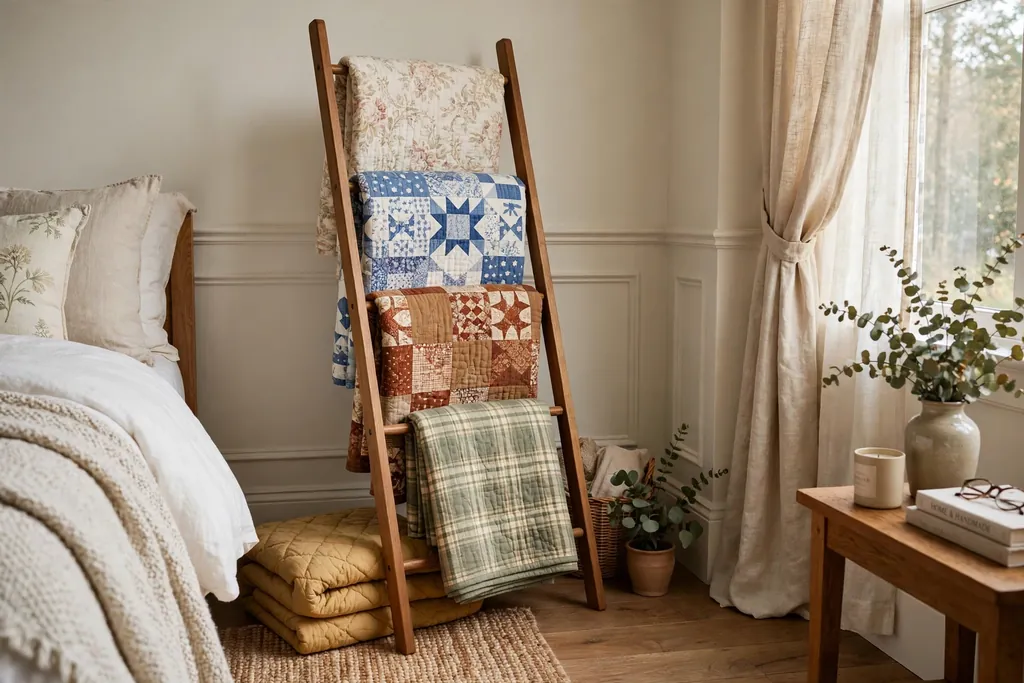
A freestanding quilt rack holds blankets folded over its bars like a small clothes rail, and it stands where you need it without any wall fixings. This suits a bedroom corner or a dressing area where you want to show a favorite quilt, since the rack keeps it aired and visible rather than folded away. It also works in a guest room, where visitors can see and choose their own blanket.
Pick a rack with wide, smooth bars, so folded blankets do not crease sharply, and place it where it will not block a drawer or a door swing. Limit it to two or three blankets, and fold each one the same way, so the rack looks planned. Move the rack away from a sunny window if blankets fade, and dust the bars now and then, since a rack in a corner can gather dust unnoticed.
13. Tuck a Basket Under a Console or Side Table
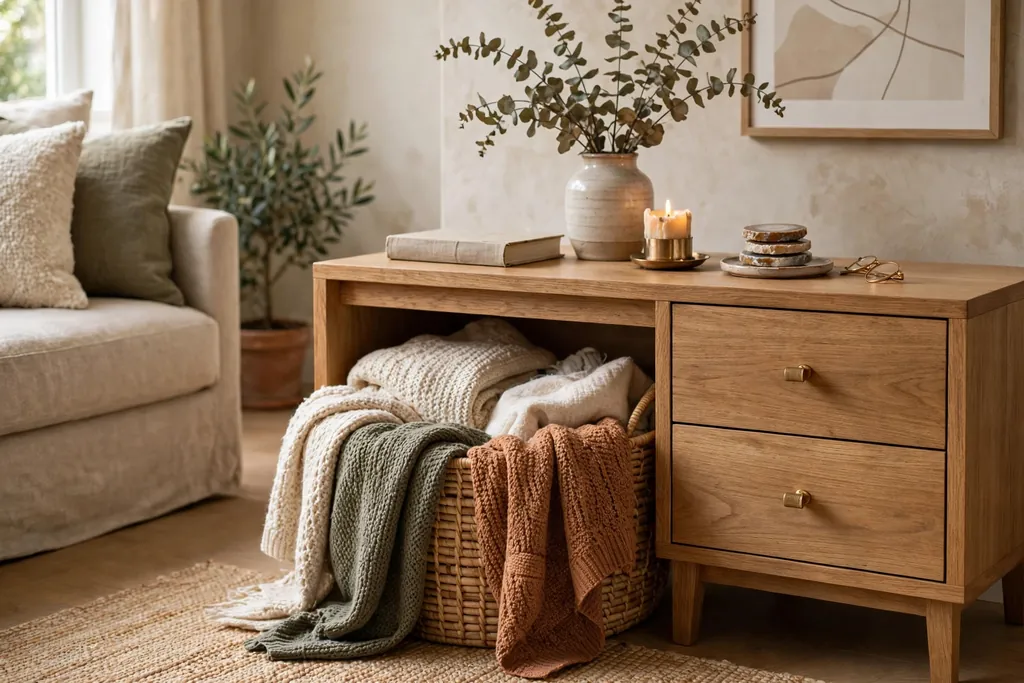
A basket tucked under a console table or a side table uses space that usually sits empty, and it keeps a throw within arm’s reach of a chair. This suits a living room where a large floor basket would crowd the seating group, since the table hides the basket from most angles while leaving the throw easy to pull out. Measure the space under the table first, and choose a low, wide basket that slides in and out without catching table legs.
Keep one throw in this basket, not a stack, so it stays easy to grab and easy to put back. Use a basket with handles, so you can lift it out to clean under the table, and shake the throw outside now and then, since a basket under furniture collects dust. If the table has a lower shelf, use that shelf for the basket instead of the floor, so the throw stays cleaner.
14. Add a Shelf Above a Door for Spare Blankets
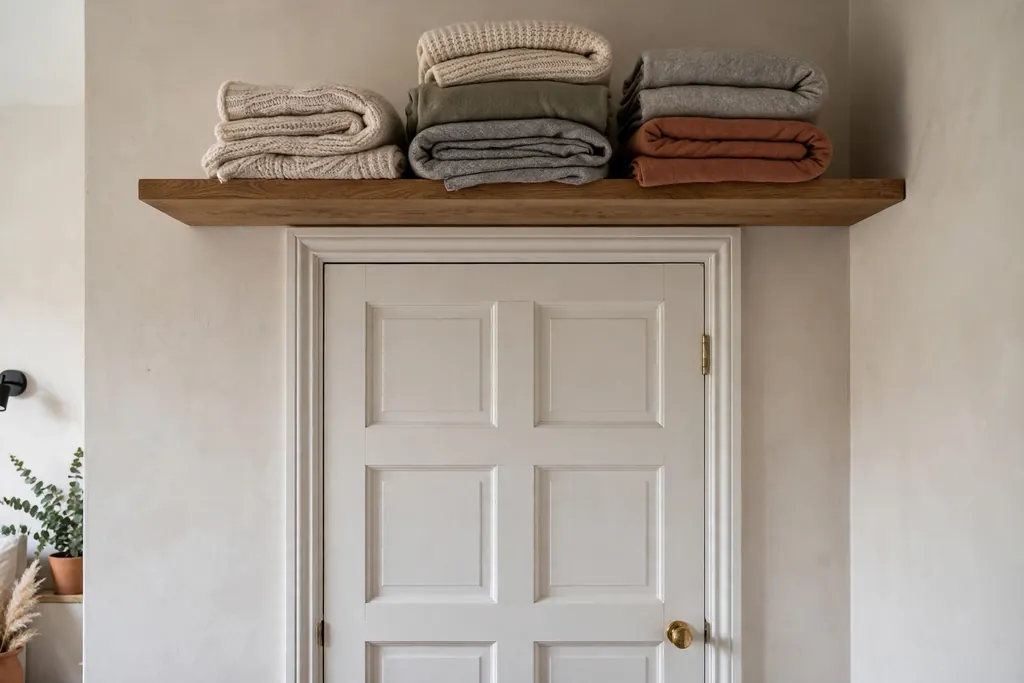
A shelf above a door uses wall space that is almost always empty, and it is a good home for spare blankets you need only now and then. This suits a bedroom or a hallway where floor and closet space are already full, since the shelf takes no usable wall at eye level. Fold blankets flat and stack them in a neat pile, or roll them in a row, so the shelf looks tidy from below.
Fix the shelf into studs or use fixings rated for the weight of folded blankets, and keep the shelf depth shallow enough that blankets do not overhang. Store only clean, dry blankets up high, and keep a small step stool nearby, since you will need it to reach the shelf safely. Label the stack by season if you store more than one type, so you do not pull down the wrong pile.
15. Stack Wooden Crates Beside the Fireplace
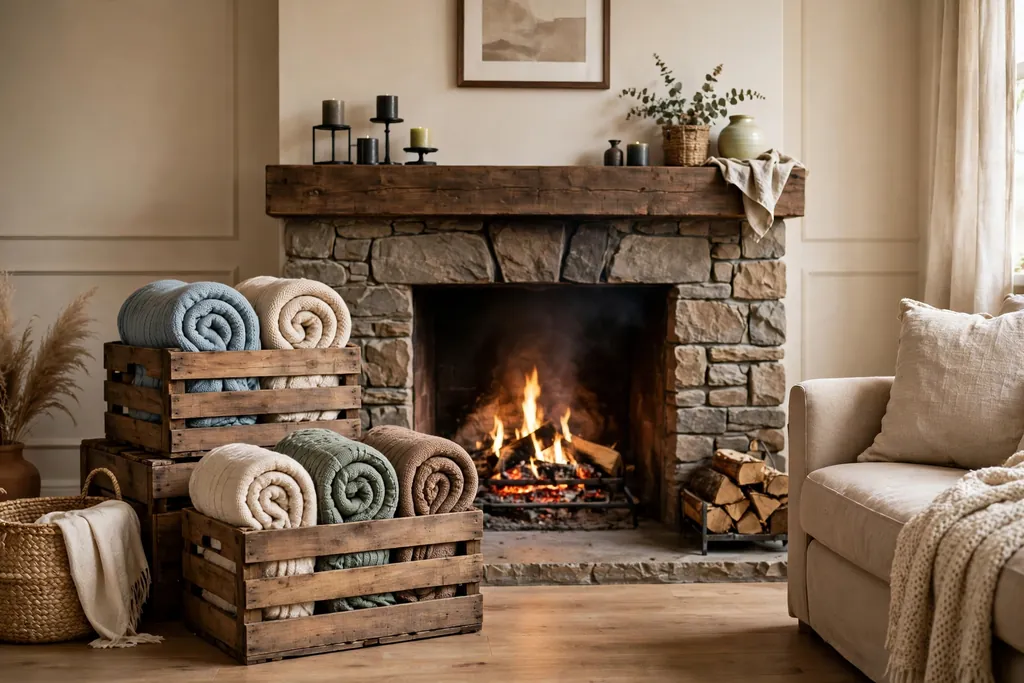
A stack of wooden crates beside the fireplace holds rolled or folded blankets close to where they are used on cold evenings. This suits a living room with a fireplace or a wood stove, where blankets are wanted nearby but must stay clear of heat. Crates add warm wood texture, and each crate can hold one blanket type, such as light throws in the top crate and heavier wool blankets below.
Keep crates at a safe distance from the fire opening and from hot surfaces, and never store blankets against a stove or a flue. Choose crates with smooth inside edges, so knit blankets do not snag, and line a rough crate with a plain cloth. Roll throws for the top crate if you want to show their colors, and fold heavier blankets flat in the lower crate, so the stack stays stable.
16. Give Blankets a Closed Cabinet in the Living Room
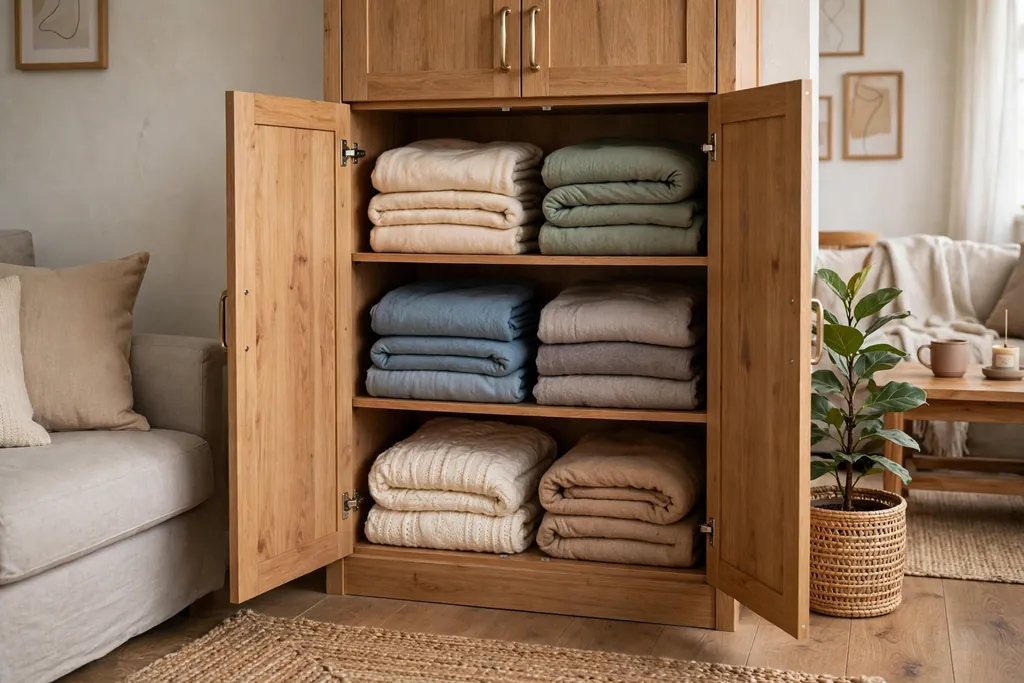
A closed cabinet in the living room, such as a sideboard or an armoire section, hides blankets completely and keeps dust off them. This suits a formal living room or a small room where open baskets and ladders feel too casual, since closed doors keep the room calm even when the cabinet is full. Use one shelf or one section of the cabinet for blankets only, so they do not mix with games, media, or paperwork.
Fold blankets to fit the shelf depth, and keep the most used throw at the front, so you do not disturb the whole stack. Add a cedar block or a lavender sachet inside the cabinet to keep blankets fresh, and air the cabinet now and then if it stays shut for months. If the cabinet doors stick, wax the runners or adjust the hinges before the doors start to strain.
17. Use Zippered Bags on the Top Closet Shelf
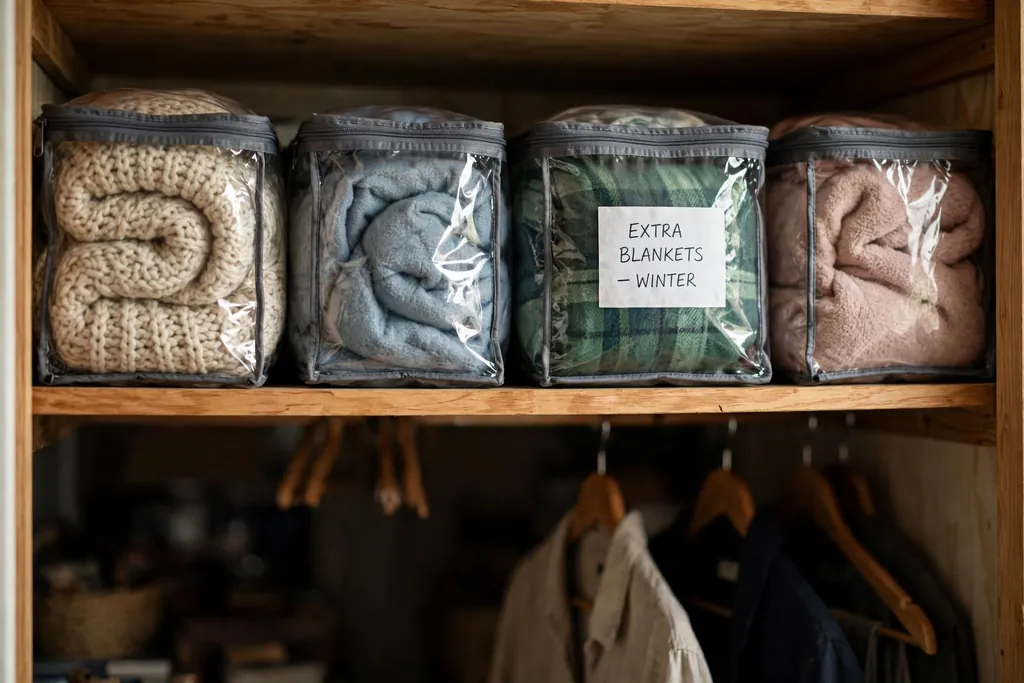
Zippered storage bags on the top shelf of a closet protect blankets from dust and damp while keeping them out of daily way. This suits guest blankets and spare quilts that are used only a few times a year, since a clear bag lets you see what is inside without opening it. Choose bags sized to the shelf, so they sit flat and do not slide off when you pull one down.
Label each bag on the outside with the blanket size and weight, and wash blankets fully before you zip them away. Do not pack bags so full that the zip strains, and store them flat rather than stacked high, since a tall stack is hard to lift down safely. Keep the bags away from a hot attic hatch or a damp outside wall, so blankets stay dry and fresh.
18. Roll a Cart Beside an Armchair
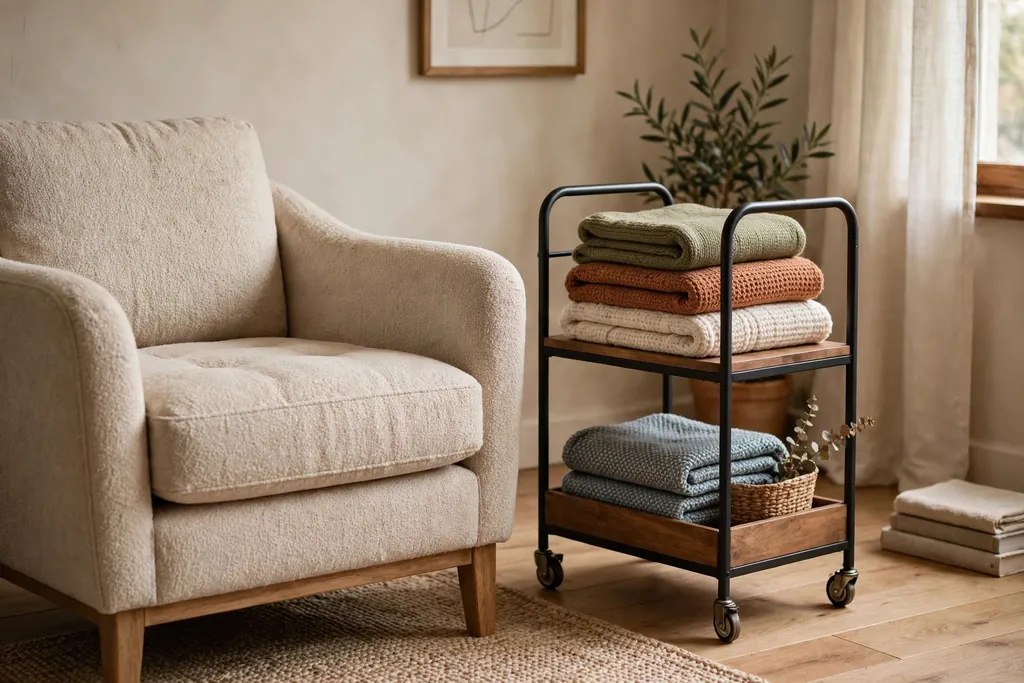
A small rolling cart beside an armchair holds folded throws on its tiers and moves where you need it. This suits a reading corner or a living room where seating moves with the seasons, since the cart can roll closer to the sofa in winter and tuck away in summer. It also suits a home with limited wall space, since the cart needs no fixings and no floor basket footprint beyond its own wheels.
Choose a cart with a handle and smooth wheels, and keep heavier blankets on the lowest tier, so it rolls steadily and does not tip. Fold throws to fit each tier, and limit the cart to two or three blankets, so it does not become a rolling pile. Lock the wheels when the cart is parked, and wipe the tiers often, since a cart beside a chair collects crumbs and dust.
19. Hang Throws on a Row of Wall Hooks
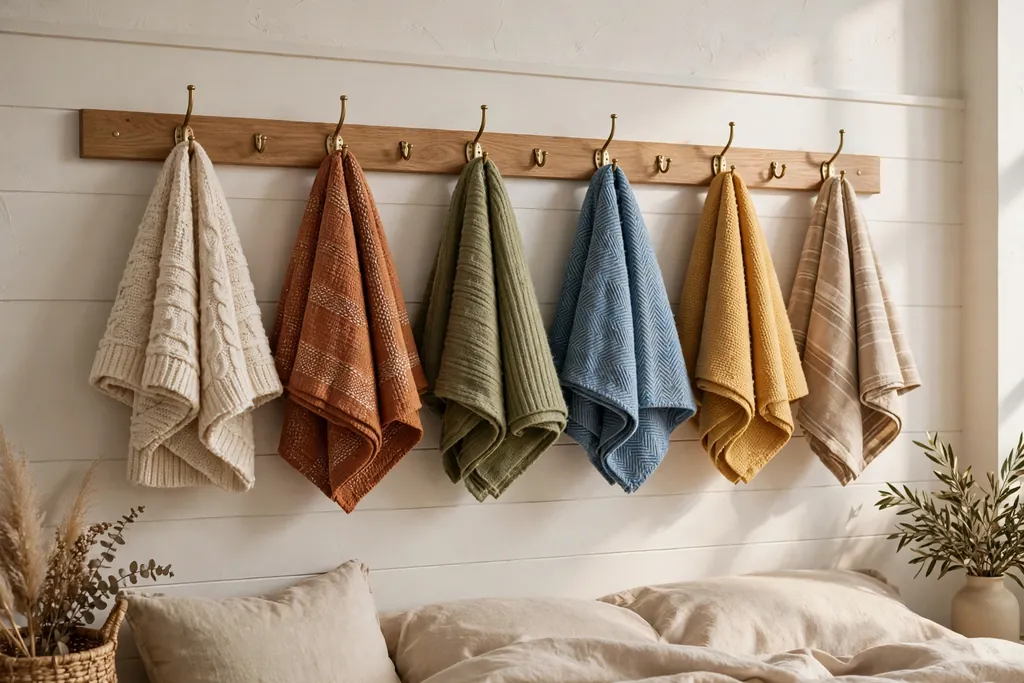
A row of wall hooks gives each throw its own hanging spot, so blankets stay aired and you can see every option at a glance. This suits a bedroom wall, a hallway, or the back of a living room door area, where a ladder would take too much floor space. Hang hooks at a height where a folded throw clears the floor, and space them wide enough that throws do not overlap.
Use sturdy hooks fixed into studs or with fixings rated for the weight, since a wet or heavy wool throw is heavier than it looks. Hang one throw per hook, and fold each throw the same way, so the row looks even. Keep hooks away from direct sun and from radiators, and rotate which throw hangs nearest the window, so one blanket does not fade faster than the rest.
20. Store Blankets in a Window Seat Drawer
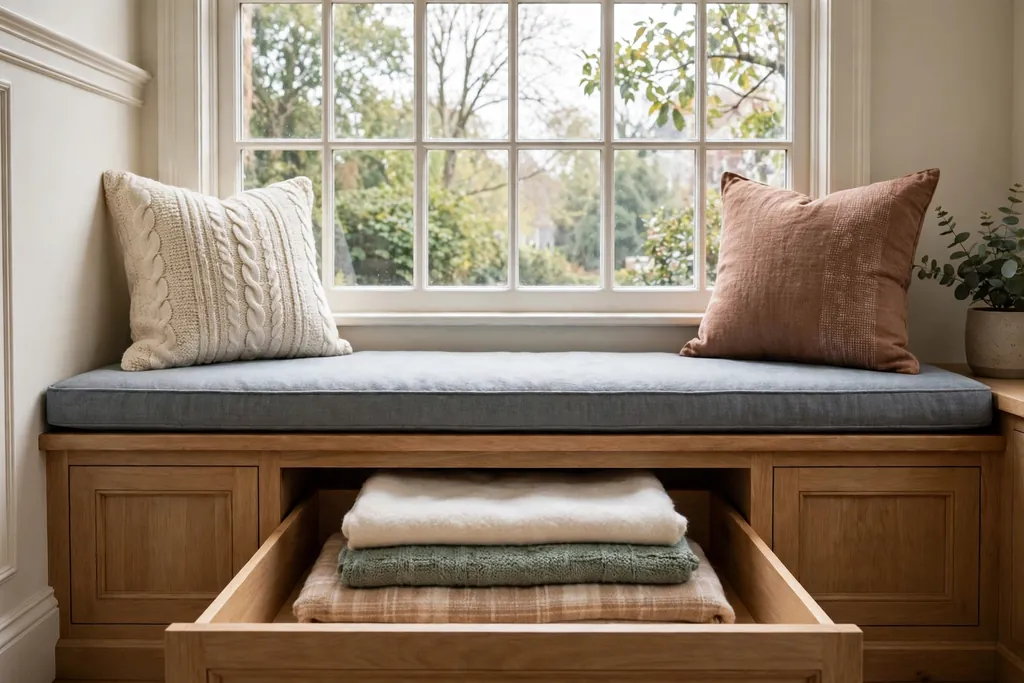
A window seat with drawers below turns a reading spot into blanket storage, since the seat already sits where people reach for a throw. This suits a bedroom or a living room with a wide window, where a built-in bench or a sturdy seat can hold drawers or a lift-up lid. Store the blankets you use in that room inside the seat, so the seat earns its floor space twice over.
Keep the drawer for blankets only, and fold them flat so the drawer closes without forcing. Add a clean liner inside the drawer, and check it for damp if the window leaks or condenses in winter. If the seat has a lift-up lid instead of drawers, store lighter throws on top of heavier ones, so the blanket you want is easy to lift out without emptying the whole seat.
21. Hang a Fabric Shelf Unit Inside the Closet
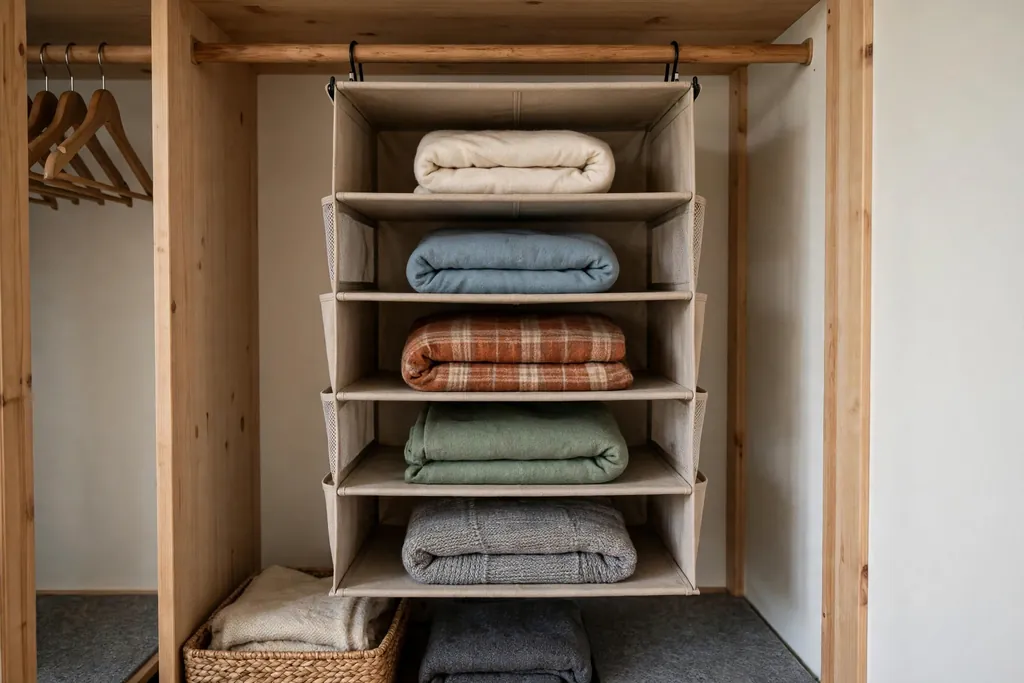
A hanging fabric shelf unit hooks over a closet rod and adds soft shelves for folded blankets without any building work. This suits a closet where hanging clothes leave a gap at one end, since the fabric shelves fill that gap with blanket storage. It also suits a rented home, since the unit comes down in minutes when you move.
Fold blankets to fit each shelf, and keep heavier quilts on the lowest shelf, so the unit hangs straight and does not swing. Limit each shelf to two folded blankets, so the fabric does not sag, and keep the unit away from the closet door swing. Wash the fabric unit now and then, since closet shelves gather dust, and check the rod hooks, so the unit stays level as it fills.
22. Roll Blankets on a Hallway Closet Shelf
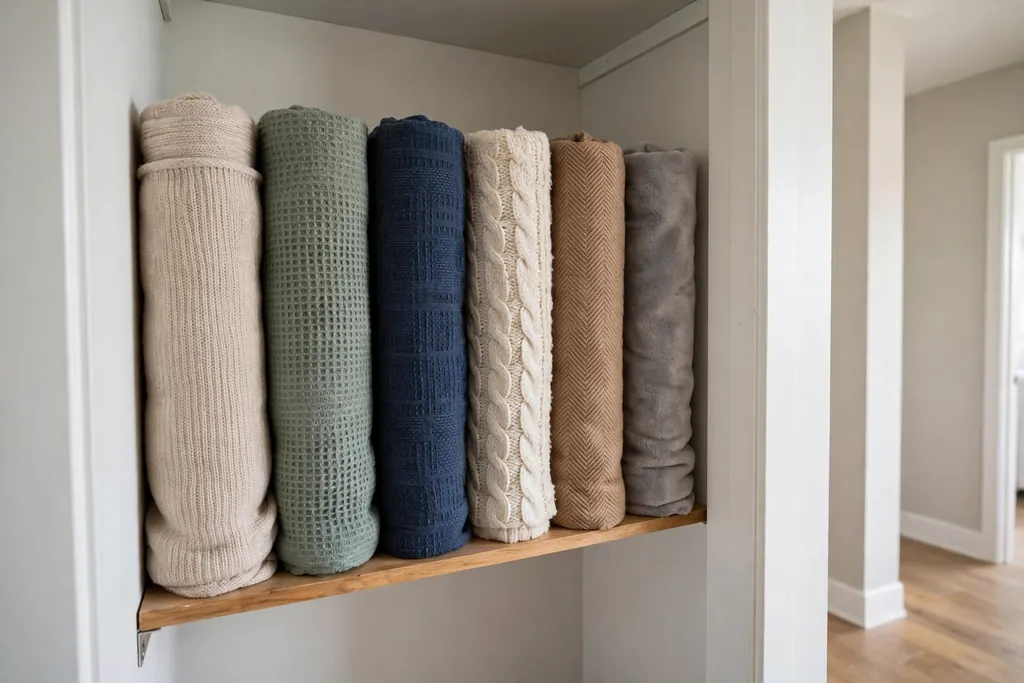
A hallway closet shelf is a useful middle ground for blankets, since it sits between bedrooms and the living room and serves both. Roll blankets instead of folding them, so you can see each roll from the front and pull out one without disturbing the rest. This suits a home where the linen closet is small, since a hallway closet often has one shelf free above coats or cleaning supplies.
Keep the blanket shelf separate from coats and cleaning products, and use a small basket or a shelf divider to stop rolls from spreading. Roll each blanket tightly and stand the rolls upright in a row, with the lightest at the front. Air the closet now and then, and keep the door shut in a dusty hallway, so blankets stay clean between uses.
23. Dedicate One Dresser Drawer to Throws
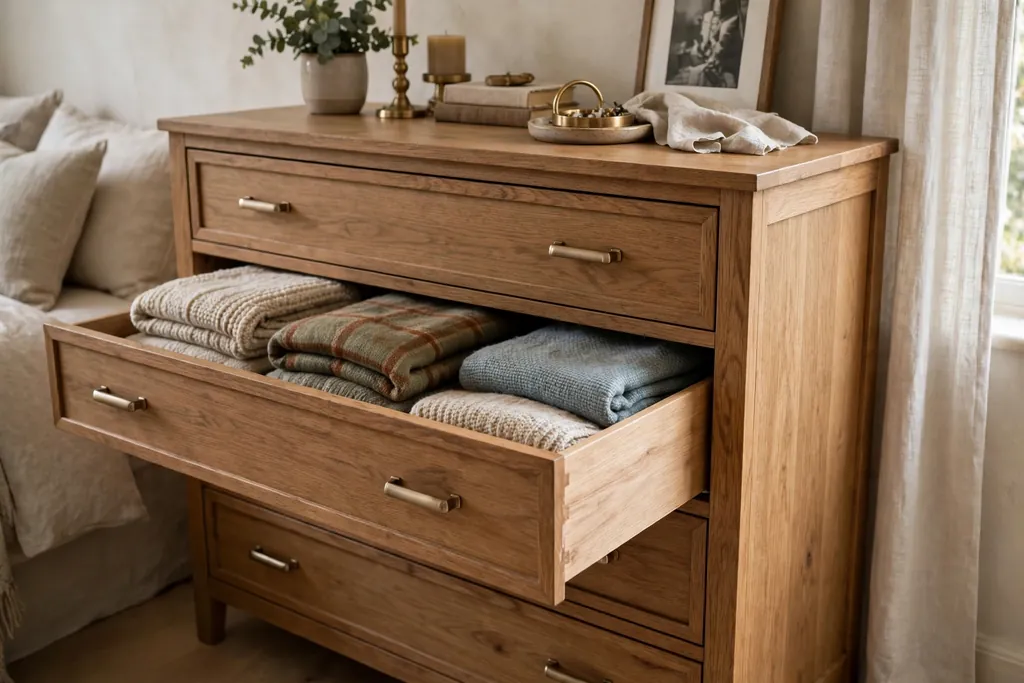
A dedicated dresser drawer for throws keeps living room and bedroom blankets in one place, sorted by the room they belong to. This suits a bedroom where a dresser drawer sits half empty, since throws fold flat and fill a deep drawer neatly. Use the top drawer for daily throws and a lower drawer for heavier blankets, so the blanket you reach for each evening is always on top.
Fold throws to the drawer width, and file them upright like books if the drawer is deep, so you can see each one without lifting the stack. Keep the drawer for throws only, and move other items out, so the system stays simple. Wash throws before they go back in the drawer, and empty the drawer each season, so blankets you no longer use do not fill it again.
Conclusion
Blanket storage works best when it matches where you actually sit, sleep, and read. A basket by the sofa, a chest at the foot of the bed, and a labeled shelf in the closet cover most homes, and the other ideas here fill the gaps those three leave. Start with one trouble spot, keep daily throws easy to reach, and move off-season blankets to closed storage. When every blanket has a clear home, the room stays tidy, throws stay fresh, and a warm blanket is always within reach. Save this list for your next tidy-up, and try one new idea this week.
FAQs
How many blankets should I keep in a living room basket?
Two or three throws suit most living room baskets. That number covers the people who usually sit there, keeps the basket easy to use, and leaves room to fold a throw back in without forcing it. If the household is larger, use a second basket rather than overfilling one, since a packed basket is hard to use and looks untidy fast.
What is the best way to store blankets so they do not smell musty?
Wash and dry blankets fully before storage, and never pack a damp blanket into a closed bin or bag. Add a cedar block or a lavender sachet to closed storage, and air the storage spot now and then, especially in a closet that stays shut for months. If a blanket already smells musty, wash it again and dry it in fresh air before it goes back into storage.
Should blankets be folded or rolled for storage?
Both work, and the choice depends on the storage type. Fold blankets for shelves, chests, and drawers, where a flat stack stays stable and easy to lift. Roll blankets for baskets, crates, and open closet shelves, where a roll lets you see each blanket and pull out one without disturbing the rest. Use the same method in each container, so the storage looks tidy.
Can I store blankets under the bed safely?
Yes, if the bins are clean, dry, and lidded, and the blankets inside are washed before storage. Rolling bins work well for off-season blankets and spare quilts, while daily throws are better kept by the sofa or bed for easy reach. Check under-bed bins each season for dust and damp, and keep them clear of heating vents, so blankets stay clean and dry.
How do I store heavy winter quilts in a small home?
Vacuum bags, under-bed bins, and top closet shelves suit heavy winter quilts in a small home, since all three use space that is otherwise wasted. Do not vacuum seal wool or down quilts for very long periods, and check the maker guidance first. Label each bag or bin, store it flat, and keep the quilt you need first at the front, so summer storage does not become a yearly search.
What blanket storage works best in a rented home?
Over-door racks, hanging fabric shelf units, rolling carts, baskets, and ladders suit rented homes, since none of them need wall fixings or building work. A freestanding quilt rack and a storage ottoman also work well, since both move with you. If you do fix a wall bar or hooks, use fixings that suit the wall and keep the original fittings, so you can restore the wall when you leave.